A Haunting Made Tangible: Eyoab Desalegn’s FIT MFA Collection
Absence can carry its own history. In Eyoab Desalegn’s FIT MFA collection, Ethiopian Orthodox artifacts become a starting point for examining the identities, memories, and cultural narratives that remain present even when they have been suppressed or erased. Drawing on the concept of “social haunting,” the designer reconsiders the meanings embedded in Ethiopian crosses, Arks of the Covenant, and the traditional handwoven Netela textile, using their forms and symbolism to explore the erasure of queerness within the Ethiopian cultural psyche. What began during the COVID-19 pandemic as abstract paintings of black marks across white canvases has evolved into a three-part collection that translates these personal and cultural tensions into sculptural silhouettes, architectural frameworks, and intricate textile constructions. Stiff quilting, exaggerated proportions, and reimagined ceremonial forms challenge the boundaries between the body and the objects that surround it, allowing what is missing to become as significant as what remains. Through this work, the designer approaches fashion as a means of questioning inherited narratives and giving physical presence to identities that history and culture have left unseen.
What was the starting point for your MFA collection, and what initially made you want to explore that idea through fashion?
The starting point for the collection, which is a clash between two identities, has sort of been the starting point for all my creative endeavors. The first time I realized this was through a series of large-scale abstract paintings I created during the COVID-19 pandemic. The paintings consisted of random brushstrokes of black paint or ink on large white surfaces. Through a series of progressions, I eventually began to imagine these paintings as a way of emotionally and visually expressing the clash between two identities, as garments on the body. The first exploration of this idea through fashion started before my time at FIT, when I began to cut into these large canvases and drape them on a form to turn them into garments.
Your collection brings together a specific set of personal, cultural, historical, or conceptual references. How did your research evolve as you moved from an idea into an actual collection?
This idea first began to evolve into an actual collection through a series of material explorations where I continued to create these paintings of fabric to create garments. Early on in the development of the collection, however, these explorations began to feel stale and limiting, so I decided to go to the root of what these paintings were trying to communicate. In order to do this, I started to look at different Ethiopian artifacts and began to reimagine alternative arrivals of their contemporary meaning. This reimagination was inspired by Patricia William’s Alchemy of Race and Rights and Avery Gordon’s Ghostly Matters: Hauntings and the Social Imagination. I would describe both of these works as phenomenological studies of objects whose very existence was signified by an absence. Using this as a starting point to create an actual collection, I began to examine different Ethiopian Orthodox objects and started to trace what is absent in these objects. I eventually narrowed the Ethiopian objects used in the collection down to three, which were highly articulated Ethiopian crosses, Arks of the Covenant, and the Netela, which is a handwoven Ethiopian cotton textile.
What role do your personal experiences play in your design practices, and how much of yourselves do you see reflected in these collections?
My design practice is a complete reflection of my personal experiences. The three Ethiopian objects that are reimagined throughout the collection have been significant symbols in my life for as long as I can remember, and the process of reimagining alternative arrivals of these objects involved a lot of questioning and examining the different meanings these objects have held throughout different points of my life.
How did you all translate the central concepts of your collections into something physical through silhouette, material, color, construction, or textile development?
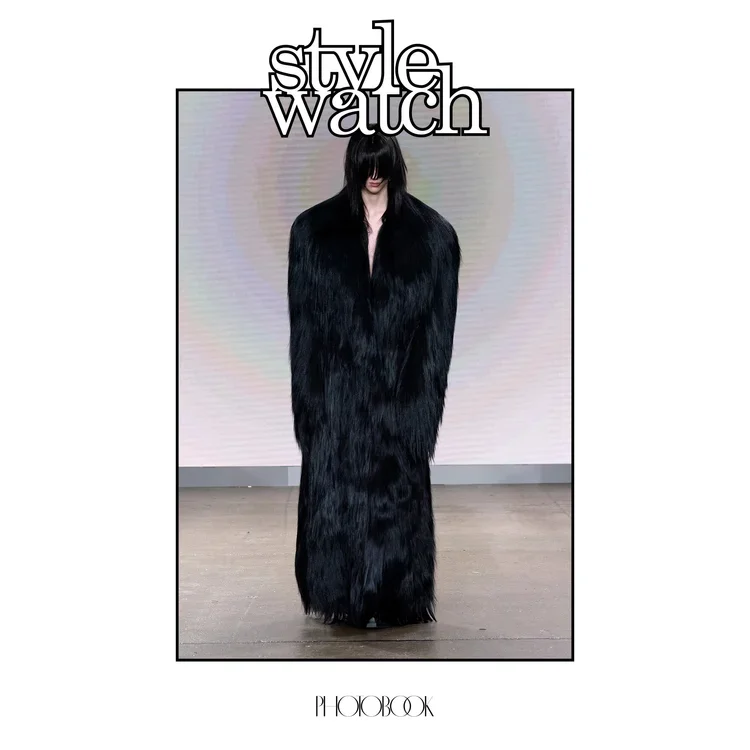
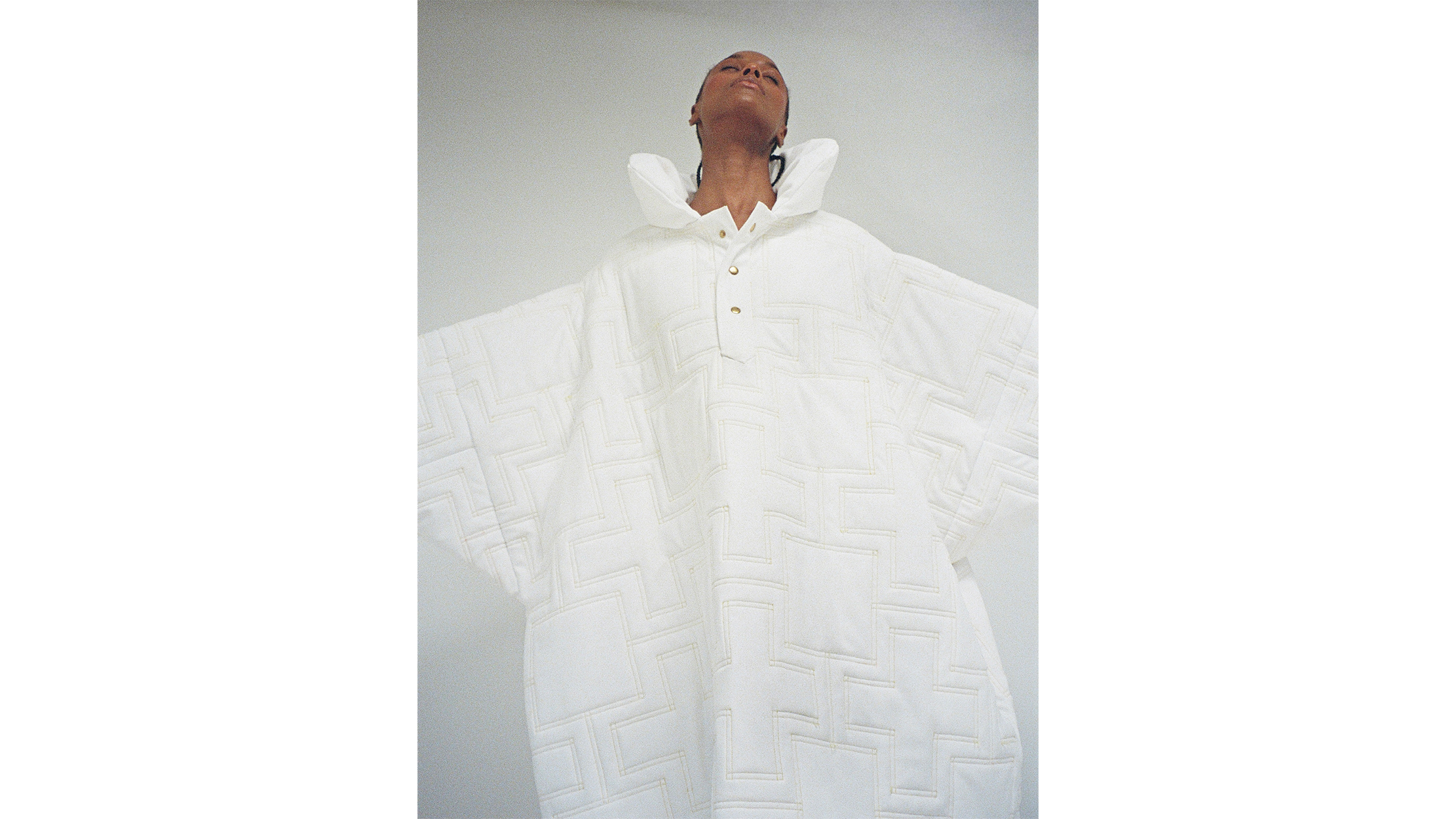
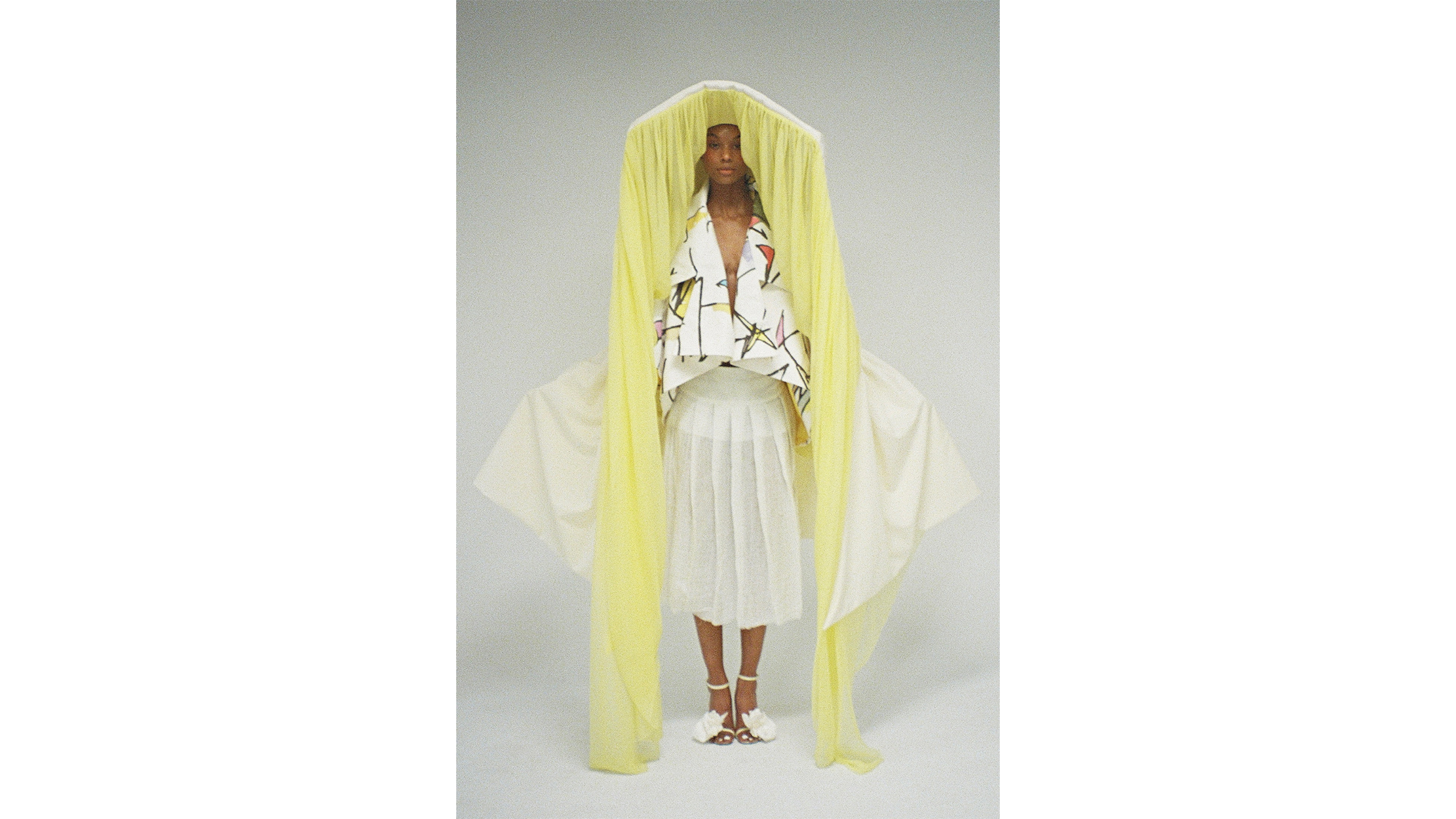
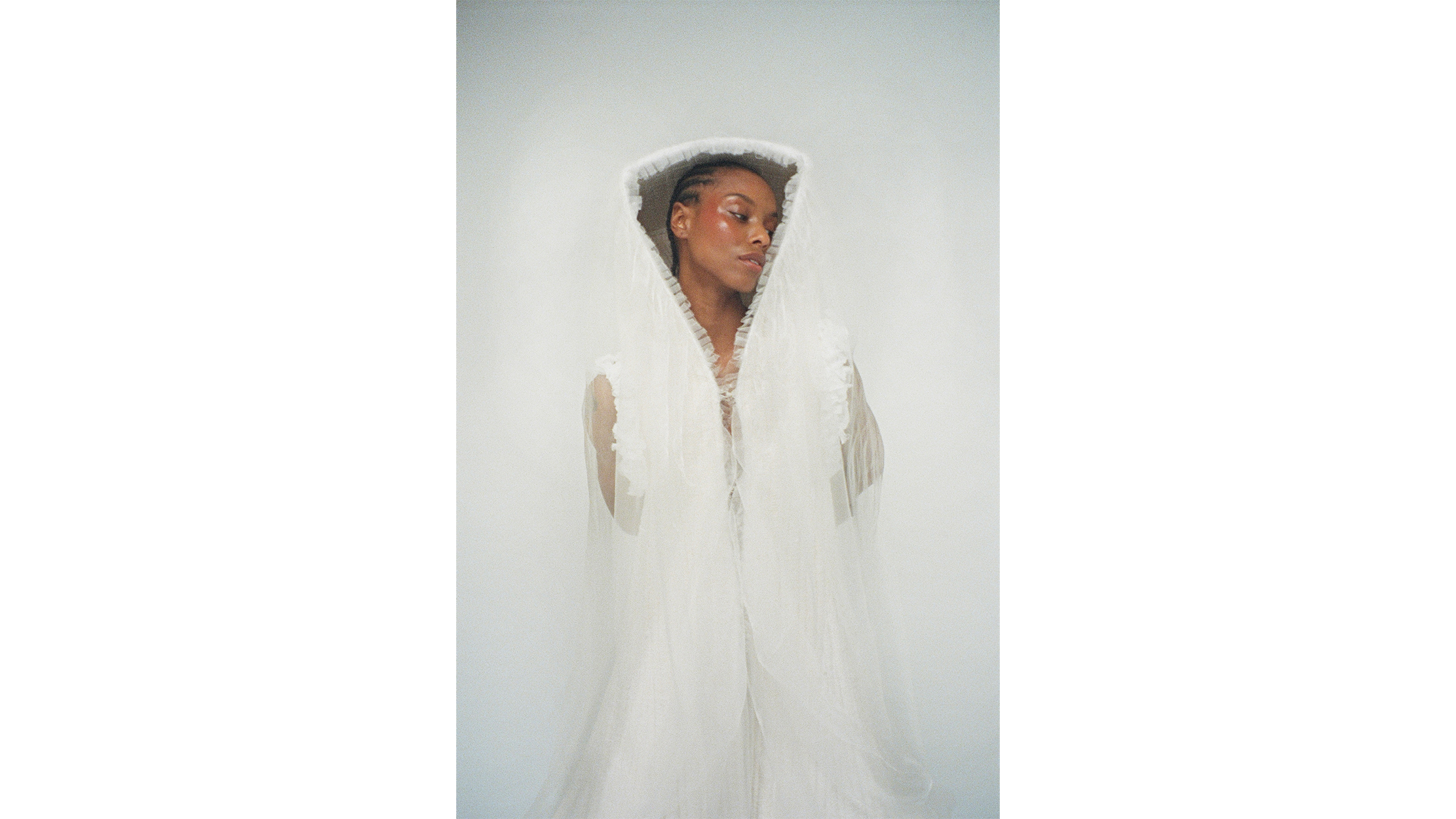
The collection is divided into three movements, each one dedicated to the reimagination of crosses, arks of covenants, and the Netela, respectively. In the first movement of the collection, highly articulated Ethiopian crosses are translated into physical garments by using their outline shapes to frame the body. Engraved and architectural Ethiopian crosses are used in a similar manner through their translation into quilting patterns. In the second movement of the collection, Arks of the covenants, which are wooden crates placed on the heads of clergy members to represent the core of all covenants, are used as the primary silhouette inspiration. The wooden crates are reconstructed through stiff fabrics and boning, with a skirt attached at the bottom of the structure and a high-contrast yellow chiffon draped in front of the frame, which serves to highlight the wearer. Worn underneath the structure is a pleated Netela skirt and a draped jacket with an original abstract print that was the original inspiration for the collection and is continued through the looks in movement 2. The final movement in the collection challenges the conventionally lightweight draped form of the Netela textile through tight gathers and stiff quilts. The Netela gathers are used to create shearling-like textures to create garments that fit close to the body. The stiff Netela quilts are used to reconstruct two additional ark structures placed on the heads of the wearer, as well as a quilted skirt that squares out at the hem.
Was there a particular garment, technique, material, or look within your collections that became especially important to your overall story? Why?
I would say that each object and the material exploration it inspired in its respective movement were able to compound on one another to tell the overall story of the collection, which is best represented in the final look, which was an ark structure created out of quilted layers of Netela and boning. This look, silhouette, and quilting technique is especially important because it completely reconstructs the Ark of the Covenant into an original silhouette using original quilting techniques that are completely unique to this collection.
Many of the collections in this graduating class engage with larger ideas around identity, culture, memory, the body, technology, or the environment. What do you hope viewers take away from your all’s work beyond the clothes themselves?
I hope that viewers see themselves reflected in our stories, and I hope this experience inspires them to seek out other fashion outlets that tell stories about identity, culture, memory, the body, technology, and the environment.
Was there anything about the processes of developing your thesis collections that challenged an assumption you initially had about your own design practices?
Absolutely. While I had worked on extended projects before, I had never been able to spend up to two years developing an idea prior to my thesis collection. Working around the same ideas for two years completely exhausted the naive design frameworks I had been familiar with and truly challenged the depth of the research and communication of my designs.
How has your time at FIT changed or expanded the way you think about fashion and your role as designers?
My time at FIT has both standardized the way I approach fashion and design while giving me creative agency and confidence at the same time. The FD MFA program maintains a harmonious balance between technical emphasis and creative freedom that has allowed me, as a designer, to use fashion to communicate deeply personal perspectives.
What do you think makes your design perspective distinctly your own, and how has that perspective evolved throughout your MFA?
If I really had to narrow it down, I would say that paradoxical experiences, identities, and memories are what make my design perspective distinctly my own. Throughout the progression of my MFA, my fascination with contradictory qualities, identities, and experiences I have lived through became increasingly evident, and pulling from these unique contradictions helps in making my design perspective distinctly my own.
As you move beyond FIT and begin the next chapter of your career, what do you want to carry forward from these collections, and what are you excited to explore next?
As I move beyond FIT, I want to maintain and protect the personal perspective, as well as the creative freedom and confidence I have developed during my time at FIT.
You use the idea of “social haunting” to explore the erasure of queerness within the Ethiopian cultural psyche. What does a ghost or haunting allow you to express that a more literal approach might not?
I use the ghost or haunting experiences as vessels into the erasure of queer identities within the Ethiopian cultural psyche because ghosts and haunting experiences, in their nature, are seething presences that are made evident through an absence. Using ghosts and hauntings as symbols of queer absence (but also a seething presence at the same time) allowed me to start redefining the meaning behind Ethiopian Orthodox objects through what is missing, has been erased, lies underneath, or is not present, as opposed to what is superficially present and represented.
Your practice often simplifies and exaggerates the body through primary colors, shapes, and motifs. How did those visual elements help you translate an experience?
The expression of my collection concept through primary colors, shapes, and motifs is deeply tied to my background in biochemistry and methodological reductionism. As a trained biochemist, my creative universe heavily relies on reductionist approaches that break down complex concepts and ideas to their elementary forms before offering an expanded explanation of elementary interactions that create larger systems.
Interview by Emma Green, Assistant to Editor-In-Chief, PhotoBook Magazine
Tearsheets by Daniel Lopez, Art Director, PhotoBook Magazine
*Images Courtesy of FIT
RELATED STORIES