UNIVERSITY OF SALFORD MA AW26: FIFTEEN STORIES STITCHED FROM MEMORY AND DEFIANCE
Yeomanry House is the kind of venue that forces intimacy. A whitewashed brick space tucked into central London, its low ceilings and pale wooden floors make everything feel close: the audience pressed shoulder to shoulder along a narrow runway, phone screens raised like votive candles, the air thick with hairspray and nervous energy. On the evening of 19 February, the room held a particular charge. Fifteen designers from the University of Salford’s MA Fashion Design programme were about to send their final collections down this strip of parquet, each one the culmination of roughly eighteen months of obsessive, exhausting, deeply personal work. There was no set, no soundtrack bombast, no theatrical smoke. Just bodies in clothes, moving through a room full of people who were paying attention.
Salford’s MA programme has, in recent years, carved a distinct reputation for producing designers who arrive at London Fashion Week not with commercial collections but with arguments. Garments that interrogate identity, place, material culture, and the body itself. This cohort was no exception. The range was staggering: sculptural metalwork that caught the overhead lights like armour forged in a dream, voluminous cocoons of blush-dyed fabric that swallowed the models whole, hand-knitted collars worked so thickly they resembled geological formations. What unified the show was not aesthetic but intent. Every designer on the schedule had built their collection around a question they couldn’t stop asking.
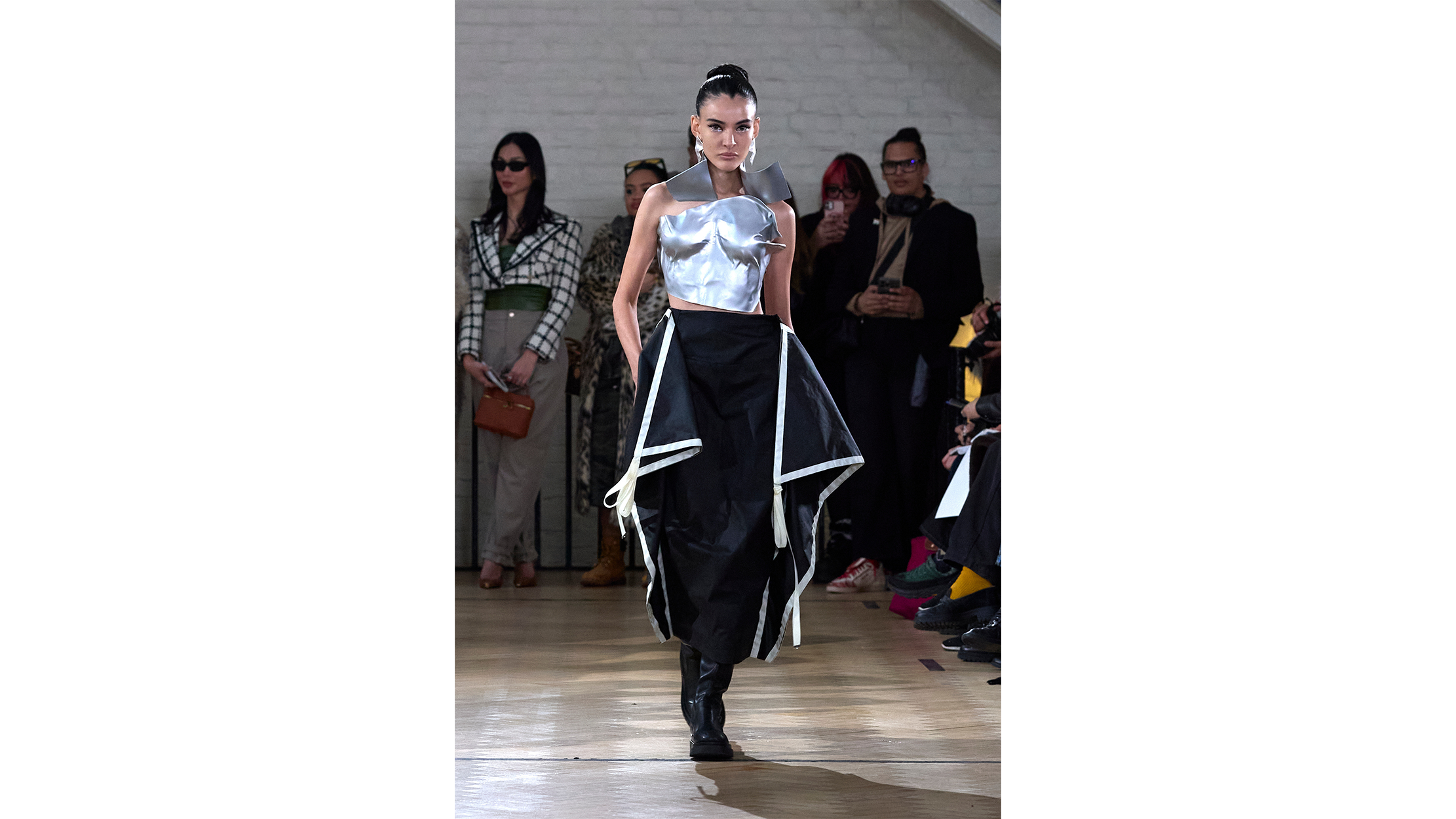
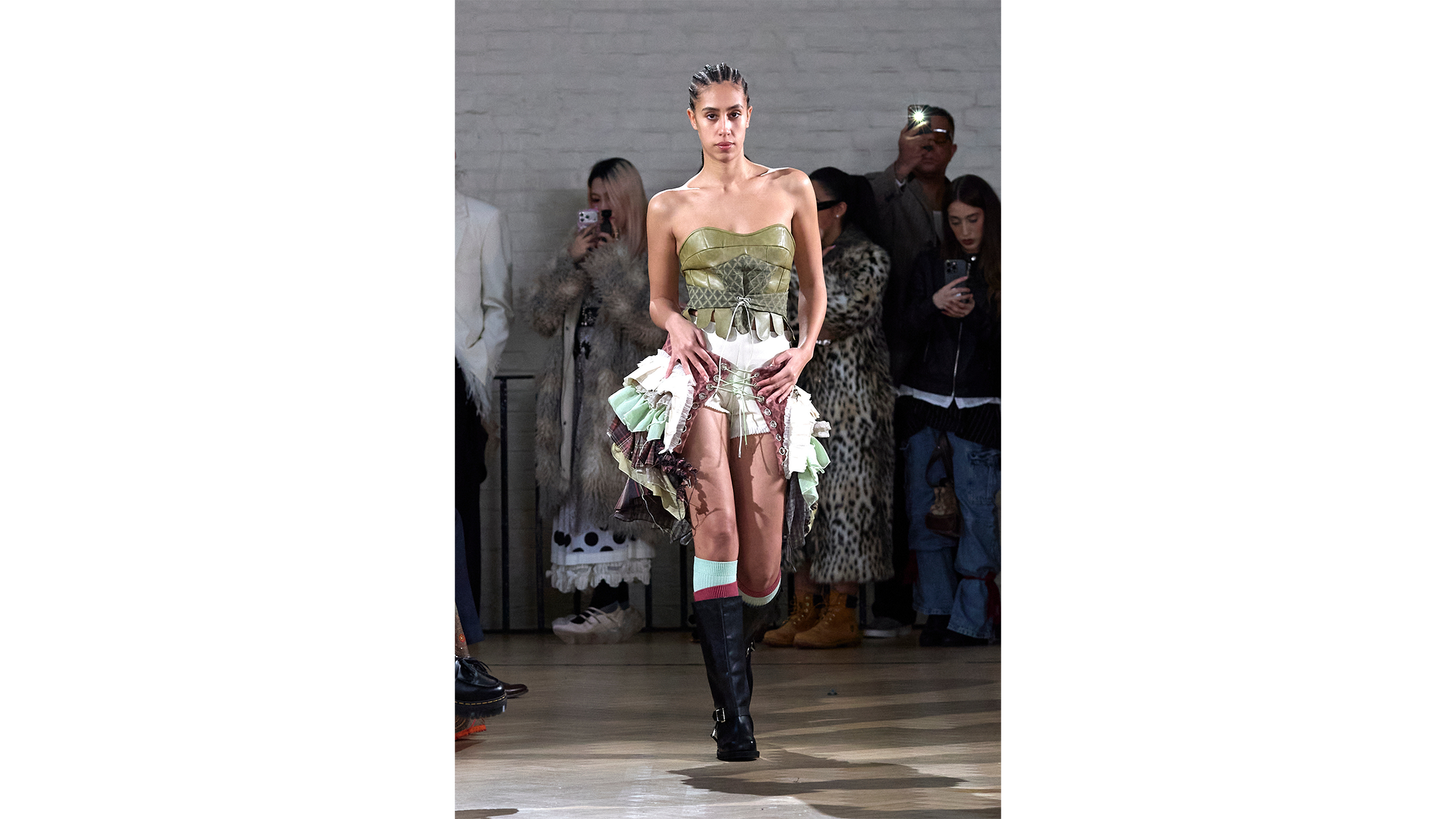
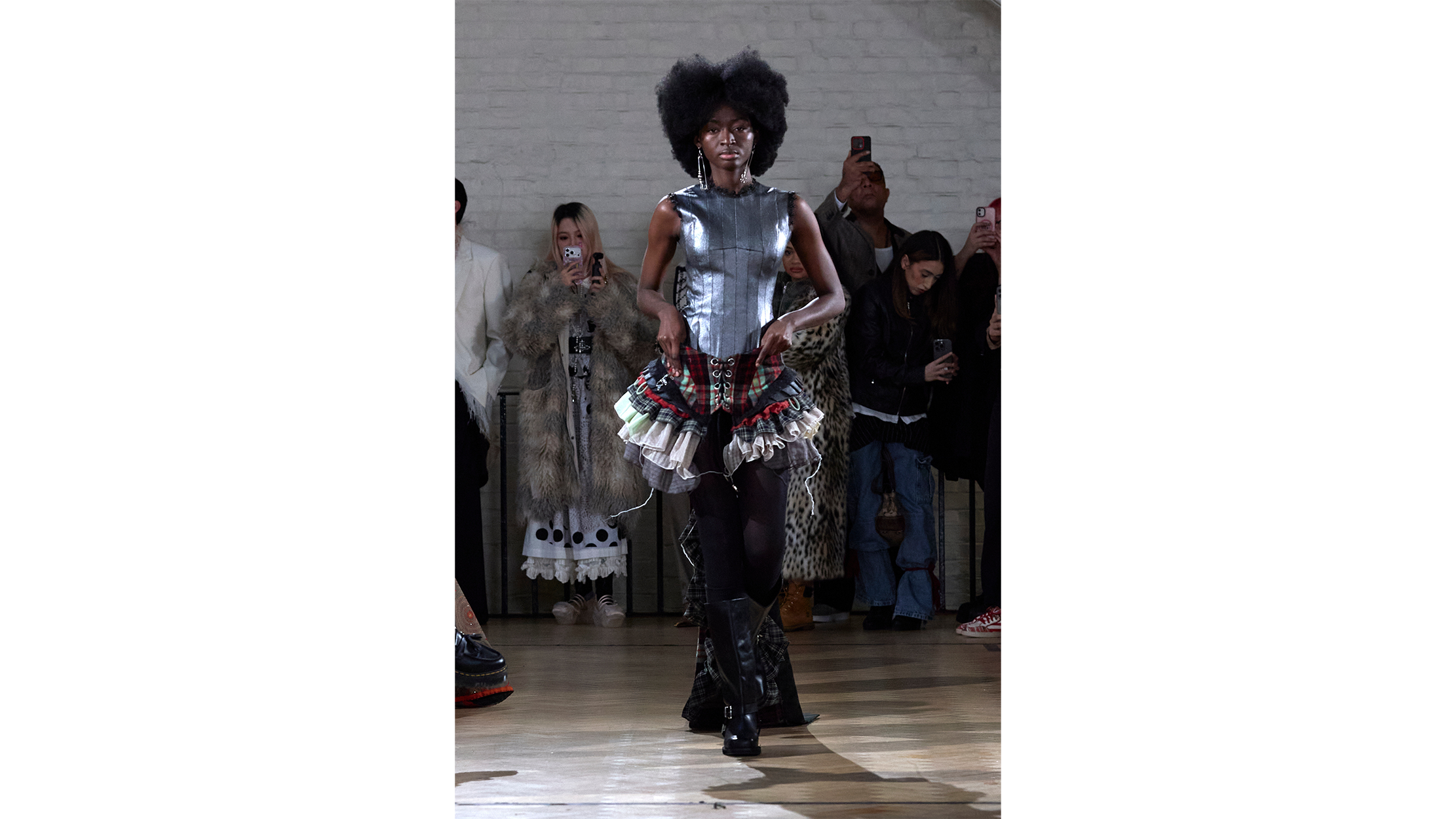
One of the evening’s most arresting narratives came from a collection rooted in the Pygmalion myth, that old story of transformation, control, and the woman reshaped by someone else’s vision. “It’s about how a woman can get trapped in a relationship and they tear her down, but she still spoke in that situation,” the designer explained backstage, her voice quiet but steady. The garments made the tension visceral. Corset dresses in olive leather with diamond quilting sat above skirts assembled from scraps of plaid, tulle, and raw-edged ruffles, beauty built from wreckage. A silver metallic bodice, rigid and reflective as a breastplate, was paired with a tartan mini-skirt whose laced eyelets ran along the seams like wounds held shut. On both corset pieces, rings appeared only on the wedding finger, a detail so small you might miss it unless someone told you to look. “They show the progression from marriage to being sad in a marriage,” the designer said. “It’s quite dark, whereas I tried to do it in kind of a beautiful way.” That tension between prettiness and pain, between romantic softness and structural severity, ran through every look. Frills and fur softened what the hardware made harsh. It was fashion as survival testimony, dressed up just enough to make you lean in before it cut.
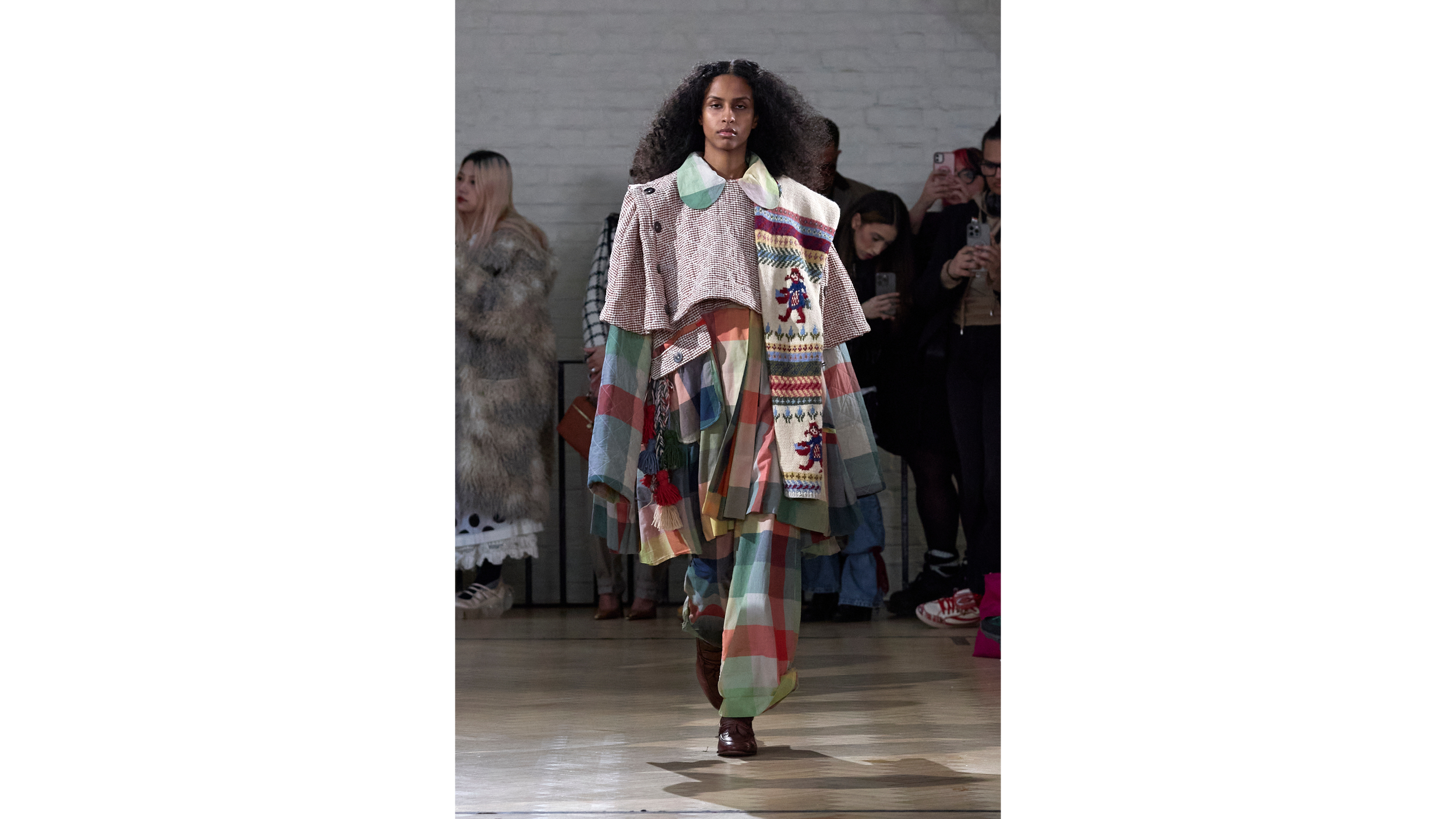
If that collection worked in shards and tension, another operated through accumulation and warmth. One designer’s work traced the geography of a split upbringing, winters in West Yorkshire and summers at a family house in Sweden, and the garments became a kind of textile atlas. “It’s like bringing those two elements together,” she said simply, as though stitching two countries into a single coat were the most natural thing in the world. The results were extraordinary. A full-length ensemble in faded pastel check, the kind of fabric you associate with old picnic blankets or a grandmother’s quilted bedspread, was layered beneath a cropped houndstooth cape and a long panel of hand-knitted Fair Isle featuring small folkloric figures in red and blue. The knitting, she admitted, had consumed far more of her time than she’d anticipated: “At the beginning, I was only doing a little bit, but now, obviously it’s a lot more.” The effect was of clothing as inherited memory, as though you could read a childhood in the pattern repeats.
Elsewhere, the personal geographies grew more specific still. Chloe Coleman built her collection around her hometown in Cornwall, that narrow, windswept tip of England, celebrating what she called “all the quirky things about it” that outsiders never bother to discover. “I’ve been away for a long time,” she said, “so every time I go back, it reminds me how much I love it there.” Meanwhile, Elizabeth Knight turned her attention to something far more mundane and, for that reason, far more revealing: the materials we use to store our possessions. Packing tape, cardboard textures, the forgotten infrastructure of overconsumption. “What if all these things that we discard and think are ugly,” she mused, “could be something?” Her garments took the overlooked substrates of domestic life and gave them the dignity of couture construction, a quiet act of material redemption.
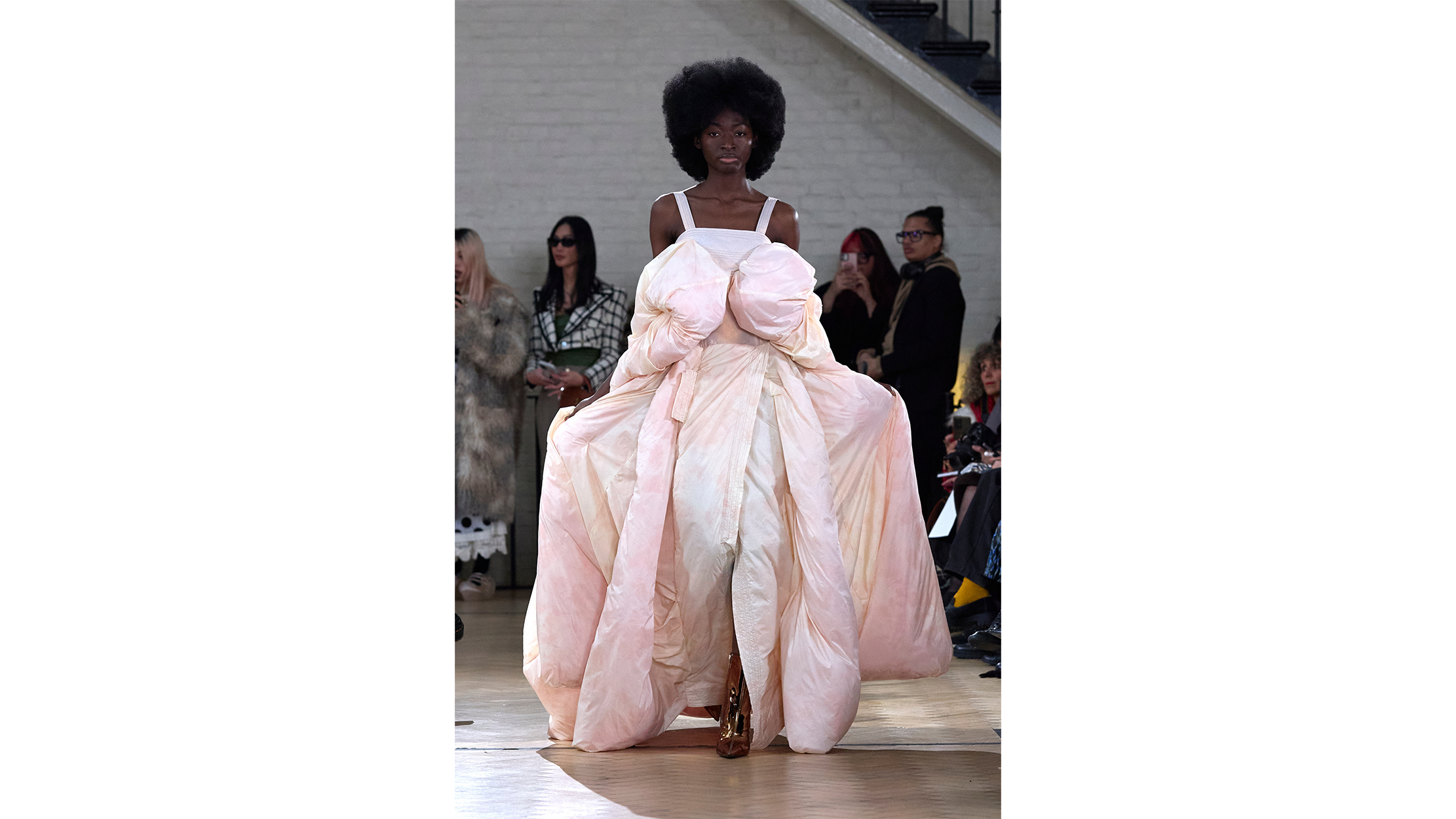
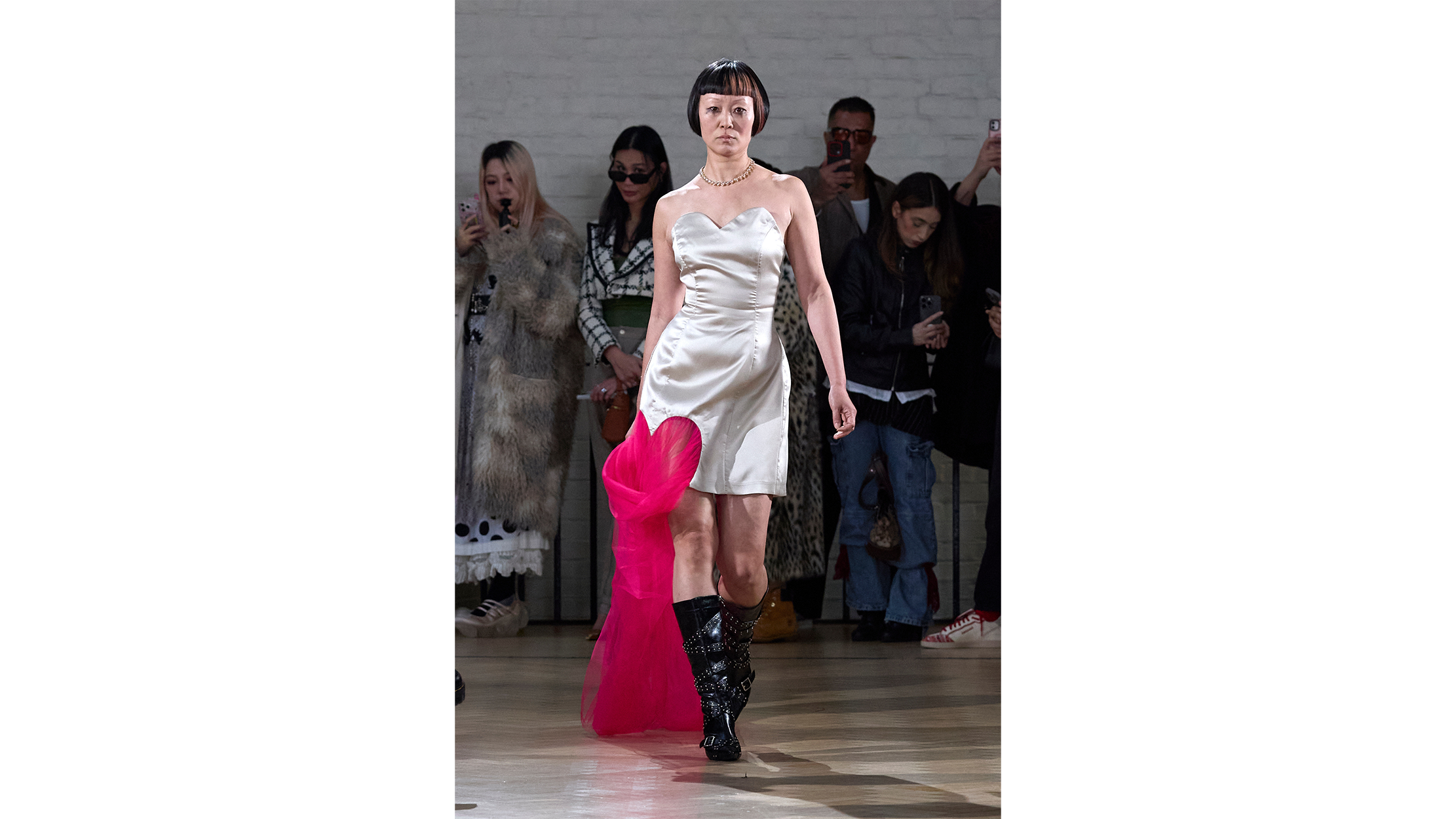
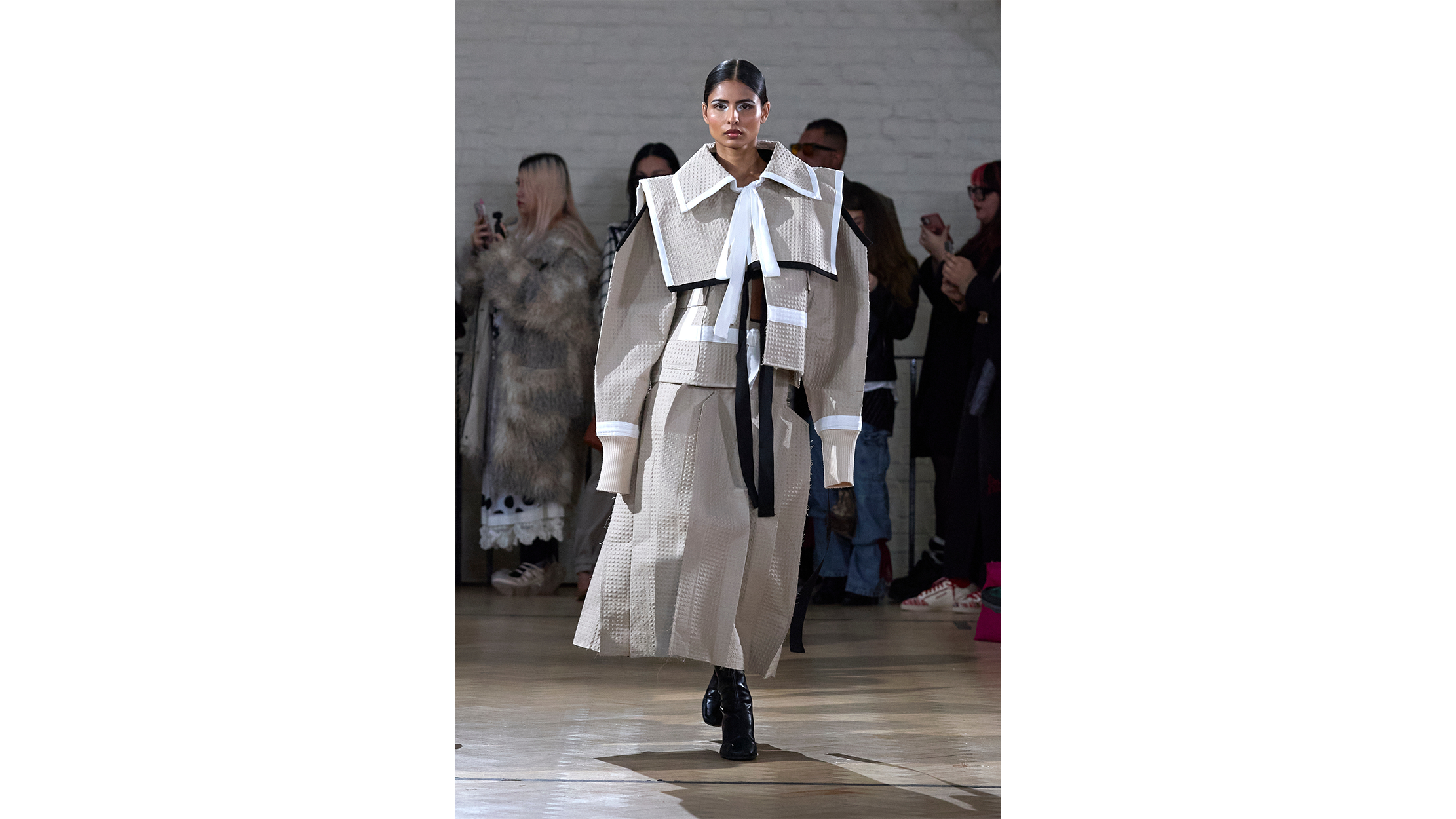
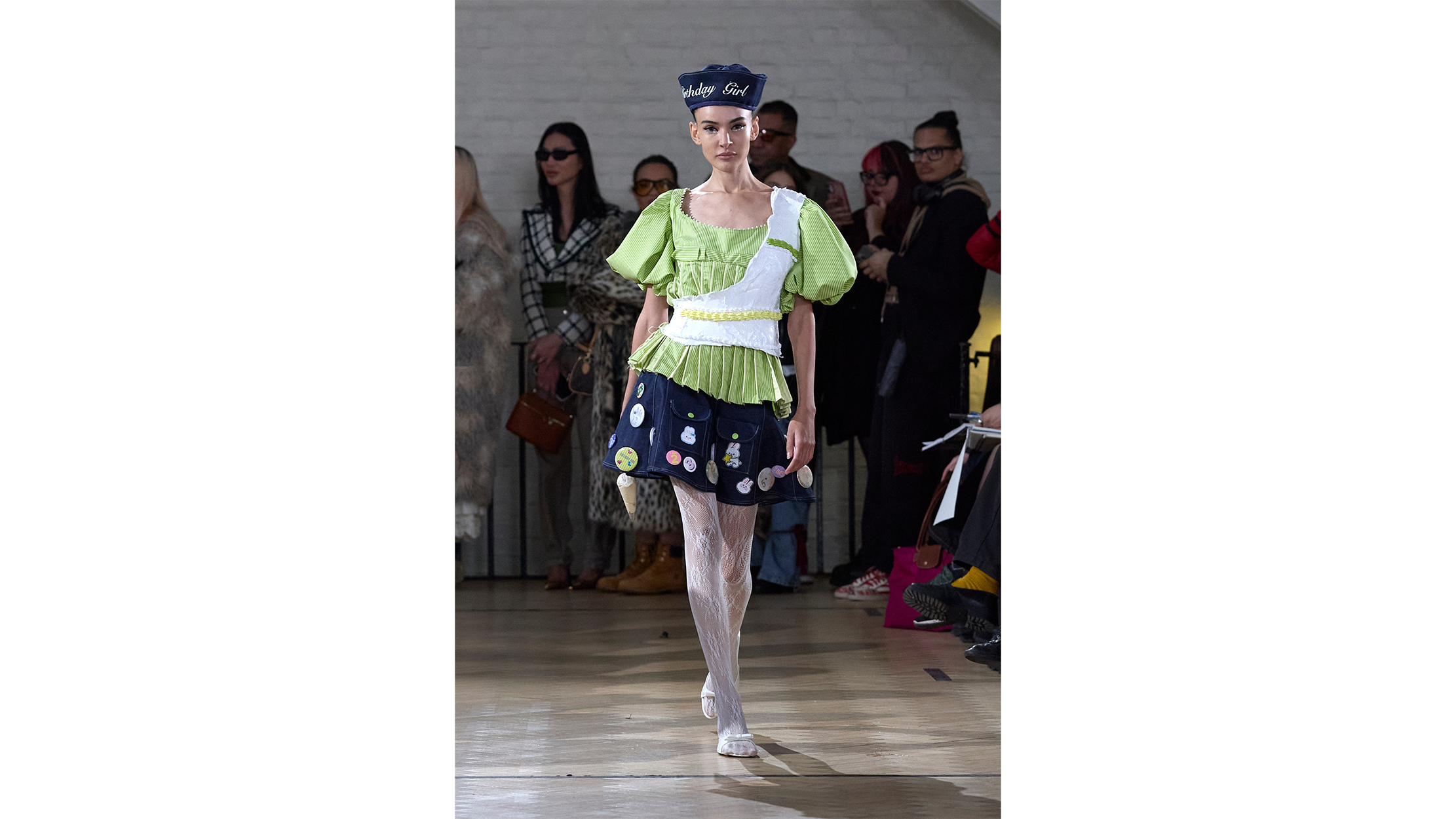
The show’s strongest visual moments arrived in flashes that lingered. A blush-pink gown, enormous, parachute-like, with the soft crumpled texture of hand-dyed silk, engulfed its model so completely that she moved through the room like a human peony, golden shoes just visible beneath the fabric’s hem. A silver satin mini-dress, cut clean and sharp as a cocktail glass, carried a single shock of hot-pink tulle blooming from its right side like a heart growing out of the body. There was wit here, and tenderness, and a refusal to let eveningwear be merely pretty. An oversized beige coat in waffle-textured fabric, finished with an exaggerated Peter Pan collar and ribbon ties in black and white, turned outerwear into architecture, each seam a deliberate decision about where the body ends and the garment begins. And a lime-green puffed sleeve blouse, paired with a denim mini-skirt covered in badges and pins and topped with a velvet “Birthday Girl” cap, carried the unashamed joy of someone who had decided to put every last thing they loved into a single outfit and wear it out the door.
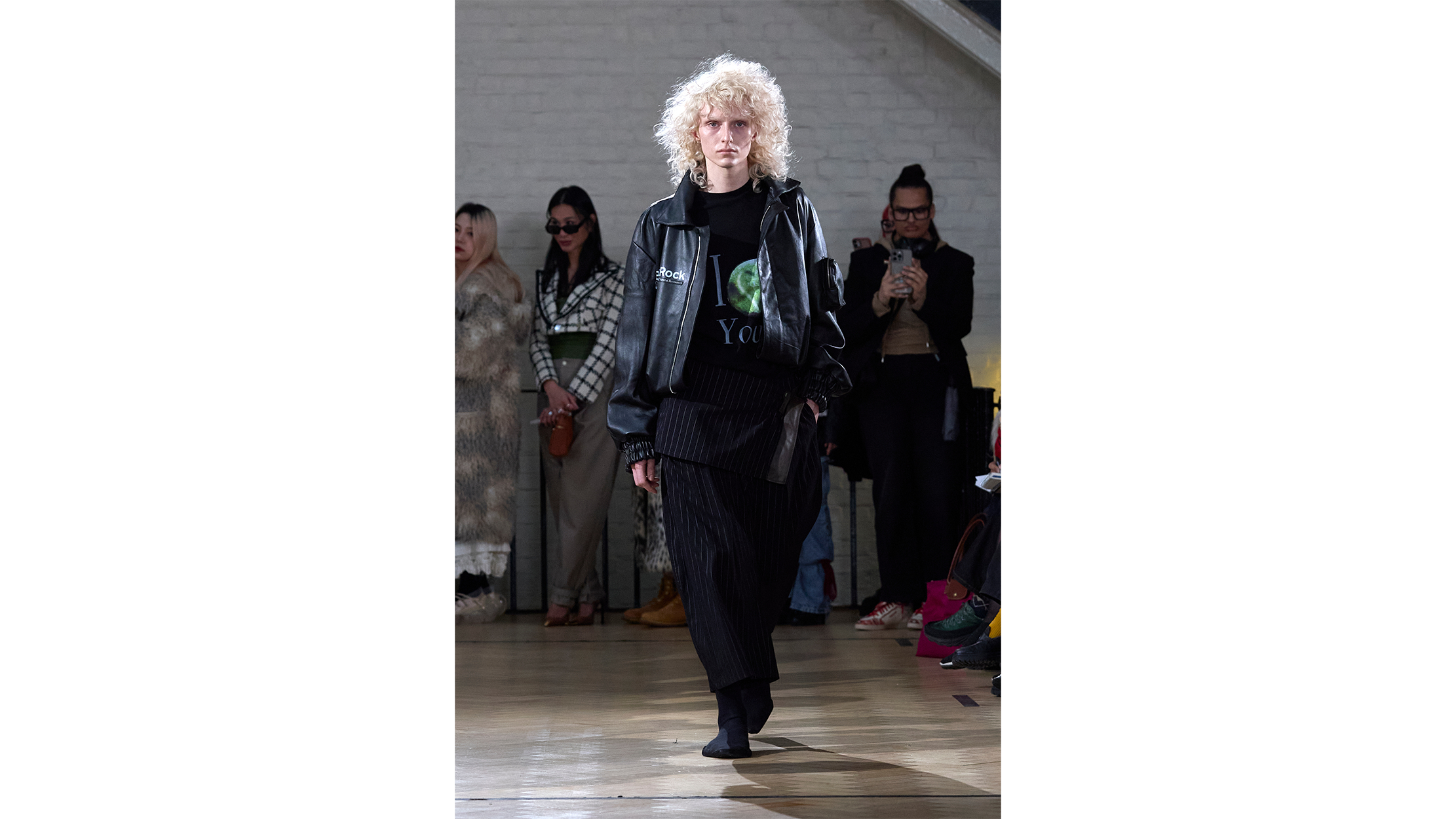
The casting, drawn entirely from Genesis Model Management, deserves particular mention. The lineup was striking in its range of ages, body types, and ethnic backgrounds, and the designers had clearly thought about who would carry their work. Older models walked corsetry and satin with the authority of women who had earned their poise; younger faces brought an unguarded rawness to the more experimental silhouettes. A male model in a cropped leather jacket over a graphic tee and pinstripe maxi skirt, his curly blonde hair unruly and magnificent, moved with the kind of careless confidence that made the audience forget they were watching a graduate show. Hair by Lea Creative and makeup by Becci’s Brushes for AOFMPro kept the beauty sharp but unfussy: slicked-back partings, minimal product, nothing that competed with the clothes.
When asked what advice she’d give to designers coming after her, Coleman didn’t talk about technique or trend forecasting. “Just trust your gut,” she said. “If you believe in something, it’ll work. You’ve just got to fight for yourself a little bit.” It was the kind of thing that could sound like a platitude in any other context, but here, backstage at Yeomanry House, surrounded by eighteen months’ worth of toile and thread and sleepless determination, it landed as something closer to testimony. What the University of Salford presented this season was not a showcase of emerging talent in the conventional sense. It was something rarer: a room full of people who had each taken something private, a marriage, a childhood, a hometown, a pile of packing materials, and made it legible to strangers. In a fashion landscape increasingly dominated by algorithmic aesthetics and content-driven design, there was something almost defiant about watching fifteen young designers insist that the most interesting clothes still begin with a story someone needed to tell
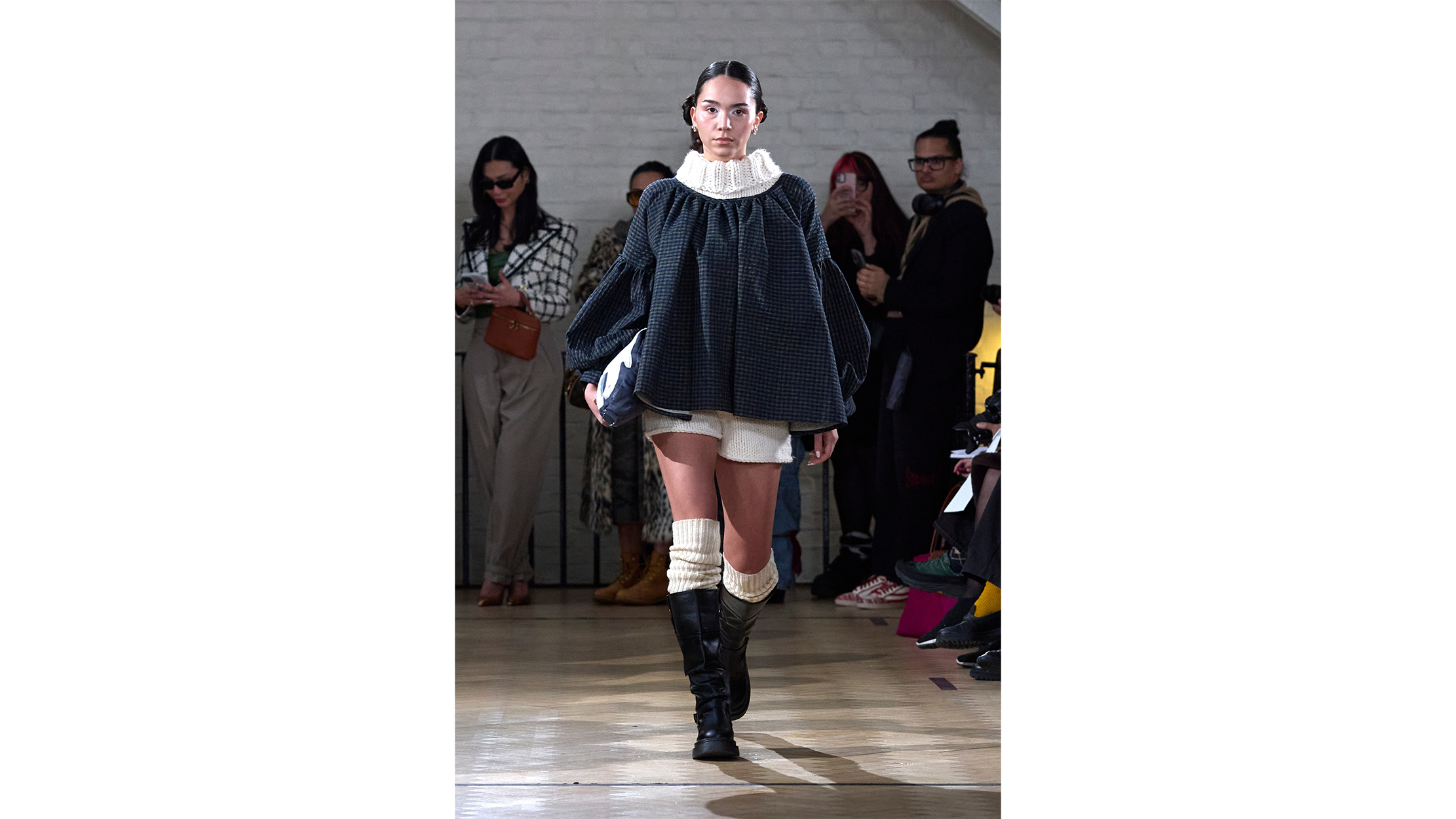
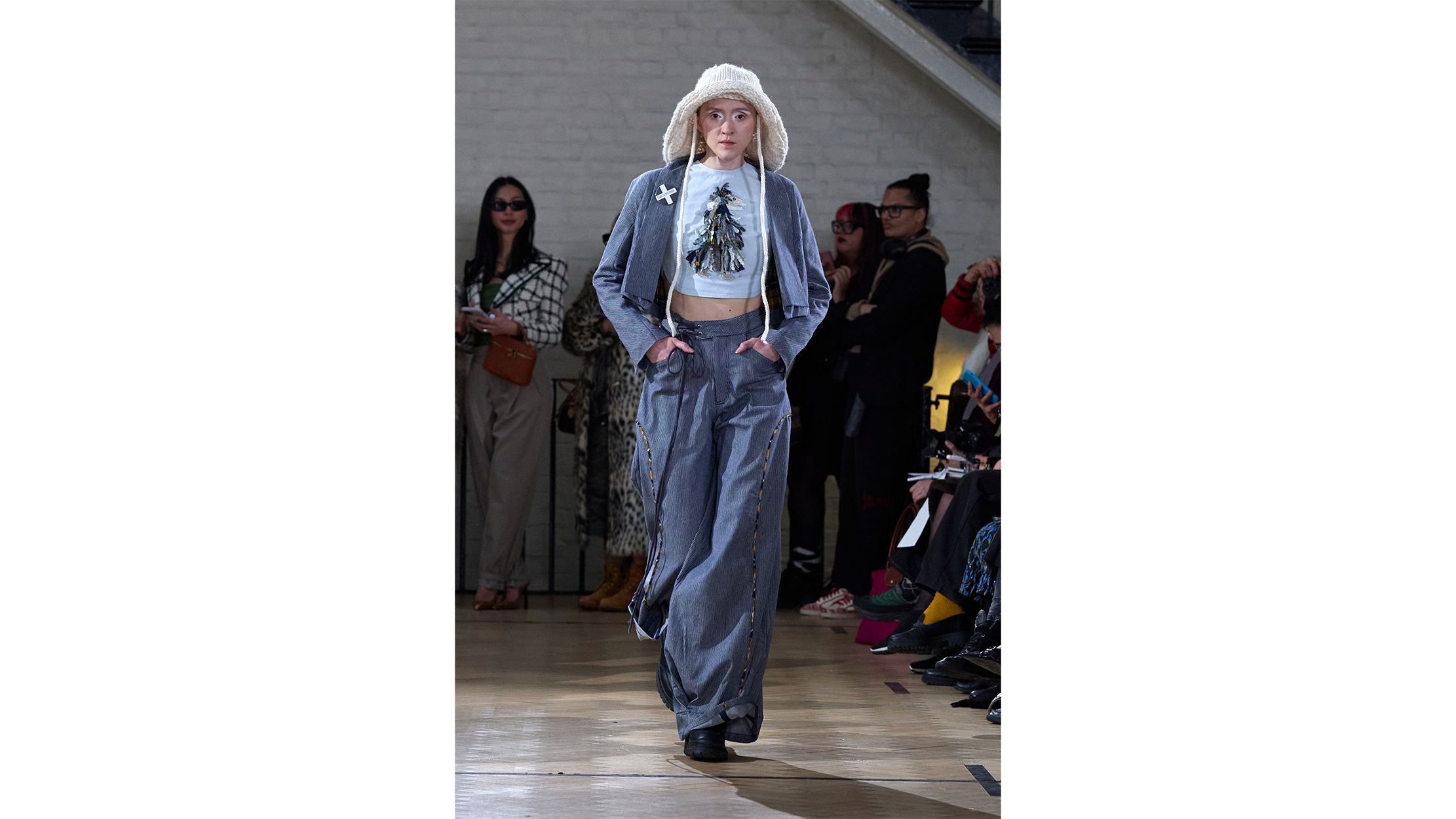
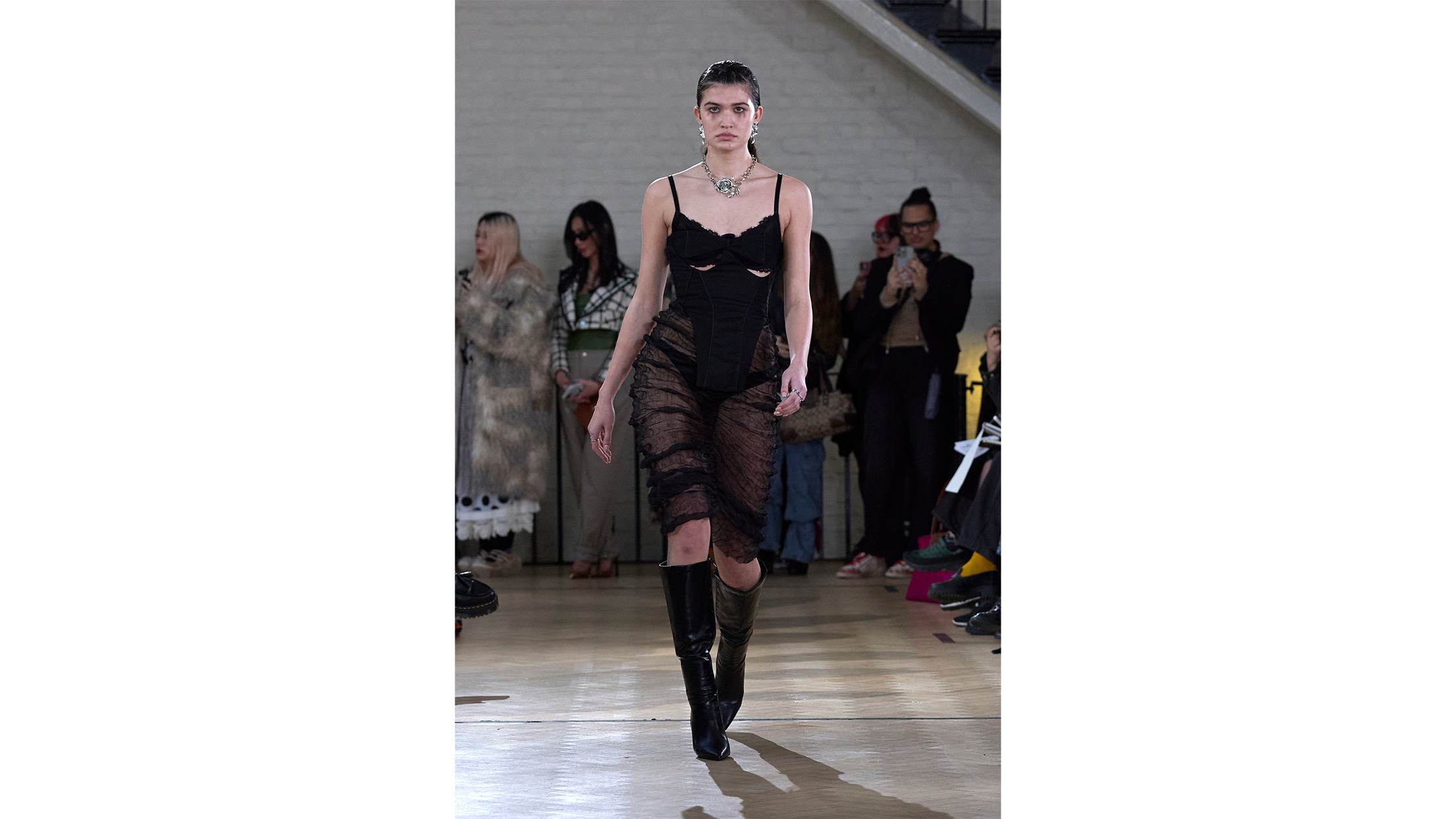
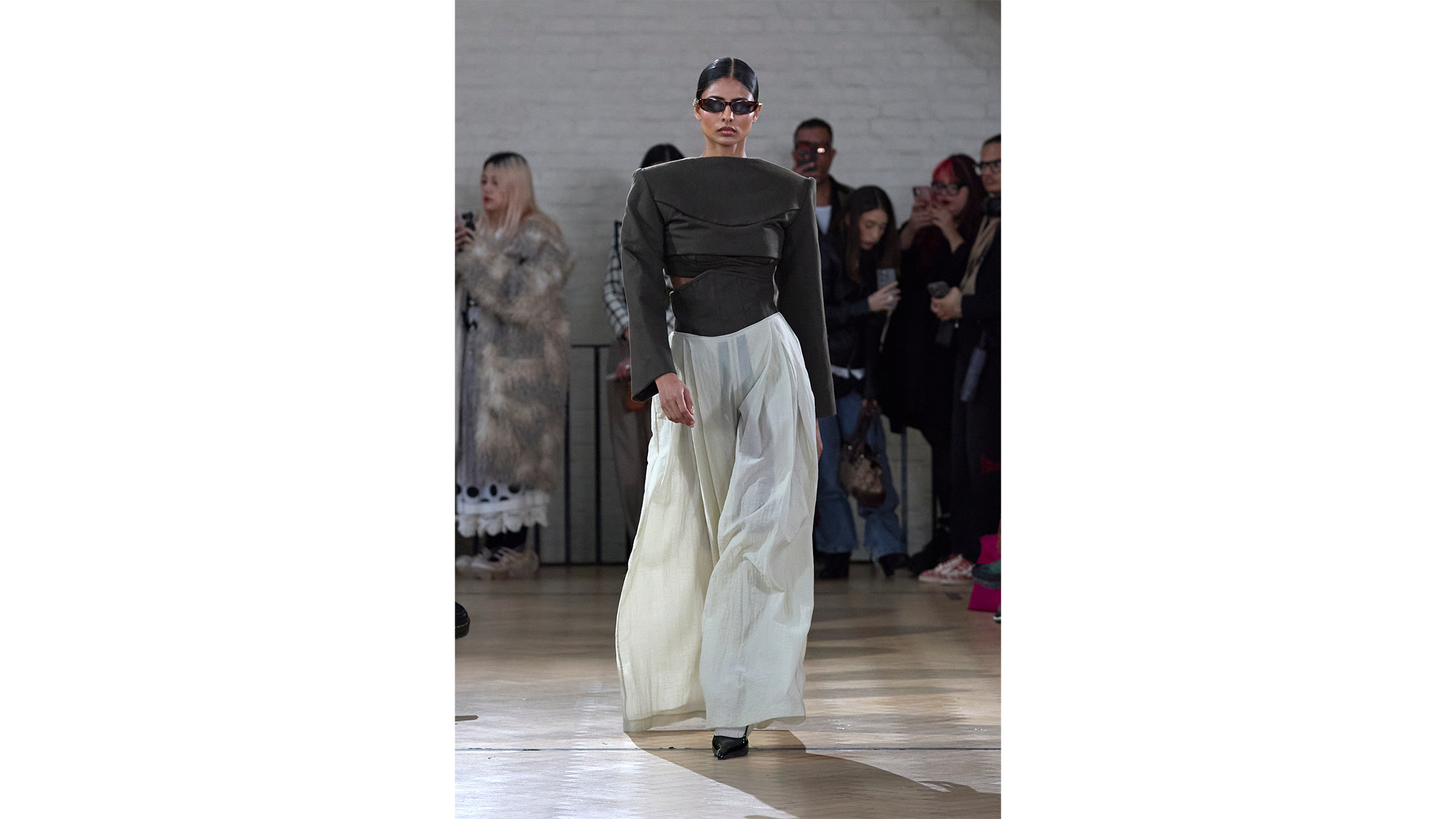
Photography by Olu Ogunshakin / Chris Yates Media for LFW.
Article by Aayush Anima Aggarwal, Contributing Editor, PhotoBook Magazine
Tearsheets by Daniel López, Art Director, PhotoBook Magazine
*Images Courtesy of University of Salford MA
RELATED STORIES