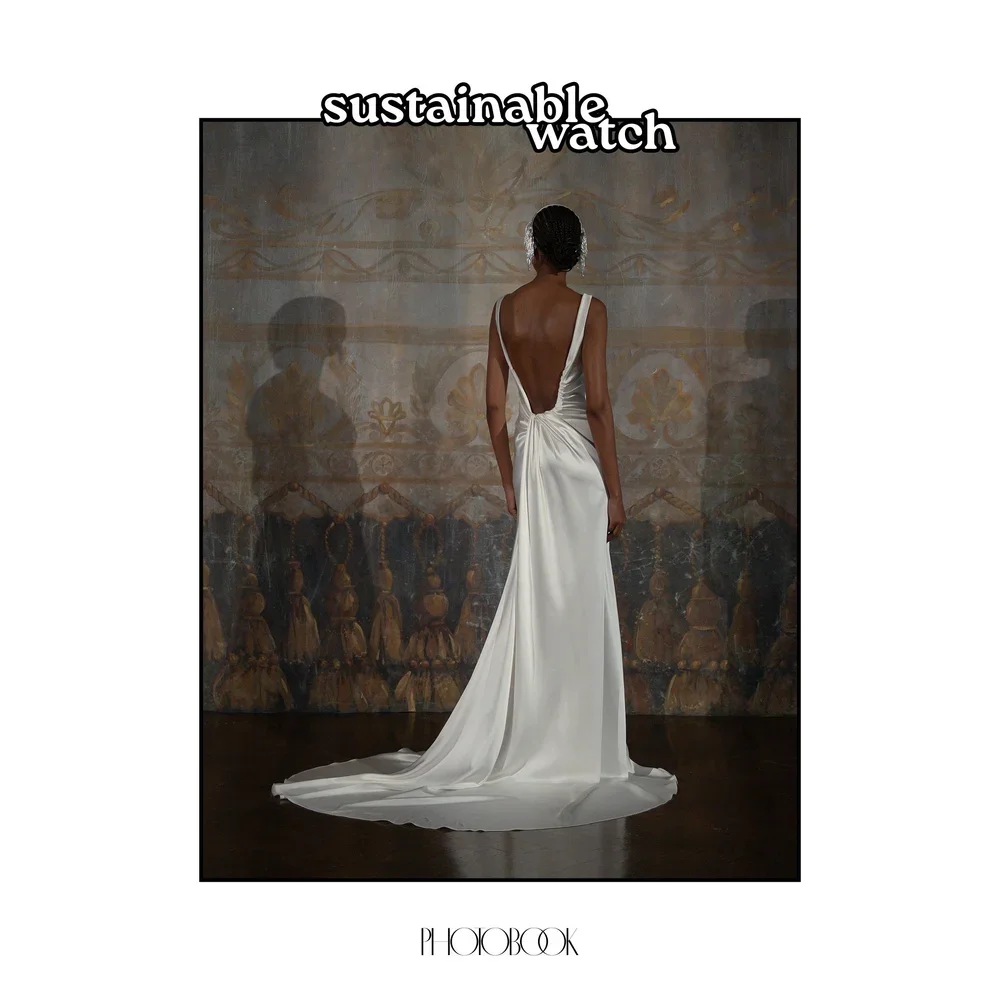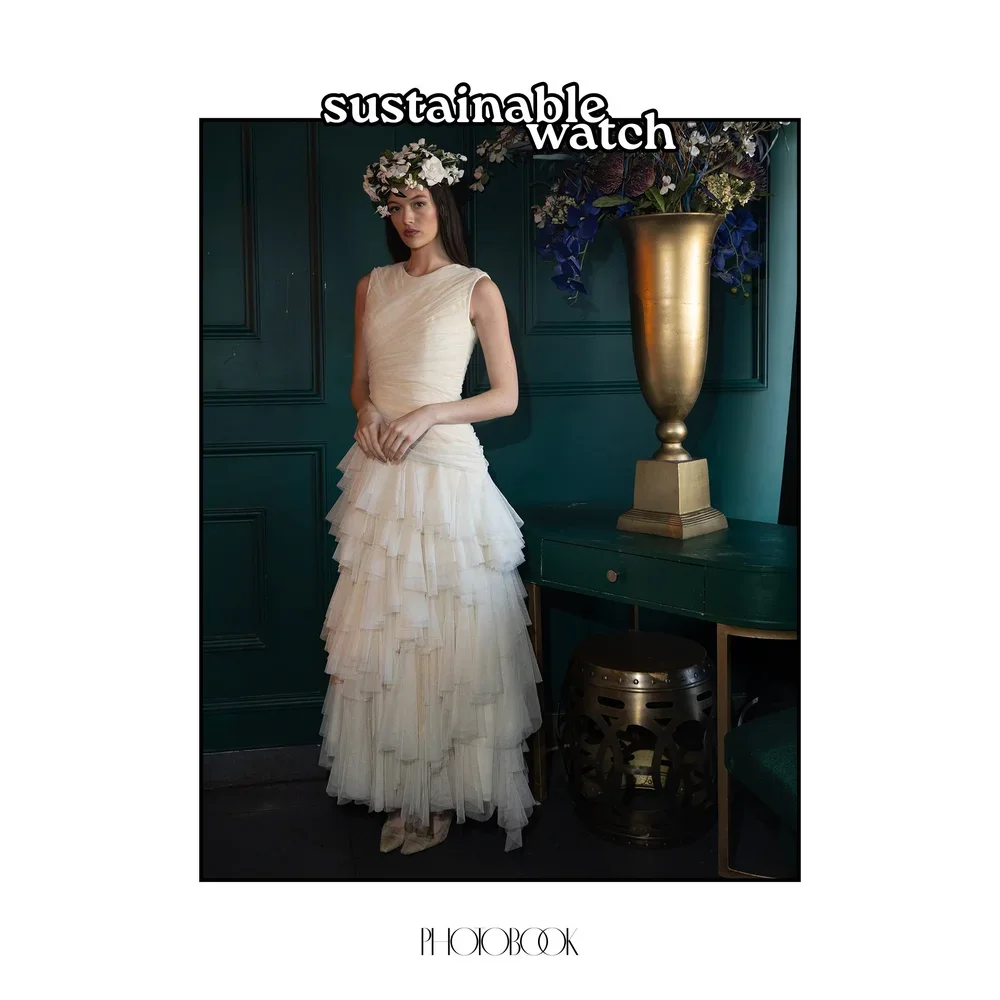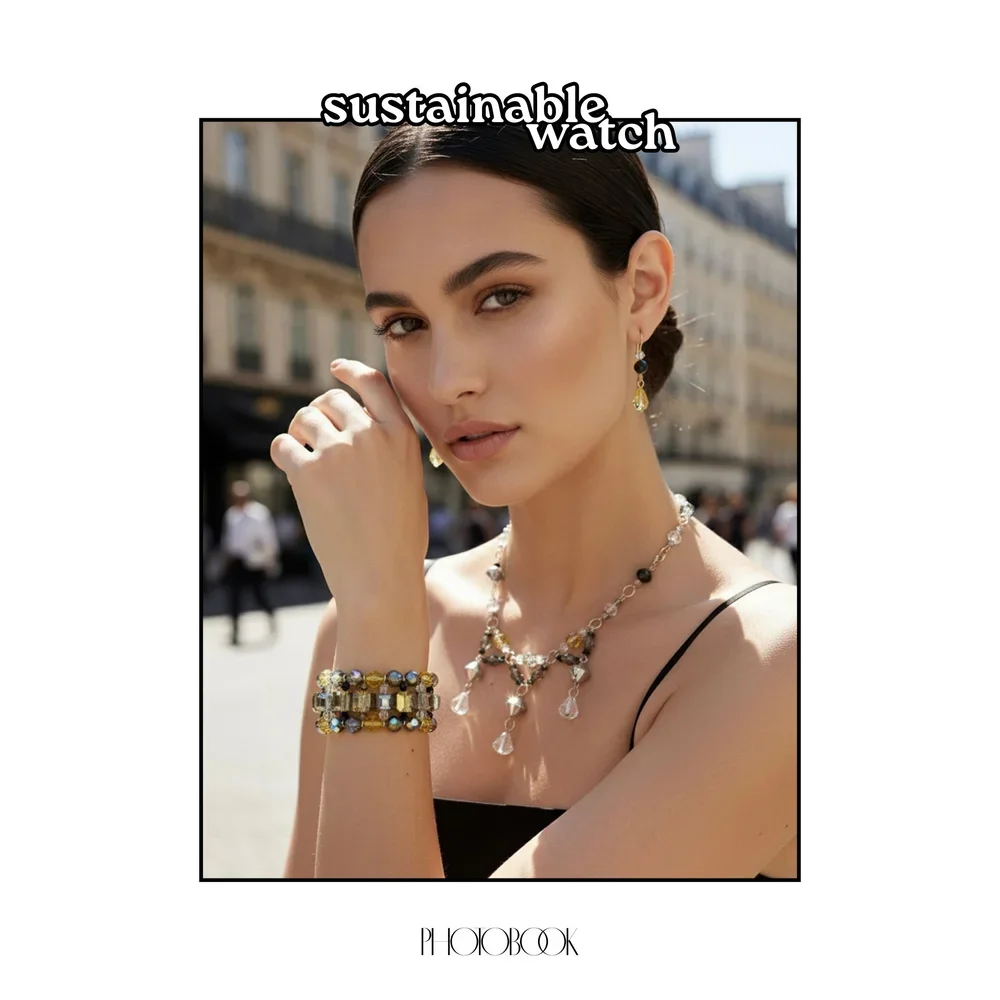
Vionnette Bridal: More Than A Wedding Dress
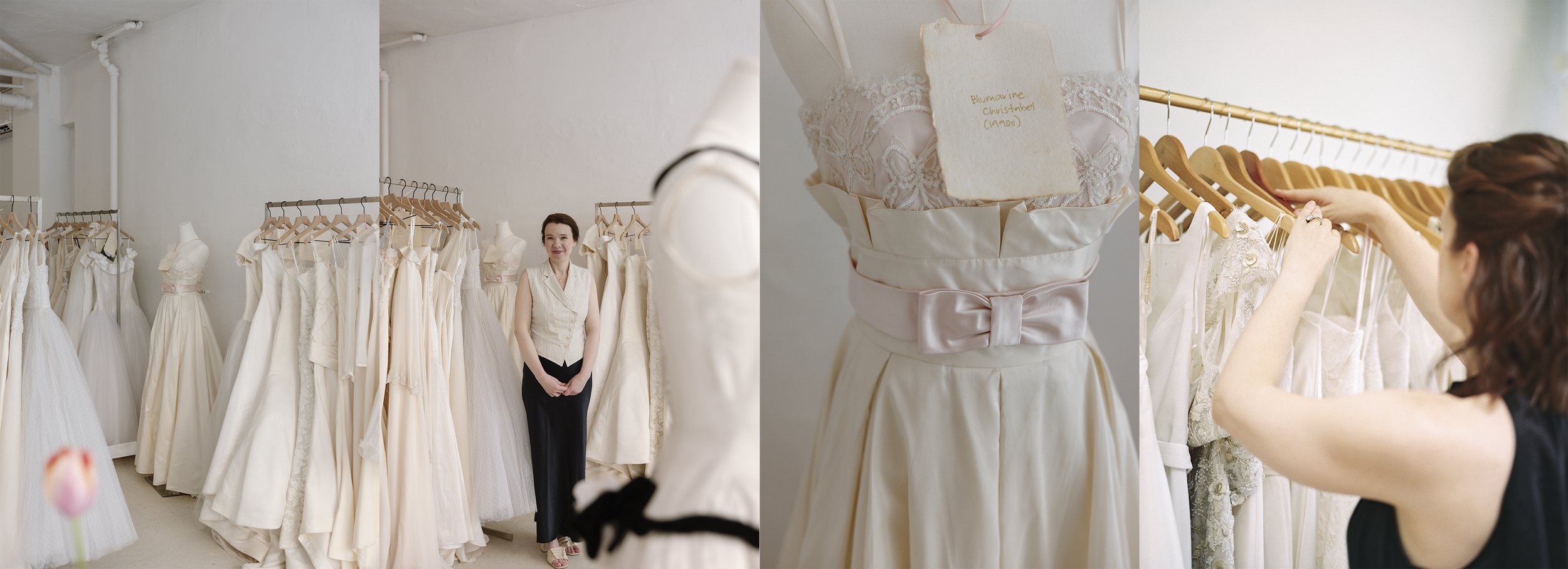
Images from Vionnette Bridal and Jean-Laurent Gaudy.
Bridal fashion has continued to evolve over time, but Vionnette has taken a different approach by celebrating craftsmanship through classic, timeless pieces. Founded by Monet Brewerton-Palmer, the boutique is dedicated to housing heirloom-quality wedding gowns that honor the history and tradition of bridal fashion. Vionnette curates the world's largest collection of couture vintage wedding dresses dating from the 1940s to 2005, featuring gowns by Vera Wang, Oscar de la Renta, Christian Dior, Carolina Herrera, Valentino, Catherine Rayner and more.
Named after Madeleine Vionnet, a designer celebrated for her commitment to craftsmanship and innovation, Vionnette embodies those same principles in its approach to wedding wear. In this interview, Brewerton-Palmer discusses what makes wedding gowns uniquely emotional pieces within the fashion industry. She also shares her perspective on how social media has reshaped bridal fashion, the importance of preserving craftsmanship at a time when trends and popularity often dominate the industry, and why wedding gowns can become lasting legacies rather than ephemeral trends.
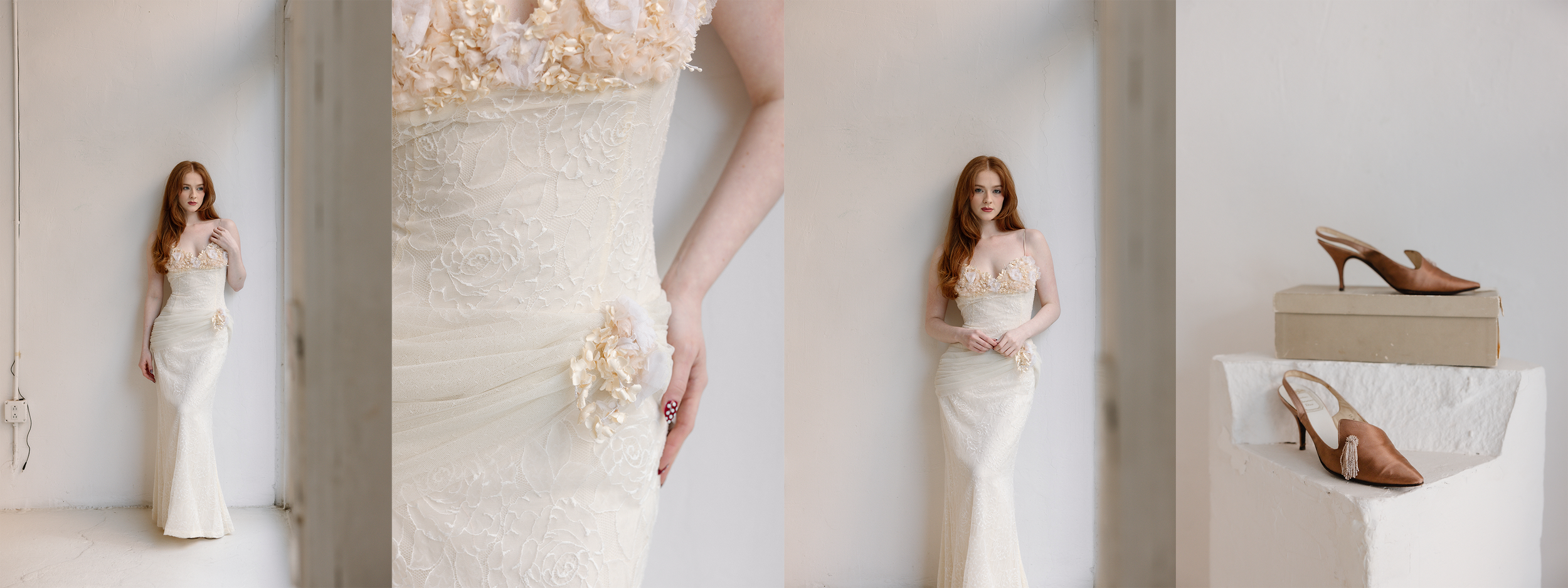
Images by Jean-Laurent Gaudy.
Vionnette was born out of a belief that something essential has been lost in contemporary bridal fashion. What do you think today's bridal industry has sacrificed in its pursuit of accessibility and trends?
That's a really good question. I don't know if I can really speak to what modern bridal overall has sacrificed. I do think there has been a convergence in modern bridal toward one silhouette, one type of dress. There isn't as much choice as many brides today are looking for.
They're searching for something that reflects who they are, something that feels special, beautifully made, and meaningful. Over and over, I hear from my brides that they feel like everything looks the same. There are basically three dresses, and everything is just a variation of one of those three styles.
I think that's probably the result of very obvious market factors and demand for those styles. Designers are going to produce what sells. When you run a business, you have to make what people want to buy, or you don't have a business. But with vintage, you tend to get a much greater variety, and it's easier to find something that truly speaks to you.
In an era where so much fashion is designed to be consumed quickly, what does it mean to build a business around preservation rather than novelty?
Around preservation instead of novelty— I love that idea. Now that you say it, I do actually think that's at the core of what I do.
I think bridal has a unique challenge because most wedding dresses are designed to be worn only once. But the dresses we focus on in my boutique are couture pieces made with the highest-quality fabrics and embellishments. They're the kind of garments that require an incredible amount of skill to create skills that are largely disappearing and, in many cases, have already disappeared from the modern bridal market. There's a form of embroidery called tambour embroidery that we still see on haute couture runway shows, but you'll almost never find it in contemporary bridal because it requires such a high degree of craftsmanship. There are very few places left that even teach it. Yet we saw techniques like this on Vera Wang gowns in the 1990s.
For me, it's really important that we continue showcasing dresses, embellishment styles, fabrics, and craftsmanship that have stood the test of time—pieces that someone poured care and love into creating, and that required years of training to master. We can't simply throw those things away—not just the dresses themselves, but the skills, techniques, and artistry that went into making them.
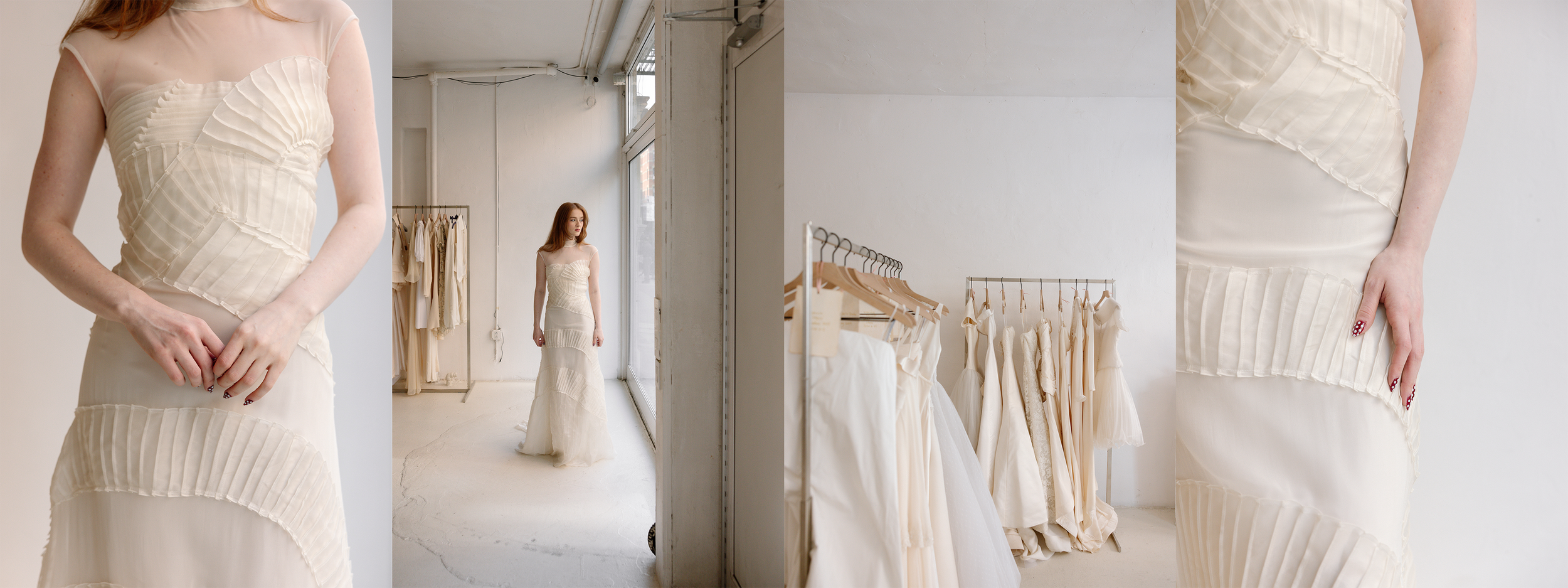
Images by Jean-Laurent Gaudy.
You've intentionally resisted the trend of transforming heirloom gowns into mini dresses. What conversations do you hope brides have when considering the long-term legacy of a garment?
I think it's important for brides to consider the long-term legacy of a garment. There are wonderful ways to repurpose a wedding dress without immediately limiting its lifespan in the way that shortening it into a micro-mini often does. Once it's altered that dramatically, it typically becomes a garment that isn't worn again.
That said, I still love that it's being used as a secondary bridal outfit. But many of the dresses our brides bring in from their mothers have thousands of pearls, sequins, or beads, and yards of lace on the train. These are often gowns from the 1980s and 1990s, so they're full of fabric and embellishment that can be repurposed in ways that preserve the garment's legacy.
For example, we make a lot of veils from a bride's mother's dress. We'll take lace from the train and incorporate it into the comb of a veil to create a mantilla-style veil. Or we'll remove the beadwork and use it to create a beaded veil. Those pieces can have a lifespan that extends far beyond a single wedding. They're tangible heirlooms that can be worn by a sister, a daughter, or another family member in the future.
We even have historical examples of royal veils that have been worn by 10 or 12 people over the course of 150 years. Those pieces become deeply meaningful because they're shared across generations. I definitely don't want to criticize anyone who chooses to turn a wedding dress into a mini dress because I think it's a beautiful tribute to a relative. I just think there are other ways to preserve those garments for longer; ways that aren't tied to a trend that's popular now but will eventually fade, as all fashion trends do.
The boutique is named after Madeleine Vionnet, a designer who championed craftsmanship and longevity. How does her legacy continue to shape your vision for Vionnette today?
Madame Vionnet was a really complex and fascinating person. She described herself as ‘the enemy of fashion,' which I think is such an interesting phrase for someone who built such an influential fashion house and continues to have an enormous impact on fashion more than a hundred years later.
I think what she meant was something similar to the famous Yves Saint Laurent sentiment that 'fashion fades, style is eternal.' She wanted to create garments that had longevity—pieces that felt beautiful, comfortable, and enduring.
She was also a pioneer in so many ways beyond design. She championed labor protections at a time when they barely existed in any meaningful or scalable way. Her employees had access to healthcare, an on-site doctor, childcare, and benefits that, even today, many people would consider remarkably progressive for an employer to provide. She was one of the most fascinating historical figures imaginable, and I couldn't have imagined a better person to name my store after.
Vintage fashion is often discussed through the lens of sustainability. Do you see Vionnette's work as part of a larger conversation about responsible consumption, or is it something more personal than that?
For me, it's actually more personal than the broader conversation about responsible consumption. My focus is really on preserving important techniques, understanding fabric, appreciating construction, and recognizing the craftsmanship that goes into creating these garments. Of course, that naturally connects to the conversation around sustainability because it raises questions about how clothing is made and produced. Since I've been doing this, I've seen fast fashion enter the bridal space in a way I never really anticipated. Bridal gowns are now widely available through mass-market retailers and online marketplaces, which has changed the landscape significantly. Sustainability is certainly part of that conversation, but I wouldn't say it's my primary motivation. That's largely because I work within such a specific niche. We focus on museum-quality pieces—garments made from beautiful fabrics with exceptional embellishments that required an incredible amount of time and skill to create.
More broadly, though, I absolutely believe vintage bridal is a wonderful, more sustainable option, no matter where you find it. Whether it's from a specialty boutique or even a thrift store, choosing a vintage gown gives an existing garment a new life while preserving the craftsmanship behind it. We try to learn as much as we can from the original owner whenever we have the opportunity, which is often the case because many of our gowns come directly from individuals. They usually love sharing the story behind their dress.
We often receive original wedding photographs, and we always ask about the history of the gown. Whenever possible, we also try to connect our current bride with the previous owner, as long as both of them are interested. Most of the time, they are. It creates a really meaningful connection and allows the story of the dress to continue with its next chapter.
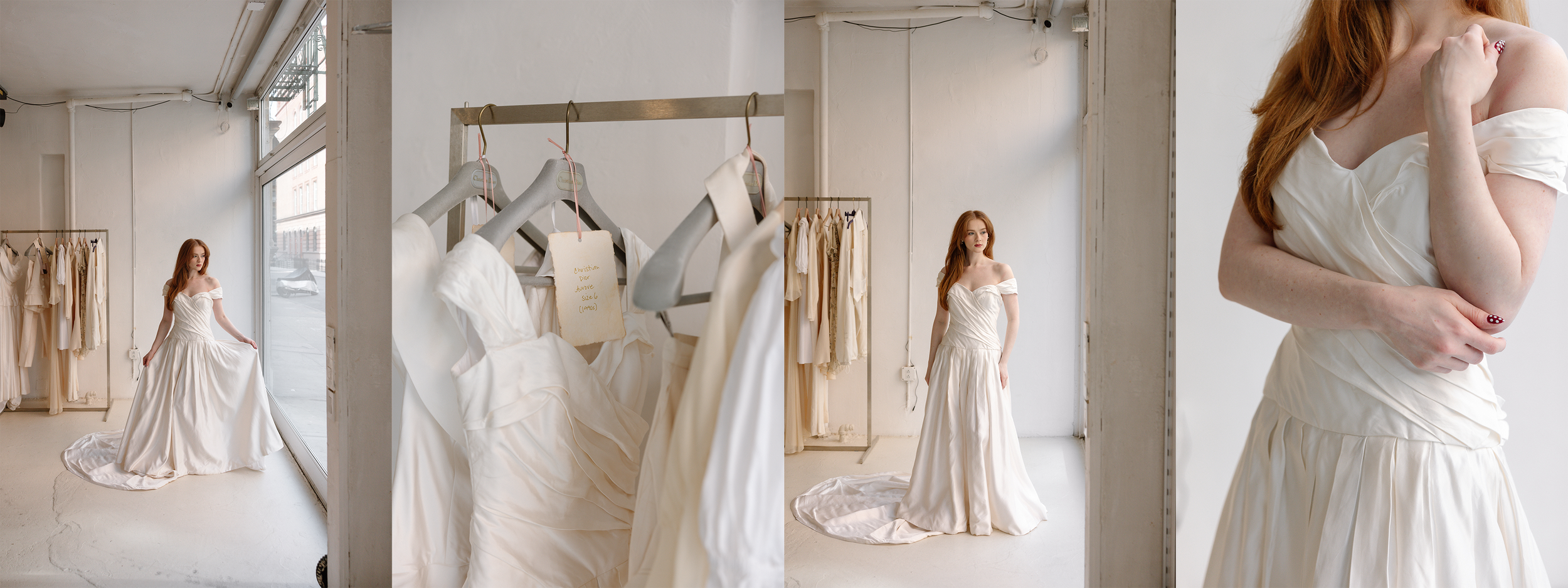
Images by Jean-Laurent Gaudy.
Restoring a wedding dress requires balancing historical preservation with the realities of a contemporary wedding day. How do you decide when a garment should be altered and when it should remain untouched?
That's a great question, and it's actually something our staff discusses quite often. Some alterations are, of course, necessary and inevitable. We want our brides to look and feel their best on their wedding day, and alterations are often essential to making that happen. If alterations are the difference between a dress being worn or remaining in storage, then we absolutely want the dress to have a second life. Especially when we've acquired it directly from the original owner, their hope is for someone else to wear and love it—not for it to sit in a collection.
That said, there are certain lines I won't cross, and it really depends on the techniques used to create the dress. Some forms of embroidery are simply too significant to alter. If someone wanted to shorten a floor-length gown covered in intricate hand-embroidered seashells, pearls, or similar embellishments into a knee-length dress, my answer would be no. We also carry some haute couture pieces from the 1950s and 1960s. Anything that truly qualifies as haute couture would not be sold if the intention were to make substantial alterations beyond minor adjustments, such as taking in the waist. Those garments are works of craftsmanship that deserve to be preserved.
On the other hand, if we're talking about a wearable wedding dress, say, a Vera Wang design from the 1990s that's still relatively common—that's a different conversation. There's a particular Vera Wang gown that appeared in the Estée Lauder Beautiful advertisements, and I'm convinced it's one of her best-selling designs. There are probably thousands of those dresses still out there. In cases like that, our priority is making sure the dress is worn and loved again. If a bride needs to size it down by two sizes so it fits her perfectly, we're comfortable with that. There are enough examples of those gowns in existence that thoughtful alterations don't threaten their legacy. We want our brides to feel beautiful, and that's what the original owners want as well. When it comes to truly historic pieces, though, that's where we draw the line.
Many of the gowns in your collection were created before the rise of fast fashion. How has the relationship between craftsmanship and value changed in the bridal industry over the past few decades?
It's very individual, first of all, but I do think some things have changed. One thing that comes up frequently with my particular clientele is a preference for natural fabrics. That's actually much harder to find in contemporary bridal. Polyester is very common today because there simply isn't as much consumer demand for natural fibers. That's not necessarily a criticism of today's bridal designers. They're contributing a great deal to the industry, and if there isn't demand for certain materials or techniques, it doesn't make sense for them to produce them. Designers ultimately have to respond to what their customers want.
Fast fashion entering the bridal space is a separate conversation altogether. We can see that wedding dresses are now widely available through retailers like Amazon, and clearly some people are buying them. What I don't know is the scale of that shift. Are most brides actually purchasing fast-fashion wedding dresses, or are they still choosing traditional bridal boutiques, borrowing dresses, or exploring other options? I don't have data to answer that question, and l'd be very interested to see the research if someone has studied it.
How do you balance preserving a historic garment with allowing a bride to make it feel contemporary and personal?
Very often, it only takes a small change to make a vintage dress feel contemporary. Sometimes it's as simple as lowering the neckline slightly, raising the waistline a bit, or shortening the hem just enough. Those subtle alterations can completely change how someone perceives a dress. Opening the neckline by even a quarter of an inch can make an enormous difference in helping it feel more modern, and changes like that are generally no problem.
There are other alterations we make as well, but we always try to preserve as much of the original garment as possible. For example, removing long sleeves is a request we receive quite often. Fully integrated long sleeves were much more common on bridal gowns from the 1990s and earlier, partly because expectations around comfort and weddings were different. Brides also tended to have more traditional receptions, so there was less emphasis on changing into a more dance-friendly look. If we remove sleeves, we always keep them with the dress. We save every original piece we can and make alterations in a way that allows the sleeves to be reattached or converted into detachable sleeves if the bride ever wants that option. Preserving the integrity of the garment is always an important part of our process.
Even when a bride tells us she doesn't want a particular element—like the sleeves on a Vera Wang gown—we'll remove them, but we never throw those pieces away. We maintain a large archive of fabrics, embellishments, and original components salvaged from dresses that were either too damaged to sell or had pieces removed during alterations. Preserving those materials allows us to use them in future restorations and customizations. For example, if another bride wants additional buttons added down the train of her Vera Wang gown, we have thousands of original Vera Wang buttons in a wide range of sizes. We always try to replace like with like, matching materials from the same designer and era whenever possible. Our goal is to ensure that every alteration maintains the dress's historical integrity while still allowing it to meet the needs of the bride wearing it today.
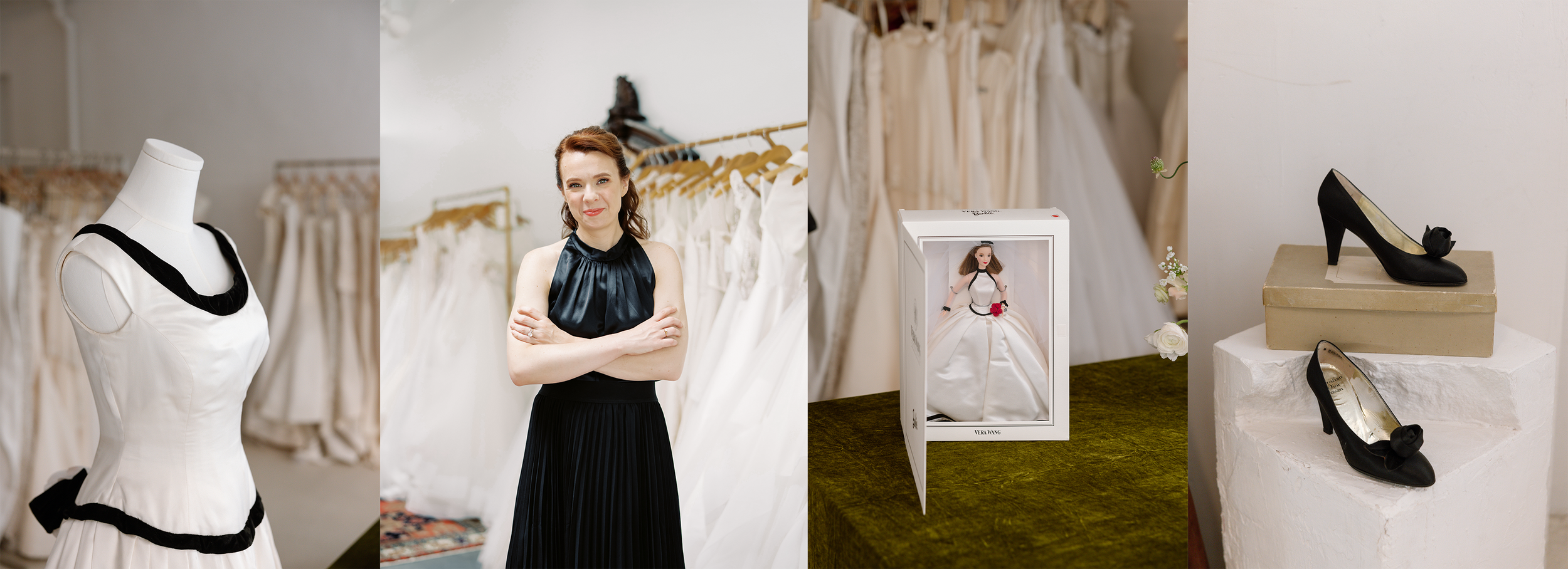
Images from Vionnette Bridal and Jean-Laurent Gaudy.
Fashion is often viewed as disposable, yet bridal-wear is one of the few categories designed to hold emotional value for generations. Why do you think wedding dresses occupy such a unique place within fashion history?
I think this is something I could write a dissertation on. Throughout history, wedding dresses have been the garments that people have devoted the most time, effort, and care to creating and wearing. During World War II, brides made wedding dresses from parachute silk when fabric was scarce because of wartime rationing. There is also a beautiful example in a museum of a dress worn by a woman in a post-war internment camp after liberation. Her fiancé traded a pack of cigarettes for a parachute, which was then made into her wedding dress. She wore it for her wedding, and afterward, I believe more than 25 other women went on to wear the same dress. To me, that's such a powerful testament to what a wedding dress means. It speaks to the importance people place on being able to wear a white dress for the ceremony and what it means to become a bride.
Beyond that, if we look throughout history, wedding dresses have often received as much attention and admiration as coronation gowns. They mark one of the most significant moments in a person's life. It's the day you want to feel your most beautiful and have something truly special to commemorate the occasion. Of course, that hasn't been true for every individual. Some women have chosen to wear suits, and during wartime many brides simply wore their best practical outfit because that's what circumstances allowed. But it's difficult to think of another period in modern history when the wedding dress hasn't held such profound emotional significance for so many people. It has consistently represented not only a deeply personal milestone but also some of the highest expressions of craftsmanship and artistry created by the great couturiers of their time.
How has social media changed the way brides consume bridal fashion, and do you think that has affected originality within the industry?
I think it's especially relevant for contemporary bridal designers. In some ways, I do think social media can make a wedding dress feel less special. Thirty years ago, take the Vera Wang gown we were talking about—the one featured in the Estée Lauder Beautiful campaign—thousands of brides wore that dress, but they didn't necessarily know anyone else who had chosen it because they weren't constantly seeing other people's wedding photos online.
Today, I think that same dress might not have been as widely embraced because people would see it all over Instagram or TikTok and think, "Everyone has this dress." Social media has changed our perception of originality. From a bride's perspective, I think it can make something that genuinely feels meaningful and beautiful to her seem less special simply because she perceives that many other people have it. But everyone deserves to feel beautiful on their wedding day and to wear something that feels special to them, regardless of how many other people have worn it.
With social media, if you see two major influencers wearing your dress, it can suddenly feel like everyone is wearing it. In reality, that's only two people, but the saturation of those images creates the impression that the dress is everywhere. That can lead to unnecessary anxiety and even dress regret as the wedding approaches. Of course, social media also has tremendous benefits. It's incredibly valuable for marketing and growing a business—we rely on it heavily ourselves. But for contemporary bridal designers, it creates new challenges, and for brides, I think it can sometimes make choosing a dress more emotionally complicated than it needs to be.
If you were curating a museum exhibition from the Vionnette archive, what story about fashion history would you want visitors to leave with?
Oh, I love that question. It's actually something I think about a lot. We recently updated our wills, and my lawyer asked what I wanted to do with my personal collection. I've been collecting fashion for a long time, and I have a number of notable pieces, so l've spent a lot of time thinking about where they'll eventually go. What I hope people leave with is exactly what we've been talking about throughout this conversation: an understanding of just how much beauty, skill, creativity, and imagination have been poured into this single garment throughout history.
A wedding dress isn't just clothing. It's the result of extraordinary craftsmanship, artistry, and tradition. I hope people come away with a greater appreciation for the generations of makers who created these garments and for the cultural and emotional significance they continue to hold.
Interview Questions by Emma Green, Contributor, PhotoBook Magazine
Opener by Ali Rosoff, Contributor, PhotoBook Magazine
Tearsheets by Daniel López, Art Director, PhotoBook Magazine
Related Stories