The Sweetness of Belonging: A Discussion with "Cookie Love" Director Sari Arambulo
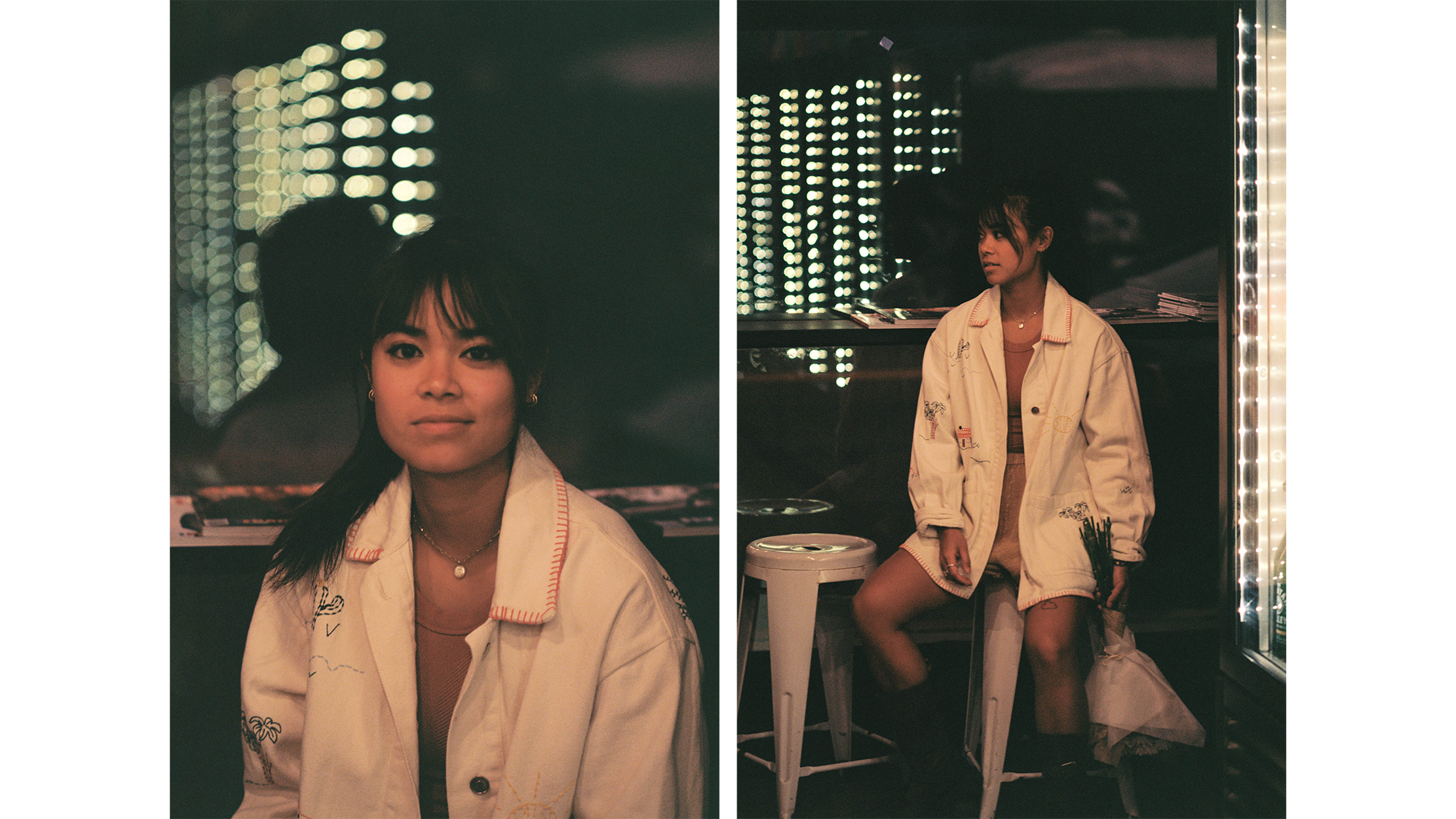
Photo by Rachel Kupfer
The scent of warm butter and freshly baked cookies may be what first draws you into “Cookie Love,” but it is the humanity at its center that lingers long after the final frame. On the surface, the film is an intimate portrait of Jean, a Taiwanese American baker who has built an unexpected home in Paris by introducing American cookies to the city synonymous with French pastry. Yet, director Sari Arambulo quickly reveals that this is not simply a story about baking.
Instead, “Cookie Love” unfolds as a thoughtful meditation on identity, belonging, cultural inheritance, and the quiet courage it takes to create a life entirely your own.
Set against the timeless rhythm of Paris, the nine-minute documentary embraces a pace that feels increasingly rare. Rather than rushing from one moment to the next, the film lingers, allowing flour to scatter across a countertop and handwritten memories to settle alongside carefully crafted pastries. Every frame feels intentionally composed, drawing subtle inspiration from the symmetrical precision of Wes Anderson while maintaining the intimacy and emotional honesty of documentary filmmaking. The result is a visual language that feels nostalgic, transforming ordinary moments into something quietly extraordinary. At the heart of the film is Jean's philosophy of "wabi-sabi", the Japanese belief that beauty exists within imperfection and impermanence. That ethos extends beyond the cookies she bakes and into every aspect of her story. Her multicultural identity, shaped by Taiwanese heritage, an American upbringing, and a life built in France, finds expression not only through her recipes but through the way she moves through the world. In Arambulo's hands, food becomes more than nourishment; it becomes memory, connection, and a vessel for understanding who we are and where we belong.
What makes “Cookie Love” so affecting is its refusal to separate artistry from everyday life.
The documentary celebrates craft without losing sight of the person behind it, balancing mouthwatering images of browned butter, chocolate, and delicate pastry with a deeply personal portrait of ambition, love, and resilience. Beneath its warmth lies a universal story about pursuing a dream that exists outside conventional expectations, honoring one's heritage while embracing new cultures, and finding beauty in the imperfect path that leads us home.
Following the film's premiere at the Tribeca Festival, Photobook Magazine sat down with Arambulo to discuss the serendipitous encounter that inspired “Cookie Love,” translating Jean's philosophy into the film's visual language, balancing culinary artistry with emotional storytelling, and why the most intimate stories often leave the deepest impression.
Photo by Rachel Kupfer
To start from the very beginning, how did Jean first come across your radar? Paris is obviously filled with incredible bakeries, so I'm curious what specific moment or trait made you realize her story needed to be captured as a documentary?
So, number one, Jean first came to my attention when I was living in Paris during the SAG strikes, as an actor and filmmaker. I really wanted to take that time as a sort of creative reset, and food is the through line in my work. I wanted to work in food spaces during the day and then write in the afternoon. And, at the very beginning of my trip, I went to dinner with some friends who invited a woman named Jean; I sat right next to her, and we sort of hit it off immediately.
She then told me that she owns this cookie store, and I was like, "Oh my gosh, this is perfect. Could I stage for you?" And the rest is sort of history.
I had a long list of creative to-dos while I was living there. The last thing on my list was to make a short film, and I thought I was gonna make it on a completely different story. I actually thought I was gonna make it on a narrative short. Basically, a proof of concept of a pilot I'd written while I was there. But I sort of was running out of time. I then thought to myself, Jean's life is full of the themes I love to explore in my work. I had been working there for most of the summer, and I sort of got to know her on a deeper level. Throughout my time there, I fell in love with Jean and her story. I don't know if there's one specific moment or trait, and honestly I feel like it does her a disservice to just talk about just one, because it really is holistically her; her entire life story is really all themes I love to explore in my work.
She is a Taiwanese American baker who's made a name for herself with American cookies in the world's French pastry capital. She has this amazing love story with her French husband, exchanging letters for years and finally finding her way to Paris to open a cookie store there. I love her philosophy on her cookies, which are deeply influenced by her Japanese upbringing and the 'wabi-sabi' ethos. It is all of those: the culture of her Japanese upbringing and her Taiwanese roots, as well as, obviously, being American while living in France. All of those things come through so well and are reflected in her baking, like the flavor profiles and the way that she cooks and bakes. I think it really was a combination of that moment of realizing I still wanted to make something. And then it really did hit me all at once:
"Wait, Jean's life is everything I love to explore in my work."
Jean has such a unique, multifaceted background-spanning Kansas, Taiwan, and eventually Paris. Given your own multicultural background, did you find your own personal experiences or identity mirroring her journey while filming? How did your own perspective shape the way you connected with her?
For sure. Given my own multicultural background, I found that my personal experiences and identity were sort of mirroring her journey. I definitely resonated and connected with it. I am a Filipina American woman, and I definitely resonated with her as a Taiwanese American woman.
Separately, I am a huge Francophile. I participated in a foreign exchange program when I was 16 and met my best friend from France. She and her family are the reason I can speak French and sort of fell in love with their culture, because they would take me in during the summers; I'd really become a part of their family. I lived in France for a total of two years. I studied abroad there during my freshman year of college. I minored in French, and I've always felt this sort of synergy with the French culture, especially in Paris, and that way of life. I've always felt at home in some way. I've also always admired Americans, specifically Asian Americans, who can really thrive in that environment and make it their long-term home—something I've always dreamt of doing, and she's done it so well. She has such a successful business and has really made a life for herself there, and it's beautiful to see. When I was filming the short film, Jean actually just got her French citizenship, so it was really a special time.
I would say my perspective definitely shaped how I connected with her, because I felt I could resonate with her on so many levels. Not only was she an Asian American living a dream life that I've always admired in Paris, but she also has an amazing philosophy on life and such optimism.
You really just can't help but want to be around her. She's such a bright light, and I just really resonated with her work ethic and her always striving for perfectionism and striving for the best in her work. But also not holding too tight, and being able to laugh at herself and just find the joy in everything she does. I've always admired that about her, and deeply resonate with that because I care so deeply about my work as well.
Photo by Rachel Kupfer
Because this is a short film with a tight 9-minute runtime, you had a lot of layers to balance— the culinary art, Jean's identity, and her life in France. What was your editing strategy for deciding what to keep, and how did you ensure the deeper thematic messages didn't get lost?
Yes, it is. When I set out to make this film. I originally really wanted it to be short; under 10 minutes was my goal. And I'm happy that I accomplished that. My other short, the last short I made, was much longer. I wanted something really short and sweet. And I just wanted to do a quick shoot. I didn't want it to feel or want it to be too long in that sense as well. It's actually interesting you bring that up. Yes, there is a lot that we're trying to balance and interweave in terms of the editing strategy. I owe a lot of the edit to my amazing editor, Joseph DeRose, who is also one of my dear friends. He is so talented at mining the stories within all the footage and building a narrative. I even think in the editing strategy, we have to take a step back from just the edit itself and start with the prep to even talk about the edit.
I basically did a pre-interview with Jean and asked her a bunch of questions. And from that, the pre-interview identified the through lines. And those through lines were the big themes: obviously her cookies, but also talking about her love life, and then having sort of that multicultural identity interwoven throughout. Those were the guiding lights that helped us decide what to keep. Then, working with an editor as great as Joseph. He's really great at sort of trimming it down and leaning it out to distill it to the most important parts. It was a really great collaboration of him helping me kill the babies, as they say, as well as finding the moments that also were able to showcase the beauty of Paris, such as the slow life and the love letter of slow living that I was trying to achieve there. So, trying to capture those sorts of moments too. Even though this is short, it does give the short film a bit of breathing room. I think ensuring the deeper thematic messages didn't get lost was, again, really about leaning into what the two main stories are here, and then what we want to interview throughout. So that is broken down into literally being about cookies and her craft, the love story, and then sort of interweaving all the fun and her cultural identity throughout. It's like a feeling as we worked really closely together to find those great moments. For example, there's a moment with Jean feeding this dog, and another with Jean sort of letting a customer into the back of her kitchen and showing him how to make a peanut butter cookie. So those were some things that I was like, oh, my gosh, these have to be in there. Overall, it was a great collaboration.
A big theme in the film is Jean's 'wabi-sabi' philosophy of embracing imperfection. How did you and your cinematographer work to translate that specific mindset into the actual visual language, lighting, or camera movements of the documentary?
A major theme in the film is Jean's 'wabi-sabi'; this is a great question.
I really wanted to embrace Jean's imagination and, by extension, her philosophy of 'wabi-sabi"; then translate that into the visual style itself. I shared a lot of references with our cinematographer; his name is Anthony, and he is incredible. We then sort of collaborated to figure out what would work well. I wanted to lean on some more, like, Wes Anderson-esque, very composed wide shots to sort of give that beautiful composition that does lean into that perfectionism, or perfect framing. And at the same time, when we were in the kitchen and cooking with Jean, we're sort of handheld following her there. But our cinematographer really wanted to use slow-mo on some of the food, and she'll almost treat food like a character in itself.
These cookies make a character within the documentary. In terms of lighting, the light we really wanted to embrace—I wanted every shot to feel a bit nostalgic. Almost like when you see the tabletops with those photo shots, I wanted the color gray to feel like an extension of that itself. I wanted it to feel like a disposable photo. So that's sort of where that coloring came from.
I definitely wanted to have those tabletops feel like an extension of Jean's imagination in and of itself. It's almost like she's piecing together her own story in that. Also, red is a big theme in her store itself. So our production designer for the tabletop really helped us hone in on a quirky yet perfect, imperfect backdrop with that red felt color.
Photo by Rachel Kupfer
The visuals of the pastries are beautiful, but the film never loses its focus on Jean as a person. How did you navigate the balance between making the food look appealing while keeping the audience firmly anchored in Jean's raw, human emotions?
The visuals are the reason I put the film there. How do you navigate the balance between making the food look appealing? Yeah, that's a good question too. I don't know. It definitely was a balance. I think that I've always had it in my brain that we would shoot in the kitchen and there in Jean's store. There, we really talk about the craft of the cookies. I then also wanted to shoot in her home, and that's where we'd get into her love story. Then, I also really wanted to have these tabletop shots. So I think with those sorts of settings, it really helps us strike a good balance among all of those. All the things you're talking about here, making sure the food looks appealing, but also being able to anchor to her raw emotion as well.
Did you set out from day one intending to make a film centered on identity and belonging, or did those deeper cultural themes naturally reveal themselves to you during the production and editing process?
I think, to answer your question, yes, I would say something that really stuck out to me and is a through line in my work, as I said before, is Jean's identity as a Taiwanese American making a name for herself with American cookies in the French pastry capital of the world. All of that entire sentence I just said, you can distill it down to a multicultural identity. And I found that really fascinating, how Jean is able to sort of honor and stay true to herself as an American and pay homage to her Taiwanese roots and heritage all at the same time while carving her own path in a country that she is not from, where she has learned the language and really, you know, thrives in that environment. So I would say that definitely stood out to me in her story. But I think they also sort of reveal themselves throughout. I think it's a bit of both. Yes, I set out trying to tell a story about Jean with one of the main draw factors being, for me, her multicultural identity. At the same time, I think we were able to mine even more moments from it that I didn't even expect. For example, her talking about the intricacies of her cookies and really getting into the nitty-gritty of the profiles of the Asian American French influences within her cookies definitely came out later. I do remember there were moments during the edit where we were trying to sort of thread the needle between all of those themes, and it was a bit challenging, but we sort of built the narrative of starting with the cookies, going into talking about the cookies as a way of getting deeper into the cultural themes, and then talking about her identity and switching into her love story. Then sort of tying it all up in a bow and ending back on who she is as a person, which then again, goes back to her identity.
Photo by Rachel Kupfer
Lastly, taking a deeply personal, niche cultural story like this to a massive platform like the Tribeca Festival is a huge achievement. What did that milestone mean to you, and what has been the most rewarding reaction you've received from audiences so far?
Thank you. It is a huge achievement. It's crazy to even think that I've achieved it. I mean, for it to be a part of the Tribeca Festival, especially in its 25th year, is honestly mind-blowing to me.
I made this because I just wanted to make something that was my own. No one told me to move to Paris for three months. No one told me to make a short film about Jean. I truly did it all for myself, and I wanted to make a new piece of work that spoke to my voice as a filmmaker today, that was meeting me where I was currently at artistically and felt like my own, and just explored all themes I love in my work regarding food, and also be a way to honor my time living in Paris. So it's almost also like a love letter to my time there. For it to resonate so strongly with the Tribeca team was really incredible.
I have to tell this story because it genuinely is the icing on the cake. It's basically that when I submitted in November, you're not supposed to find out about the festival until April, but around February, Jean and I are still close. I hadn't seen her in quite some time, and I hadn't even told her I submitted to Tribeca. And again, I didn't even plan on really submitting this. I sort of did it on a whim, just on autopilot. I really wanted an Asian American festival if I was even going to submit to stuff, but Tribeca was still open, and so I was like, you know what? That's kind of what you do. If it's open, why not, right? So I submit in November, and February comes around, Jean messages me, and she goes, "Hey, this is crazy, but someone came into the Cookie Store, and they were like, 'Hey, are you Jean? I really love the short film.' And Jean is sort of used to this happening in the sense that I've had friends who have worked on the project or have seen it, and they'll go visit Jean and say hi. So she basically asked this person, "Oh, do you know Sari?" And that person goes, "No, I actually don't know Sari, but my name is Ben, and I'm with the Tribeca Film Festival." And Jean was honestly in shock; she was like, "Oh, my gosh, I didn't even know that she submitted." And anyway, she recounted that story to me, and I was honestly gobsmacked. I was like, "What?!" The fact that someone went out of their way to say they watched the short and then went out of their way to go visit her is all you could ever ask for; that's why you make art, to move people. And that, to me, was already the win. And then to get in on top of that was incredible. And it's been an amazing time at the festival. We ended up doing a pop-up of Jean's cookies, and the person who visited Jean at the cookie store all those months ago is the VP of short film programming at Tribeca, and he ended up coming to the pop-up as well. He's just been such a champion of Jean and the story, and it's truly just been incredible. I'm almost at a loss for words about how incredible it's been.
Especially the journey and the beauty of making something because of the love of the art, and just because you wanted to make some art, and someone really resonating with that has been incredible. Lastly, the most rewarding reaction I've received from audiences so far is, honestly, I've had a lot of people tell me that they've cried while watching it, and it's brought them to tears, and they've gotten teary-eyed watching it. And that's been very surprising to me. A great piece of feedback I got was that the short was about cookies, and it's about Jean, and she's so bright and light, and I was able to make something that really spoke to her energy. And at the same time, I was able to create something that had a lot of depth. I think that part comes through when she's talking about her love story. And I'm really proud of creating something that feels really like a ball of light, because that is Jean in and of herself, and at the same time, I have created something that feels really true and honest and brings a lot of emotionality. I think being able to strike a balance and create something that makes you do both is really special, and I’m really proud of that.
Article by Emma Green, Contributor, PhotoBook Magazine
Tearsheets by Daniel López, Art Director, PhotoBook Magazine
*Images + Video Courtesy of Cookie Love
RELATED STORIES