Hu Bing: The Light Inside the Leather
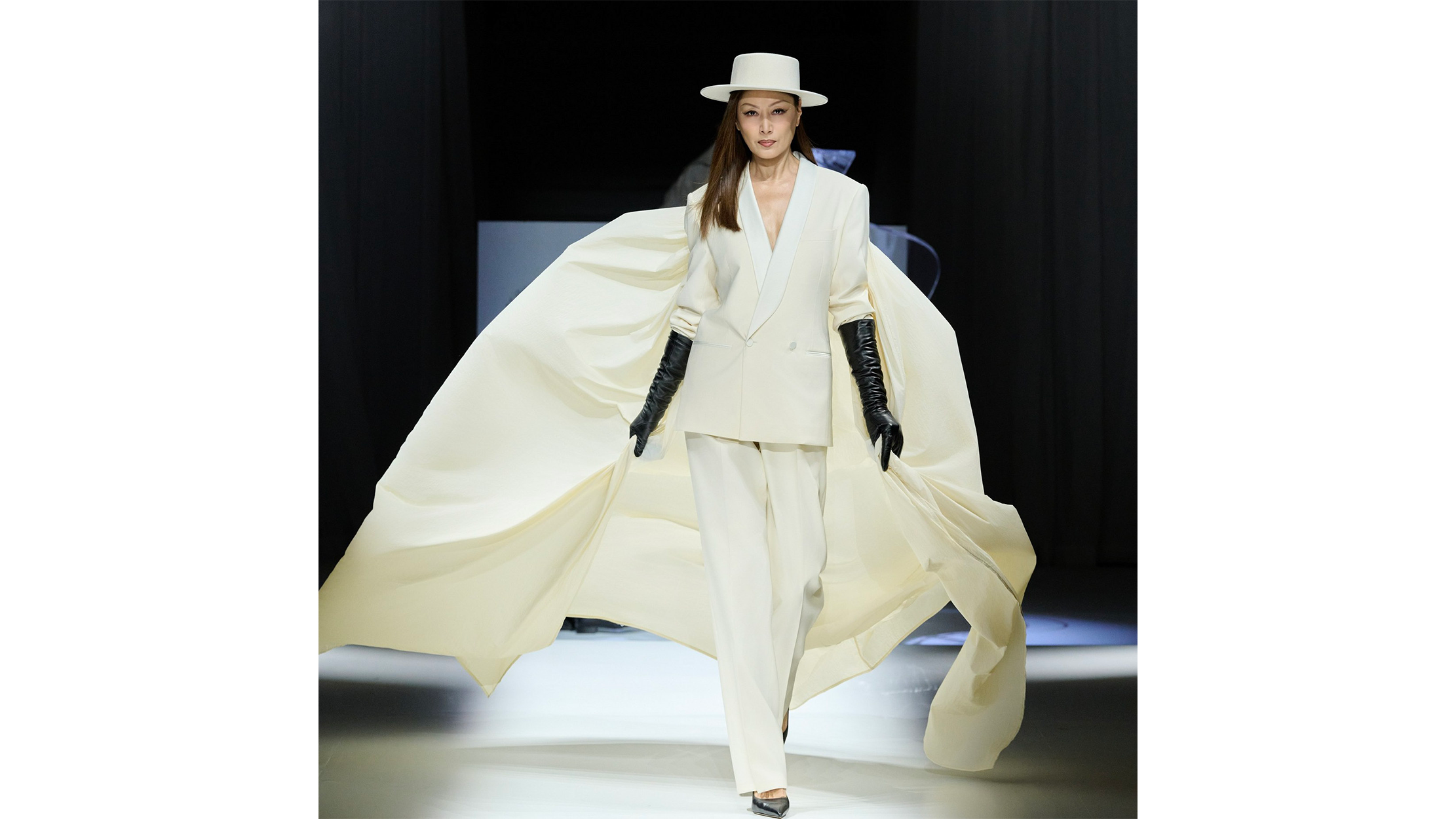
Just beyond the side curtain, the room was lowering its voice. The lights had already been tested. The audience moved as a muffled presence on the other side of the fabric. Hu Bing stood at the runway entrance and watched the first model prepare to step into view. After months of decisions about hides, gauze, seams, silhouettes and light, there was nothing left to adjust. The collection had reached the moment when work becomes image. Hu remembers the feeling as quiet anticipation. It was not, he says, a private triumph or a star's entrance. It was the collective labor of designers, artisans, technicians and performers waiting for its first breath. On 19 September 2026, during London Fashion Week, URBAN GRACE: Leather & Light opened not with a declaration but with this suspended second, the story still hidden behind a curtain.
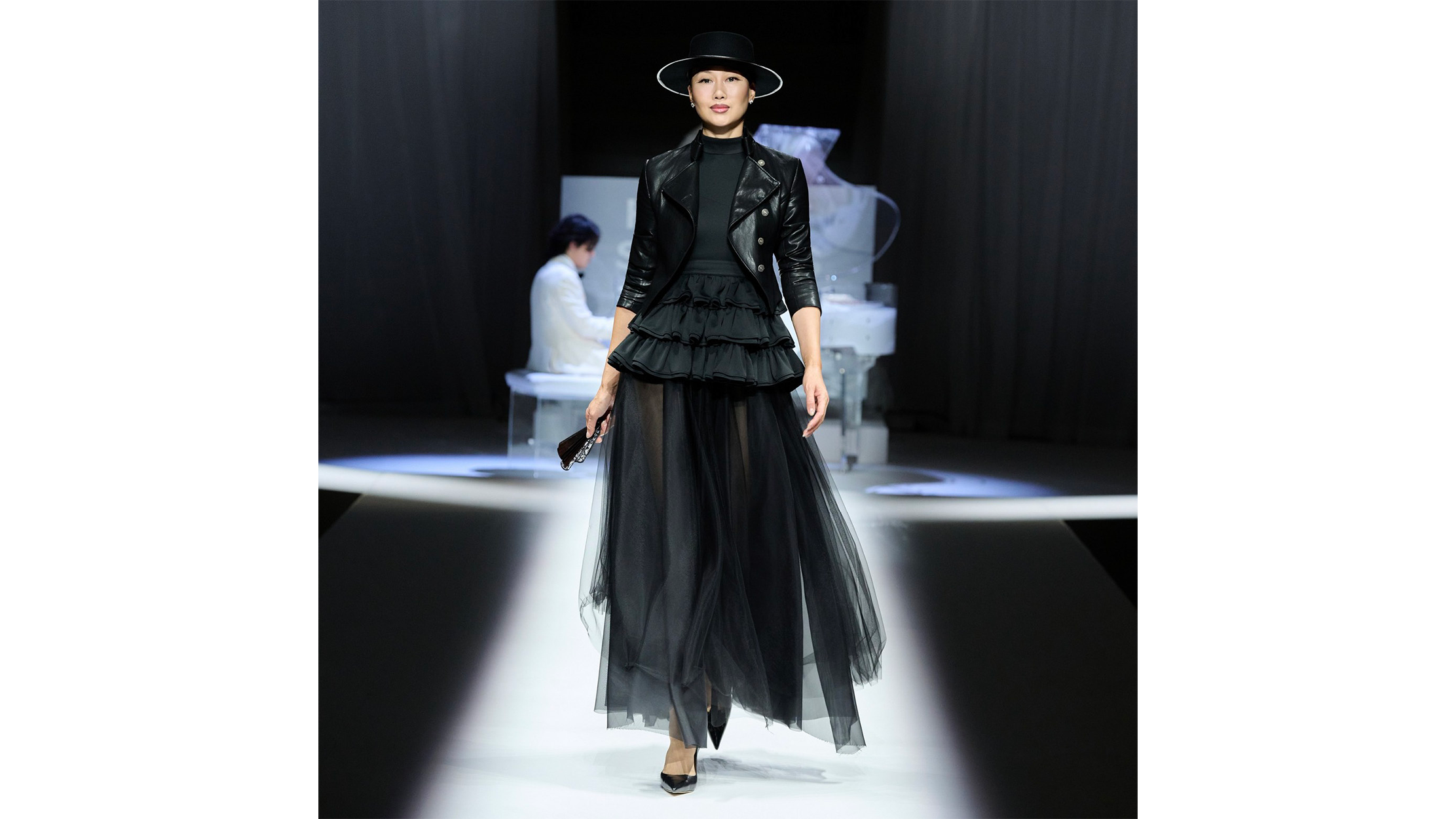
The story traveled unusually far. Its three chapters moved from 1930 to 2030 and finally 3030, crossing between Shanghai and London while leather changed state around the body. It began in ceremonial white, acquired the hard edges of armor, then loosened into something metallic and almost liquid. A white piano sat in the runway's depth like a memory from another room. Models walked through bands of light, carrying clothes that asked leather to behave against its reputation. That reputation is familiar: leather as weight, toughness and permanence. Hu wanted another vocabulary. In URBAN GRACE, the material appears beside mulberry silk, satin and gauze. It is cut close to the body, opened into lattices, softened into curved planes and balanced against transparent layers. The effect is less about denying leather's physical authority than teaching it new manners.
The collection's real geography, however, lies behind the runway. Hu was born in Hangzhou, Zhejiang province. His first modeling job in 1991 was a menswear catalog for the Zhejiang Silk Trading Company. More than three decades later, he returned to the same province to develop this project through Haining's leather supply chain. The journey carried the symmetry of a homecoming, but his position within it had changed. As a young model, Hu encountered the garment at the end of its making. His task was to study the finished object, understand its line and give it presence before the camera. In Haining, he moved backward through the sequence. He saw material selection, sampling, technical development, and the small corrections through which a garment earns its final character. The person once asked to animate the clothes was now helping to build the platform around their creation. What changed was not only his vantage point. It was his understanding of where emotion enters a garment. He realized the feeling carried by a finished look is not added when the model reaches the runway. It accumulates much earlier, inside the supply chain, through hands that judge thickness, grain, luster and tension. Leather made this visible because it refused the convenient logic of conventional cloth. It did not arrive as a continuous roll. Each hide had its own surface, thickness and temperament. Pattern pieces could not simply be repeated without attention to natural grain. Seams had to be reduced, textures aligned, and weight distributed so that leather and silk could occupy the same silhouette without one silencing the other. On a piece with a pronounced herringbone texture, Hu and an artisan spent two and a half days resolving the joins. Even hides ordered to the same specification changed under the hand and against the light. The labor was slow, intimate, and corrective. It also altered the design. Technique was not merely asked to execute an idea already complete on paper. Material and maker argued with that idea until it became more precise.
The emotional power of a garment is embedded throughout the supply chain.
This is the thinking behind Hu's phrase Finishing in China. In his account, designing is the conception of an idea. Making turns material into form. Finishing is where the object is refined, calibrated, and brought into emotional focus. It is the stage in which technical knowledge does more than obey a drawing. It participates in authorship. For Hu, the distinction is political because the phrase pushes against an old international shorthand that reduces China to production. Finishing in China asks buyers to see an entire chain of expertise, from material treatment to construction and final refinement. It asks manufacturers to recognize that craft can carry aesthetic judgment. Most urgently, it asks young Chinese designers to trust that leaving home is not the only route to seriousness.
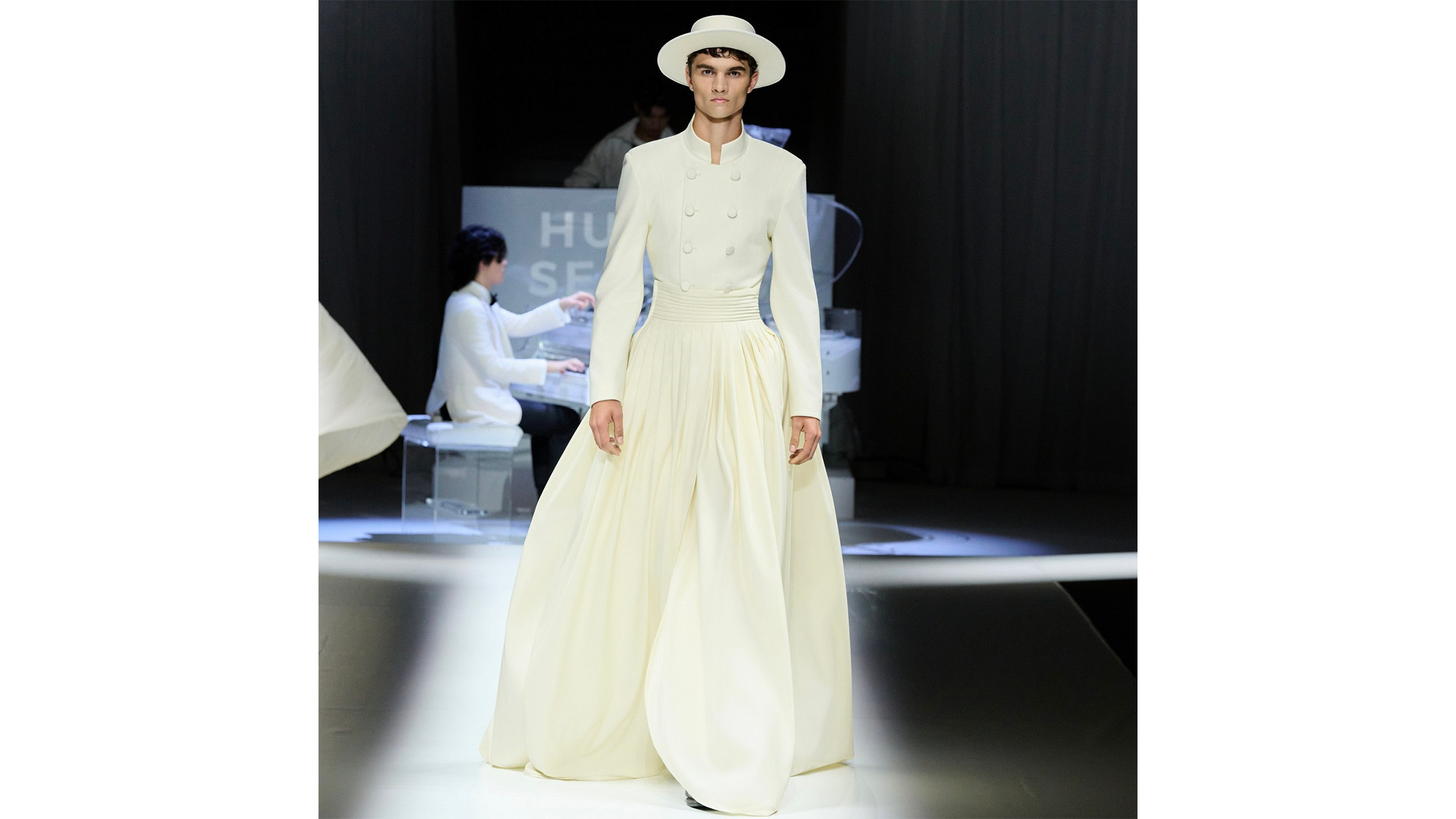
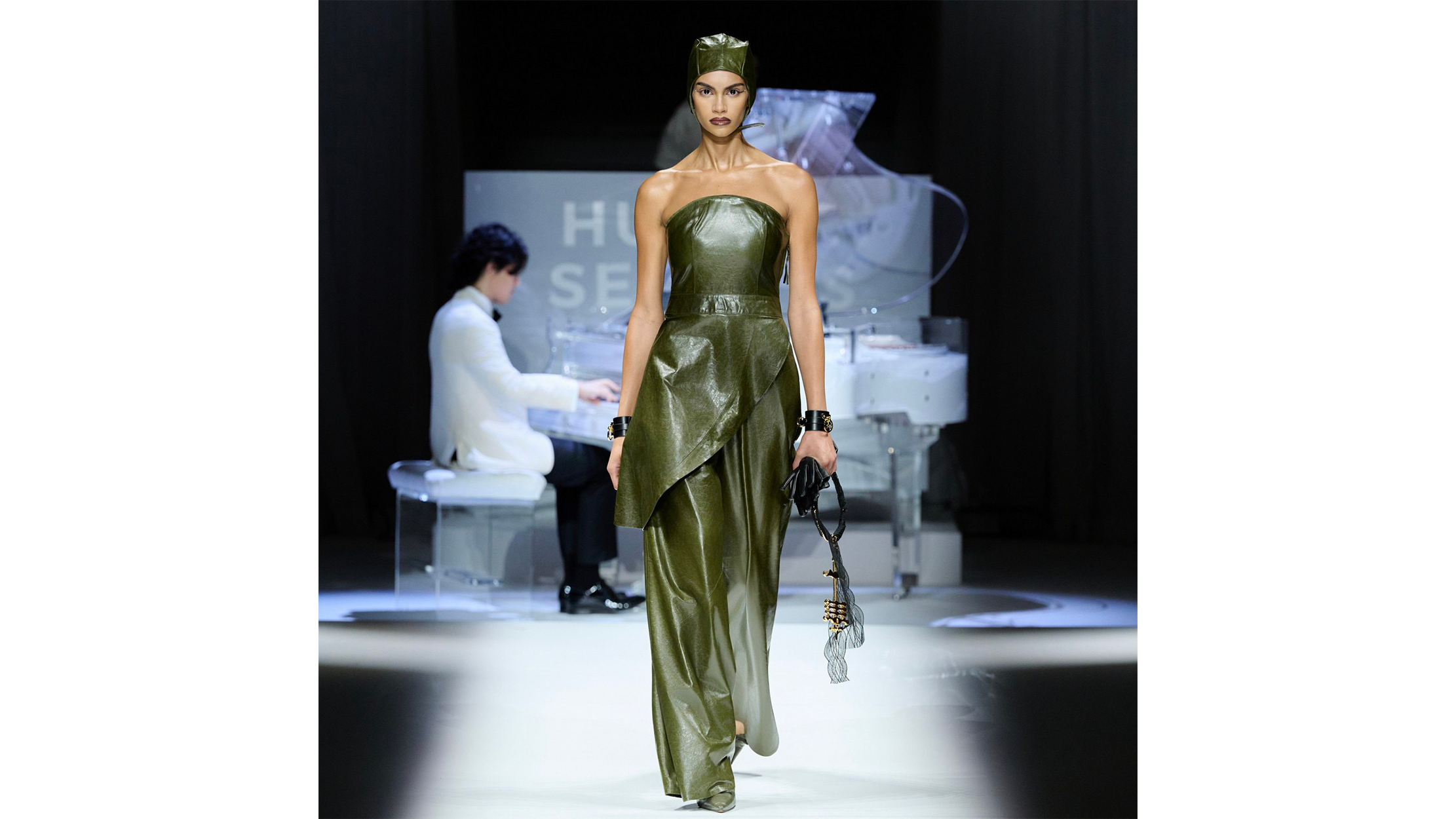
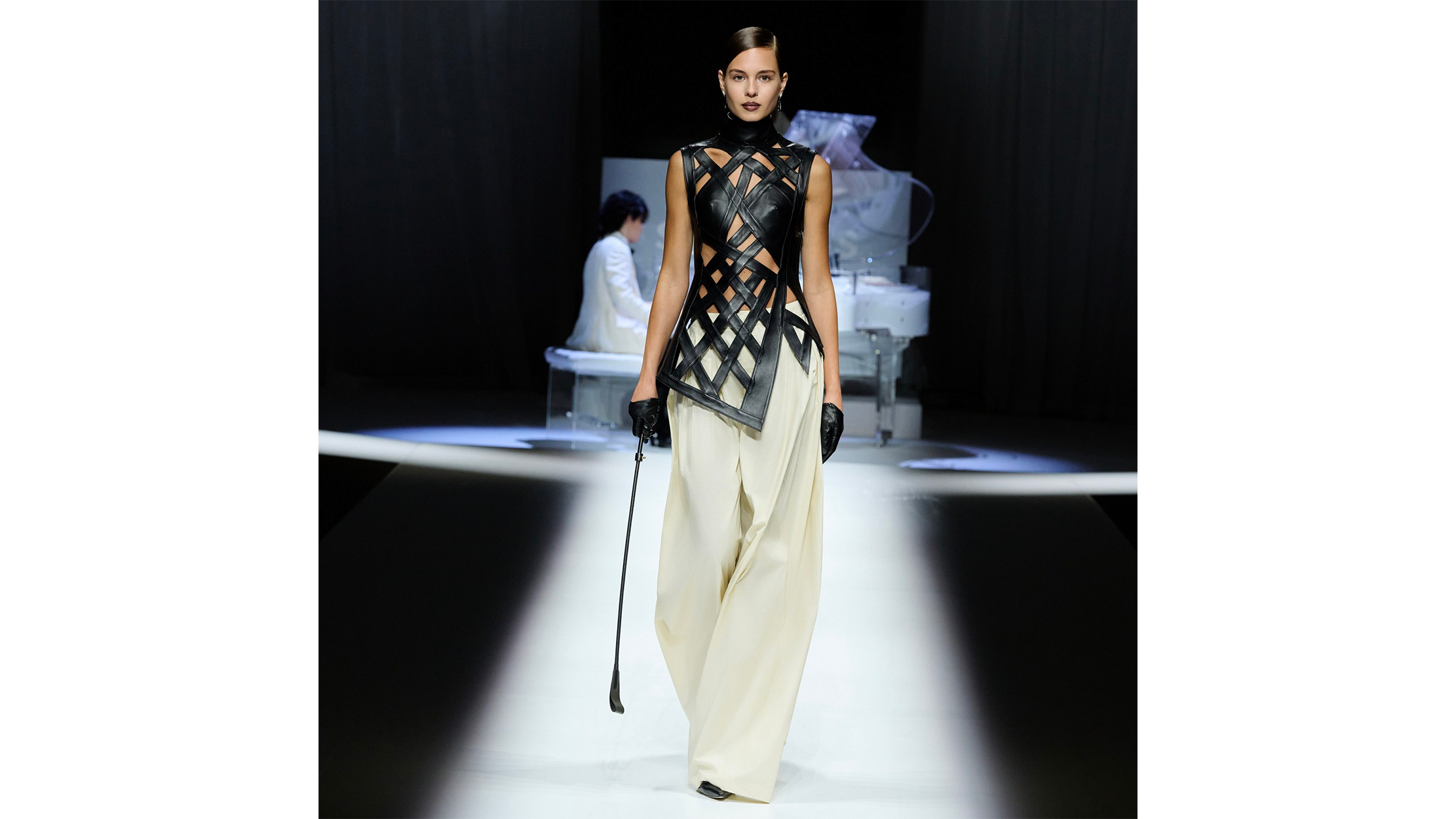
HUBING SELECTS is the vehicle for that argument. Founded in 2024 to support Asian designers on an international stage, the platform has reached its third season. Hu describes his role as part curator, part coordinator and part guardian of the larger narrative. He sets the proposition, the emotional temperature and the material direction. Then he stops. That boundary matters. He does not instruct a designer which pattern to draw or insist on a particular hand technique. His principle is to define the framework without occupying the work. In an industry where a famous name can easily eclipse the makers gathered around it, restraint becomes a form of responsibility. Hu's authority is most useful when it creates room for other people's specificity. The clothes themselves hold that negotiation. A black leather jacket, cropped and disciplined, meets a skirt of translucent tiers that continues moving after the body has passed. A fitted green bodice catches light like oxidized metal while its draped lower half pulls leather away from stiffness. A sleeveless lattice of dark strips turns the torso into architecture, the body visible through its intervals. Elsewhere, ivory expands into capes and wide trousers, ceremonial but not nostalgic.
Article by Aayush Aggarwal, Contributing Editor, PhotoBook Magazine
Tearsheets by Daniel Lopez, Art Director, PhotoBook Magazine
*Images courtesy of HUBING SELECTS
RELATED STORIES