Surgery in Silhouette: Yongxi Liao’s FIT MFA Collection
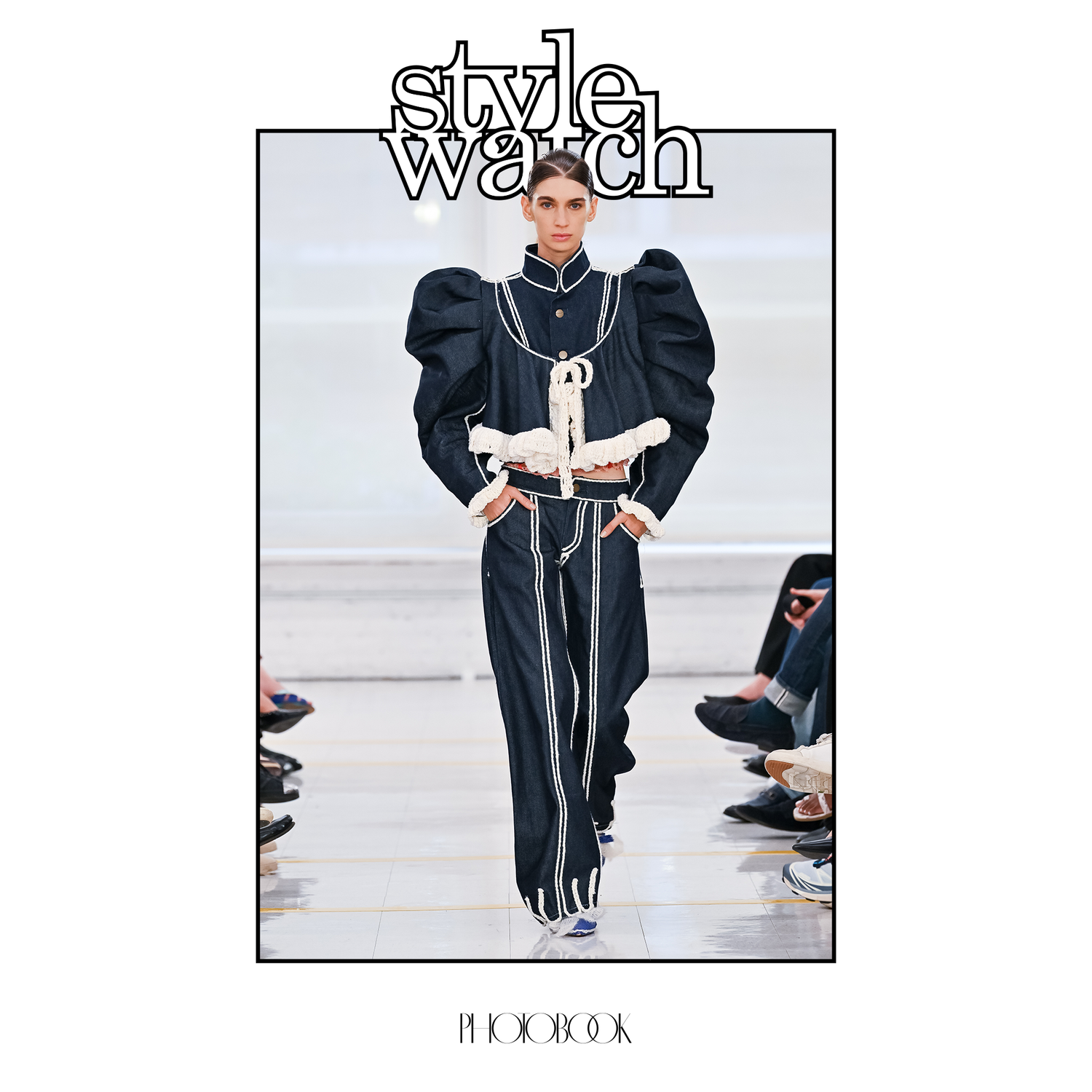
A suit is built to shape the body. Its shoulders, lapels, darts, and seams quietly dictate how the wearer’s proportions are seen. In Refashioned Body, FIT MFA designer Yongxi Liao takes that established language of tailoring and subjects it to a series of interventions, treating the garment itself as a body that can be cut, displaced, sutured, and rebuilt. What began as an exploration of body modification evolved into a study of perception, with surgery and origami informing a construction process that transforms familiar suiting into unexpected silhouettes. Sleeves and lapels shift from their expected positions, seams become sites of intervention, and visible hand stitching turns repair into an intentional design detail. Rather than dismantling tailoring entirely, Liao works within its existing structure, demonstrating how a precise alteration can change the way an entire garment—and the body inside it—is understood. Developed through experimentation and technical research at FIT, Refashioned Body ultimately asks where transformation needs to take place: on the body itself, or in the clothes that shape how we see it?
What was the starting point for your MFA collection, and what initially made you want to explore that idea through fashion?
My collection initially started with the idea of body modification. I became interested in how clothing can change the way we perceive the body, especially how it can alter a person’s perceived height, proportions, and silhouette. At first, I was asking simple questions: Can changing the silhouette and proportions make the body look completely different? As my research developed, I realized that I wasn’t interested in physically changing the body itself. I was more interested in changing the way we perceive the body. So I began to transfer the logic of body modification onto clothing, making the garment the site of transformation. I started to think of clothing as a kind of body that could be cut, displaced, repaired, and reconstructed. This became the starting point for Refashioned Body, which eventually led me to explore how suiting, surgical processes, and origami-inspired construction can reshape the visual proportions of the body.
Your collection brings together a specific set of personal, cultural, historical, or conceptual references. How did your research evolve as you moved from an idea into an actual collection?
My research started quite broadly with body modification, but as I developed the project, I became more interested in the process of changing form rather than body modification itself. I started researching surgery, especially ideas like incision, suturing, displacement, filling, and repair. At the same time, I looked at tailoring because the suit already has a very established system for shaping the body through shoulders, darts, waistlines, chest volume, and lapels. I also became interested in origami because of its relationship to folding and transforming a flat surface into three-dimensional form. Eventually, these three systems surgery, tailoring, and origami became the main framework for my collection.
What role do your personal experiences play in your design practices, and how much of yourselves do you see reflected in these collections?
I think my personal experience is reflected more in the way I think and work than through a specific personal story. I tend to analyze things very closely, and I’m interested in understanding how something works before changing it. That is probably why I was attracted to tailoring and its existing structure. Instead of completely abandoning the suit, I wanted to understand its system and then intervene in it. I also see this collection as a reflection of my own way of thinking, taking something familiar, questioning its structure, and trying to reconstruct it in a different way.
How did you all translate the central concepts of your collections into something physical through silhouette, material, color, construction, or textile development?
I mainly express the concept of surgery through structure and silhouette.
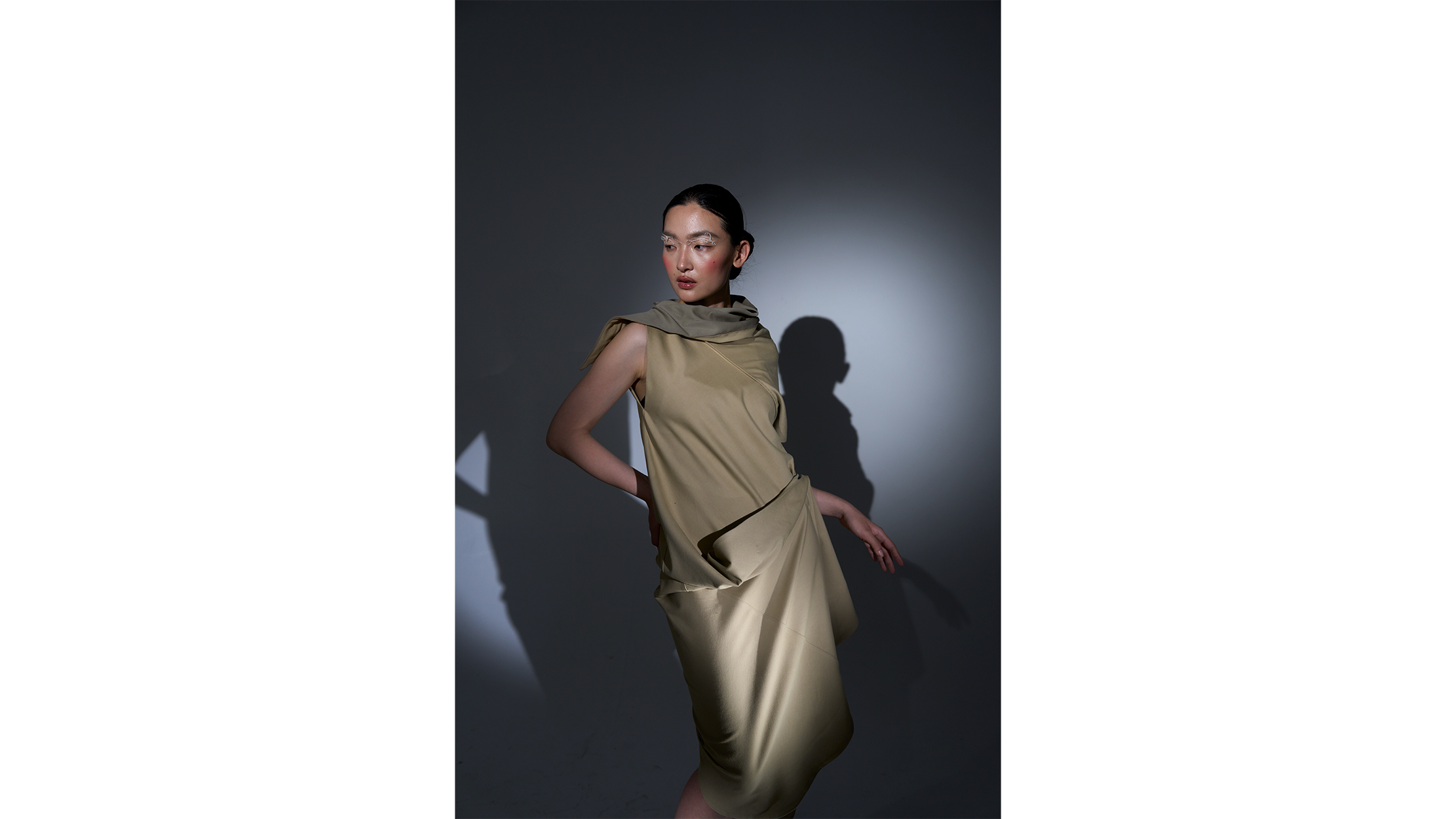
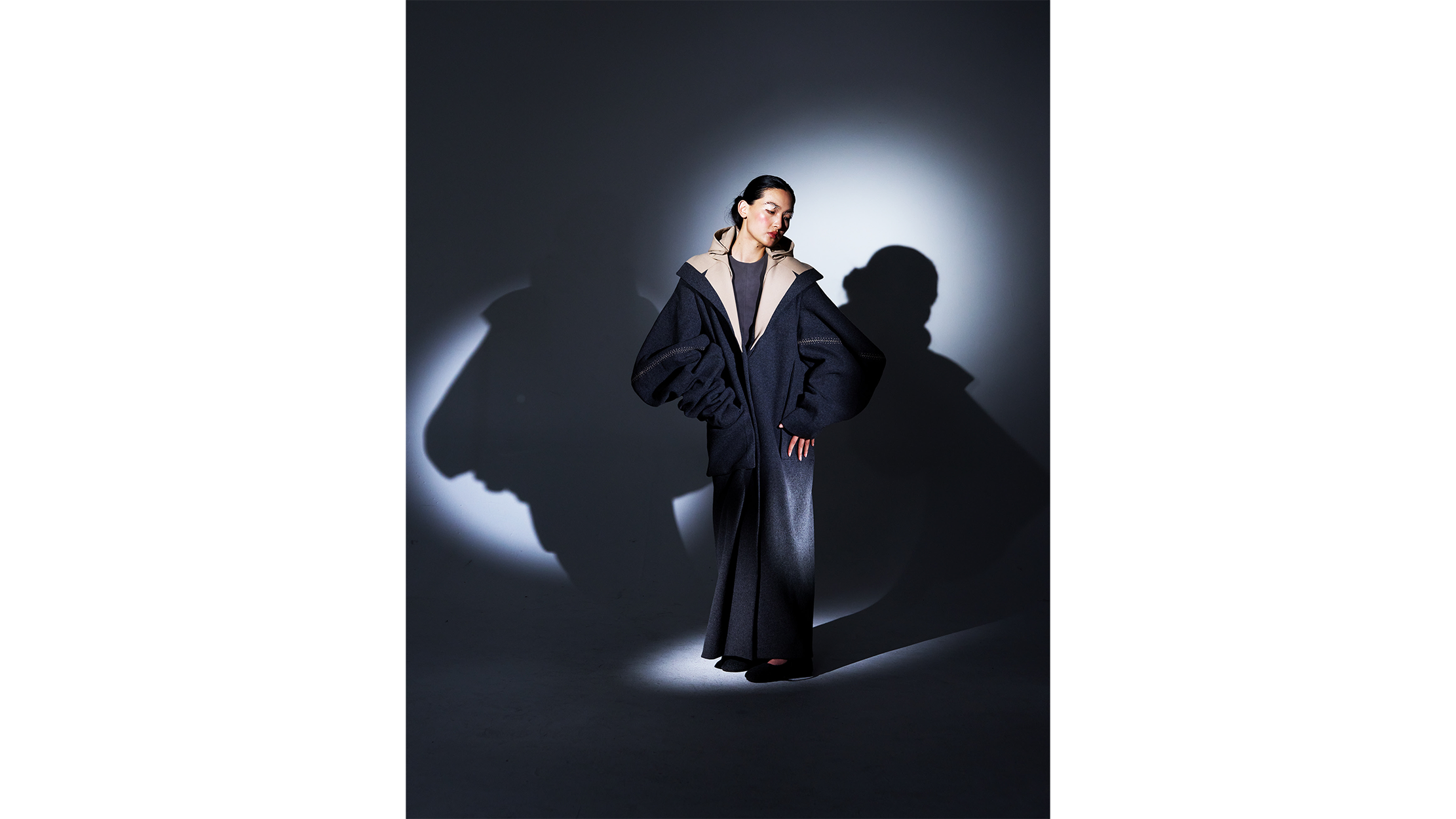
I treat the garment as a body undergoing surgery, using cutting, moving, repositioning darts, and changing seams to reconstruct the garment’s structure. I also use hand stitching inspired by surgical sutures, making the marks of repair part of the design rather than hiding them.
Was there a particular garment, technique, material, or look within your collections that became especially important to your overall story? Why?
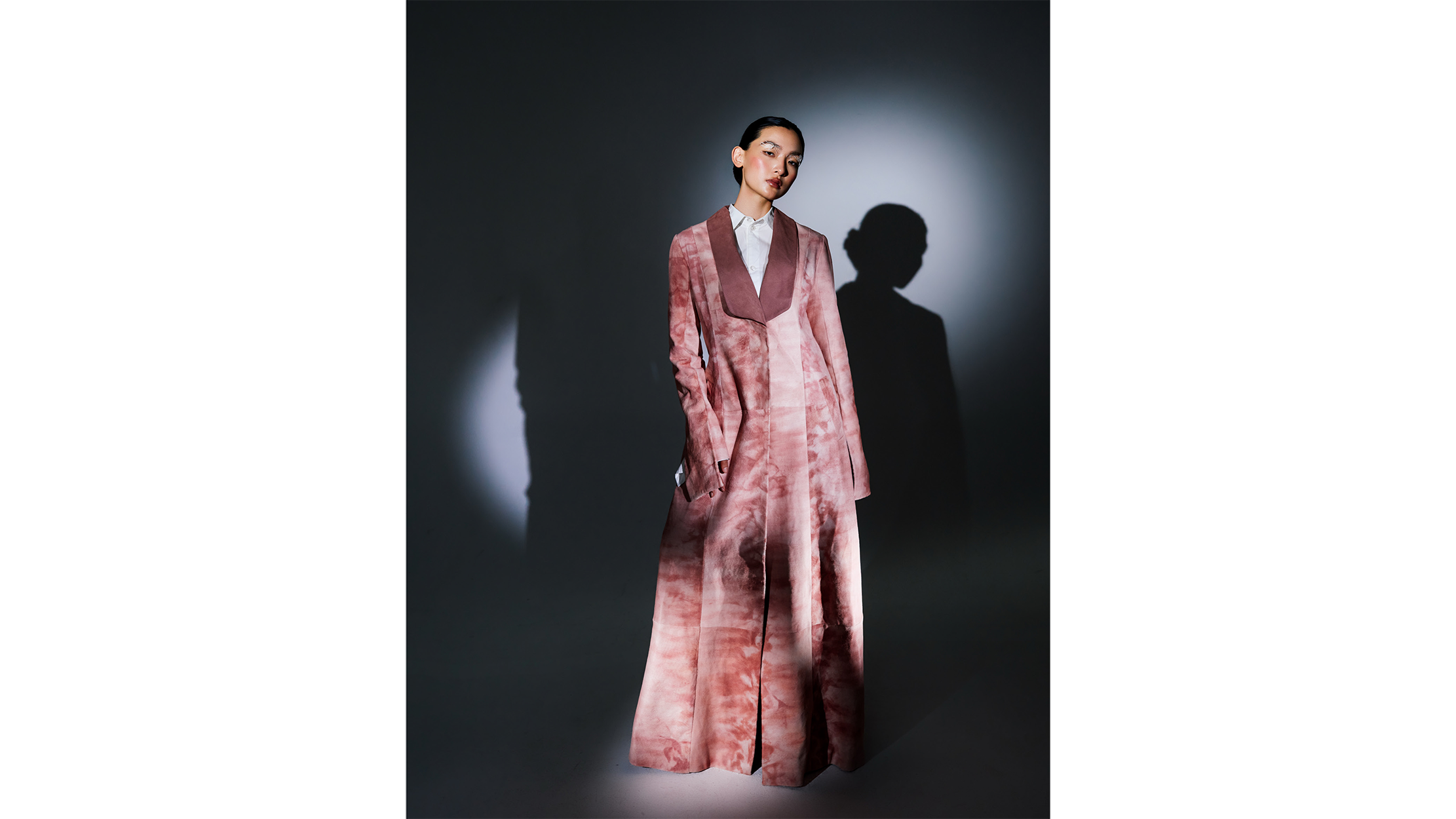
For me, the suit became especially important because it already has a very complete structural system. The shoulders, chest, waist, darts, collar, and lapels all shape how we visually construct the body. So, I started cutting and repositioning these familiar structures. Hand stitching was also very important because it shows that the garment has been cut, repaired, and reconstructed.
Many of the collections in this graduating class engage with larger ideas around identity, culture, memory, the body, technology, or the environment. What do you hope viewers take away from your work beyond the clothes themselves?
We often think of the body as something fixed, but fashion constantly changes how we see proportion, shape, and identity. With Refashioned Body, I wanted to question where modification happens. Does it have to happen to the body? Or can clothing become the place where that transformation takes place? For me, the collection is ultimately about reconstructing perception rather than reconstructing the body itself.
Was there anything about the processes of developing your thesis collections that challenged an assumption you initially had about your own design practices?
Yes. I initially thought I needed to completely deconstruct garments to create something new. But I realized I could create stronger transformations by working within an existing system. The suit taught me that small changes, like moving a dart or changing a seam, can completely change how a garment is perceived. This made me more interested in precision and intervention rather than complete deconstruction.
How has your time at FIT changed or expanded the way you think about fashion and your role as designers?
At FIT, I learned to spend much more time questioning why I am making something and what system or idea is behind it. The MFA process also taught me that research, experimentation, failure, and making are all connected. Sometimes the most useful discoveries came from experiments that didn't work. I think I now see myself less as someone who simply designs clothes and more as someone who uses clothing to investigate ideas.
What do you think makes your design perspective distinctly your own, and how has that perspective evolved throughout your MFA?
I think my perspective comes from combining a strong interest in structure and problem-solving with conceptual research. I enjoy understanding how garments are constructed and then asking how that construction can be manipulated. At the beginning of my MFA, I was more focused on the visual outcome. Over time, I became more interested in the logic behind the design and how an idea can become a construction method. That shift from designing an image to designing a system and process has probably been one of the biggest changes in my perspective.
As you move beyond FIT and begin the next chapter of your career, what do you want to carry forward from these collections, and what are you excited to explore next?
I also want to continue developing my understanding of construction, product development, and how conceptual ideas can become functional garments. After FIT, I’m interested in gaining more industry experience and continuing to explore the relationship between design, construction, and the body. In the long term, I also hope to teach fashion, so I would like to bring what I have learned through this process into both my professional practice and education.
You describe a “Refashioned Body” as surgical interventions in clothing. What interested you about using surgery as a framework for deconstructing and reconstructing garments?
What interested me about surgery was not the medical aspect itself, but the logic of intervention. Surgery involves making a precise incision, changing something underneath, and then repairing the surface. I realized that this process has a strong connection to fashion construction. A garment can also be cut, opened, moved, filled, reshaped, and stitched back together. So I started thinking: instead of performing surgery on the body, what if I perform surgery on the clothing? That became the central idea of Refashioned Body. The garment becomes the body being operated on, and the construction process becomes a form of surgical intervention.
The collection uses suiting as its foundation, then introduces ideas of incision, displacement, suturing, and repair. How did you translate those physical surgical processes into silhouette and construction?
I started by looking at the existing structure of a suit: the shoulder line, lapel, darts, seams, and chest and waist shaping. Then I treated those elements almost like anatomical structures that could be intervened with.
For incision, I physically cut into the garment. For displacement, I moved existing garment components to different areas of the body. For example, I experimented with relocating sleeves or lapel elements to create unexpected volumes and proportions. For suturing, I translated surgical stitches into visible hand-sewing techniques. Instead of hiding the repair, I made it part of the visual language. And for reconstruction, I used folding and reshaping techniques inspired by origami to transform flat fabric into new three-dimensional forms.
So the final silhouette is really the result of these interventions. The garment looks familiar because it comes from tailoring, but altered because it has essentially undergone a kind of surgical procedure.
Interview by Emma Green, Assistant to Editor-In-Chief, PhotoBook Magazine
Tearsheets by Daniel Lopez, Art Director, PhotoBook Magazine
*Images Courtesy of FIT
RELATED STORIES