Parsons MFA Fashion Design & Society Transforms Its Studio Into a Runway Venue For NYFW
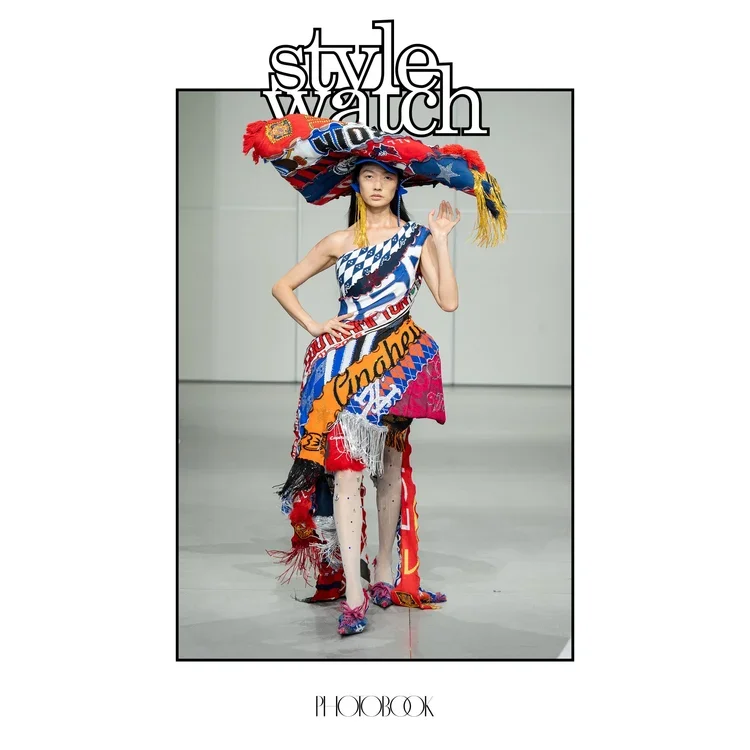
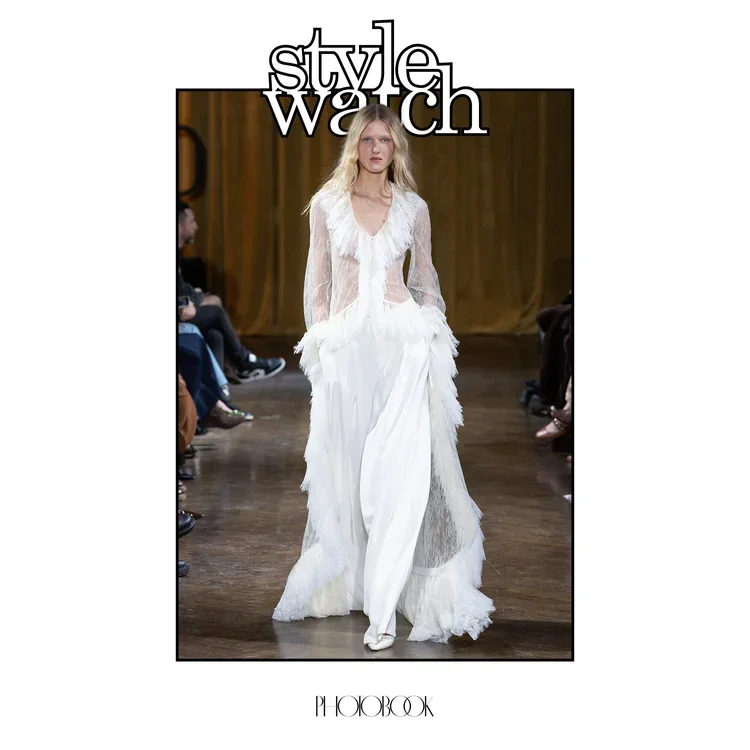
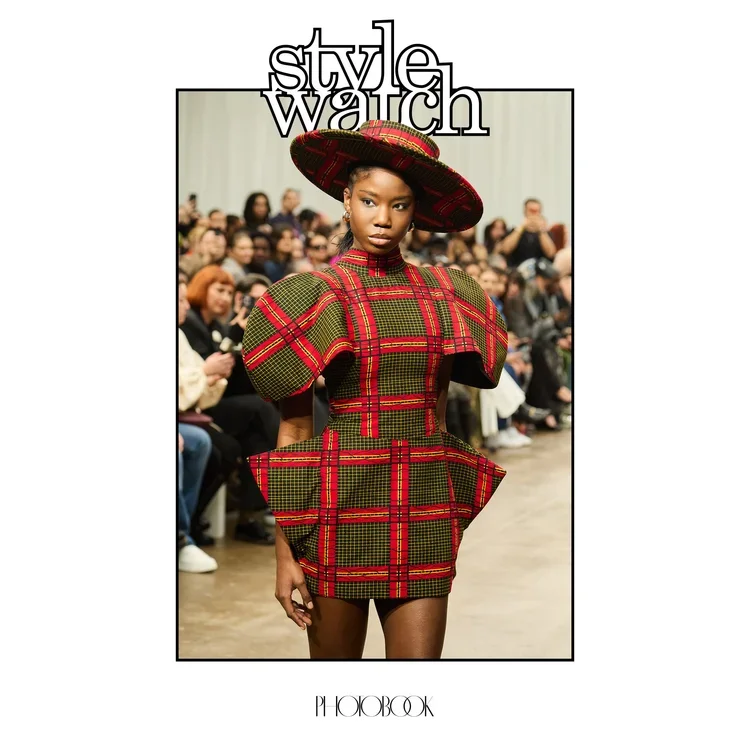
For one evening during New York Fashion Week, the familiar studios of Parsons School of Design’s MFA Fashion Design & Society program took on an entirely new identity. The atelier at 39 West 13th Street transformed from a working space into a runway, bringing the program’s graduating designers out of development and into the spotlight. Instead of cutting tables, draped forms, and works in progress, the studios became a setting for 17 designers to present 57 looks, offering a glimpse of the next generation of fashion emerging from Parsons. Rather than separating the runway from the environment in which the collections were created, the show placed the two directly alongside one another. The studios remained central to the experience, extending into a weekend-long showroom where visitors could view the designers’ work up close. In doing so, Parsons offered a different perspective on the graduate runway—one that kept the process of making, experimentation, and education visible alongside the finished collections.
Elijah Turner: I Don’t Work Here (Defiance Through Underdressing)
@elijah__online
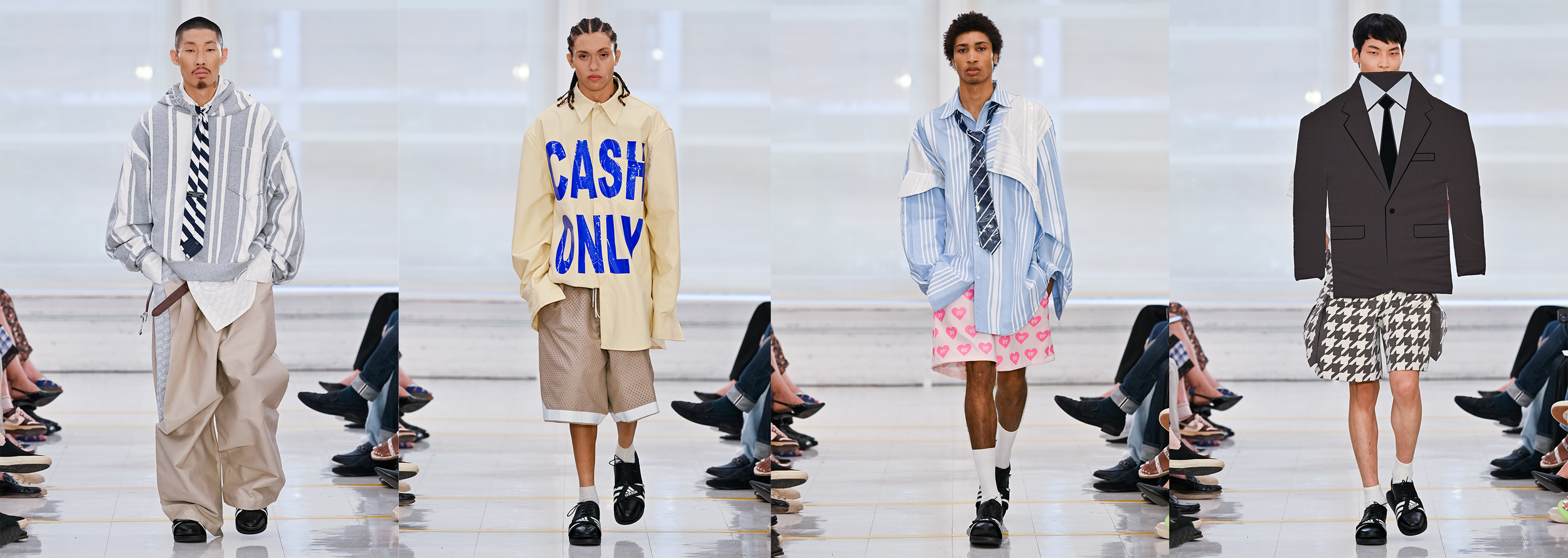
Elijah Turner is a Dallas-based artist and menswear and textile designer who uses graphics, texture, and surface design to explore identity, value, and cultural perception. Through humor, irony, and juxtaposition, his work examines fashion as a cultural signifier while questioning systems of production, branding, consumption, and the relationship between self-expression and consumer culture.
The collection explores the commodification of identity through traditional menswear and corporate dress codes, using intentional “underdressing” to challenge ideas of uniformity. Inspired by the films of Mike Judge, it transforms workplace fashion “don’ts”—such as oversized silhouettes, bold text, and untucked shirts—into deliberate design choices. Details like exaggerated stripes, imitation rib knits, laser-cut mesh, and “peeling” garments play with the idea of clothes slipping away from the body, while classic shirting and khakis are contrasted with casual boxers and gym shorts.
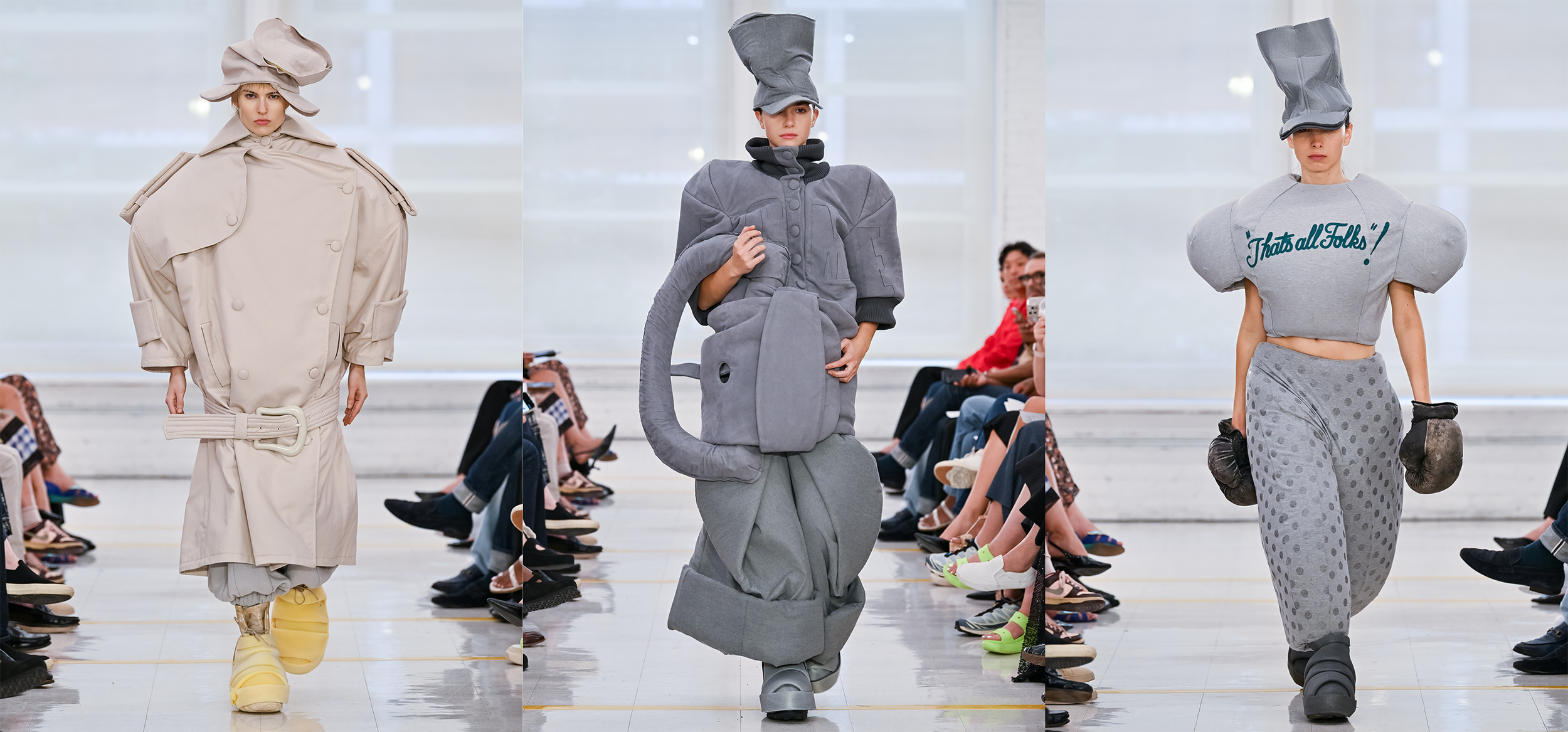
Cody Gallegos: The Laws of Cartoon Physics (That’s All, Folks!)
@codymgallegos
Cody Gallegos is a Brazilian-American fashion designer based in New York whose sculptural practice explores experimental pattern cutting, unconventional silhouettes, and alternative materials. Originally from New Orleans, he has worked with Melitta Baumeister, Thom Browne, and Divka, and was a 2026 Proenza Schouler x Gromek Institute Mentee and CFDA Design Scholar finalist.
The Laws of Cartoon Physics draws from Golden Age American animation, imagining what would happen if the exaggerated, impossible bodies of characters from Looney Tunes, Tom & Jerry, and Popeye became clothing. Beneath the playful references, the collection explores mortality and the body's fragility. Exaggerated silhouettes are created through foam and mascot-making techniques, transforming familiar garments into distorted forms—from sculpted T-shirts and oversized belts to dynamite-inspired sleeves and animal-like proportions.
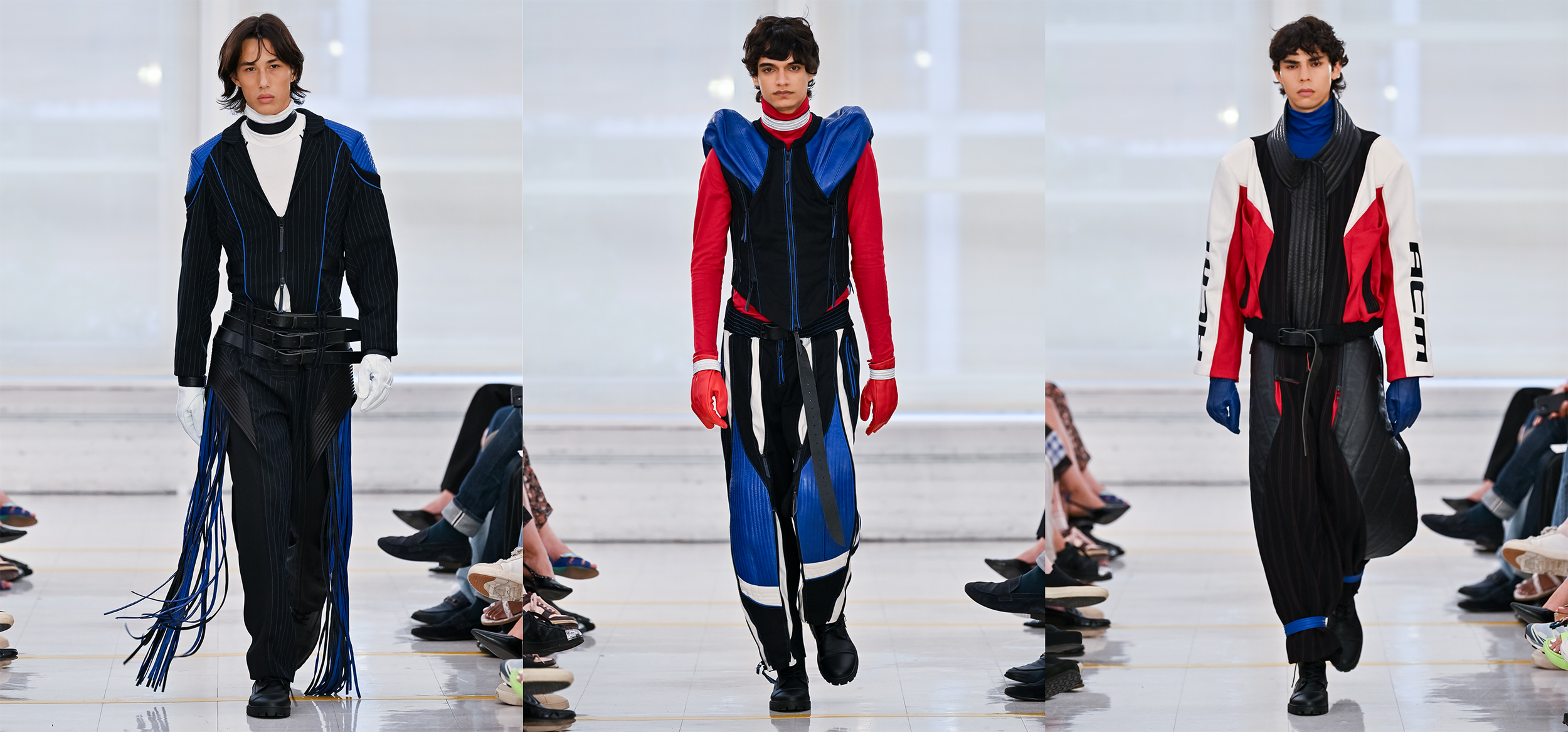
Carolin Habermann
@carolin_habermann
Carolin Habermann is a German fashion designer based in New York whose work centers on size-inclusive, adaptable clothing, using adjustable elements like belts, drawstrings, and zippers to accommodate different bodies. A Parsons MFA graduate, she has experience in performance outerwear, sportswear, and ready-to-wear, with her work exhibited across Germany and presented at Berlin Fashion Week.
The collection translates the power and adrenaline of motorcycle culture into adaptable everyday clothing, blending the structure and protection of riding gear with the sophistication of traditional tailoring. Topstitching, graphic pinstripes, leather, denim, and bold piping define the pieces, while adjustable zippers, belts, and stretch panels allow garments to adapt to different bodies and movement. A mostly black palette is accented with blue, white, and red, while deadstock wool and donated wool and cashmere yarns bring a more sustainable approach. Protective padding, exaggerated shoulders, fringe, and functional construction further reinterpret motorcycle gear through a contemporary ready-to-wear lens.
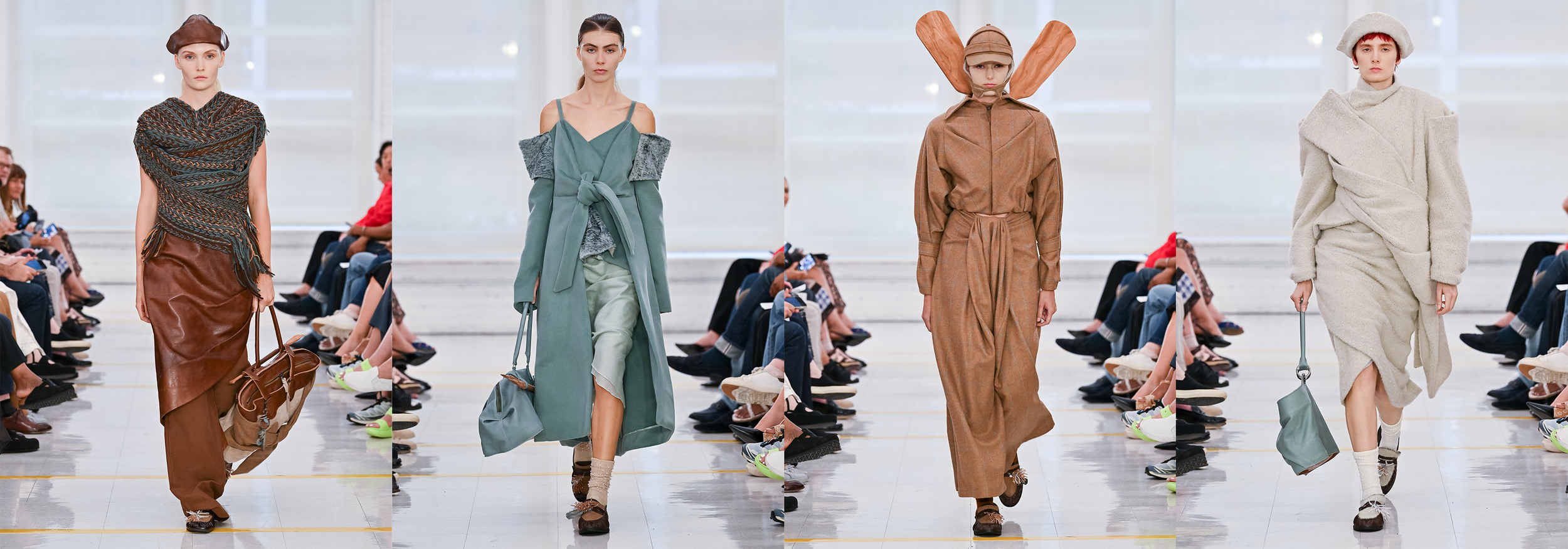
Jessica Nepton-Chayer: The Archetypes of “La Chasse-Galerie”
@jessica.nchayer
Jessica Nepton-Chayer is a French-Canadian accessory and womenswear designer of Pekuakamiulnuastsh First Nation descent whose work combines precision, utility, and craftsmanship, drawing on pattern-making, soft tailoring, leatherworking, woodworking, and upholstery. With a background in industrial, furniture, and product design, her practice explores durability and storytelling through functional designs influenced by landscape, historical making techniques, and timeless silhouettes.
Inspired by the French-Canadian legend “La Chasse-Galerie,” the collection follows the figures of the voyager, logger, and hunter, using tailoring as both protection from the elements and a way to preserve their stories. Sculptural folds, wraps, and overlapping pleats shape the body, while Scottish plaid tweed, alpaca, wool, mohair, leather, suede, silk, and cotton create layered textures. Canoe paddles serve as distinctive fastenings and embellishments, reflecting the designer’s woodworking background and connection to the collection’s folklore-inspired narrative.
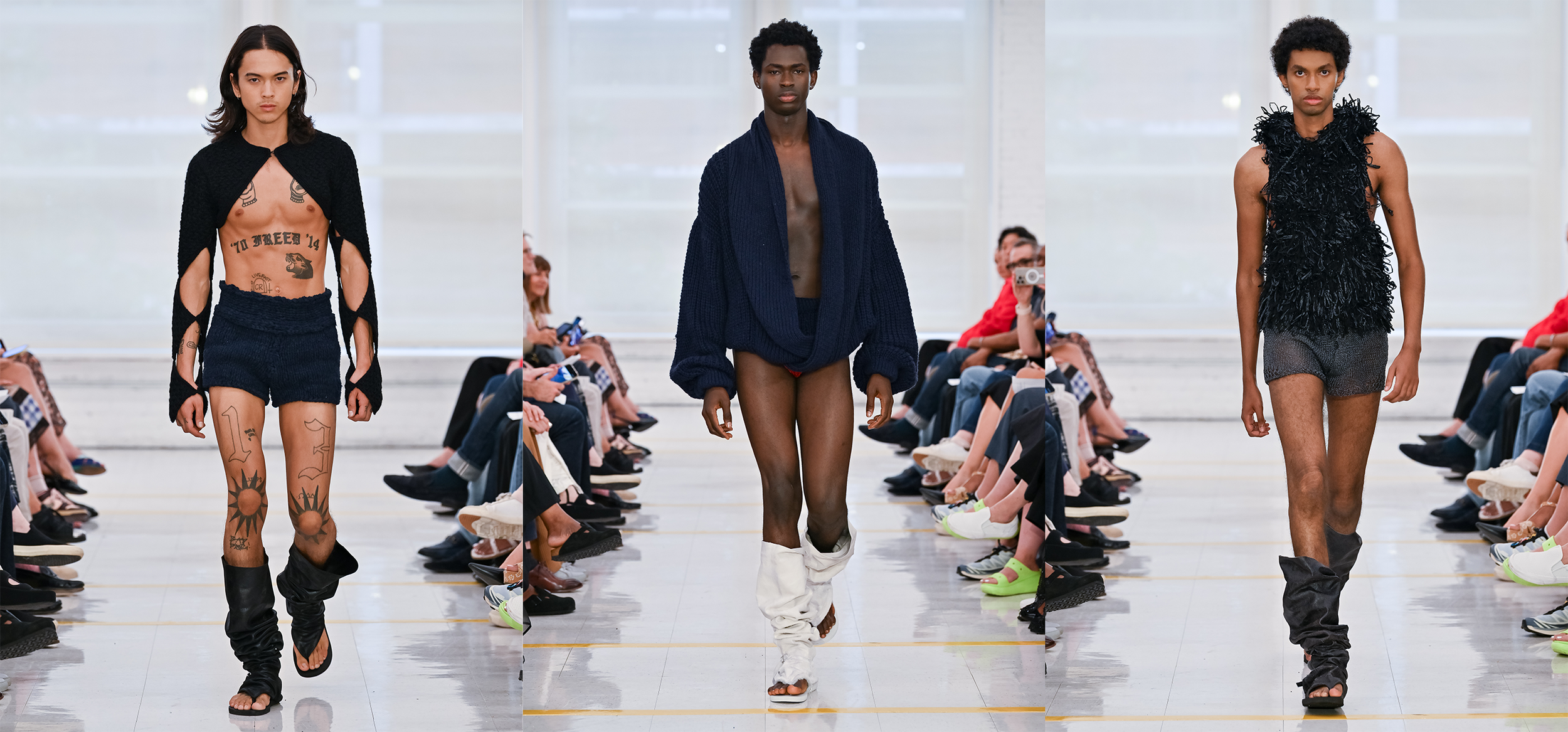
Artur Grzeskiewicz: Collection 3
@jagustaw
Artur Grzeskiewicz is a Warsaw-born, New York-based knitwear designer whose work explores fragile masculinity, gender binaries, and the performance of dress through feminine-coded materials and fully fashioned knitwear. A Central Saint Martins and Parsons graduate, he has worked in knitwear and accessories at Louis Vuitton, Acne Studios, and Eckhaus Latta, balancing experimental craftsmanship with wearability.
The collection explores masculinity through the tension between strength and vulnerability, using visible protection such as chainmail and body armor alongside open knits, fringe, loose stitches, and sheer fabrics that expose the body. Womenswear techniques introduce softness, fluidity, and emotional expression into traditionally masculine dressing. Experimental materials—including custom yarns, hair-calf, French terry, raffia blends, coated cotton, and unconventional knitting techniques—create a playful mix of textures and contrasts. The collection emphasizes self-assurance, physical ease, and freedom of movement, finished with casual yet unexpected pieces like leather over-the-knee flip-flop boots.
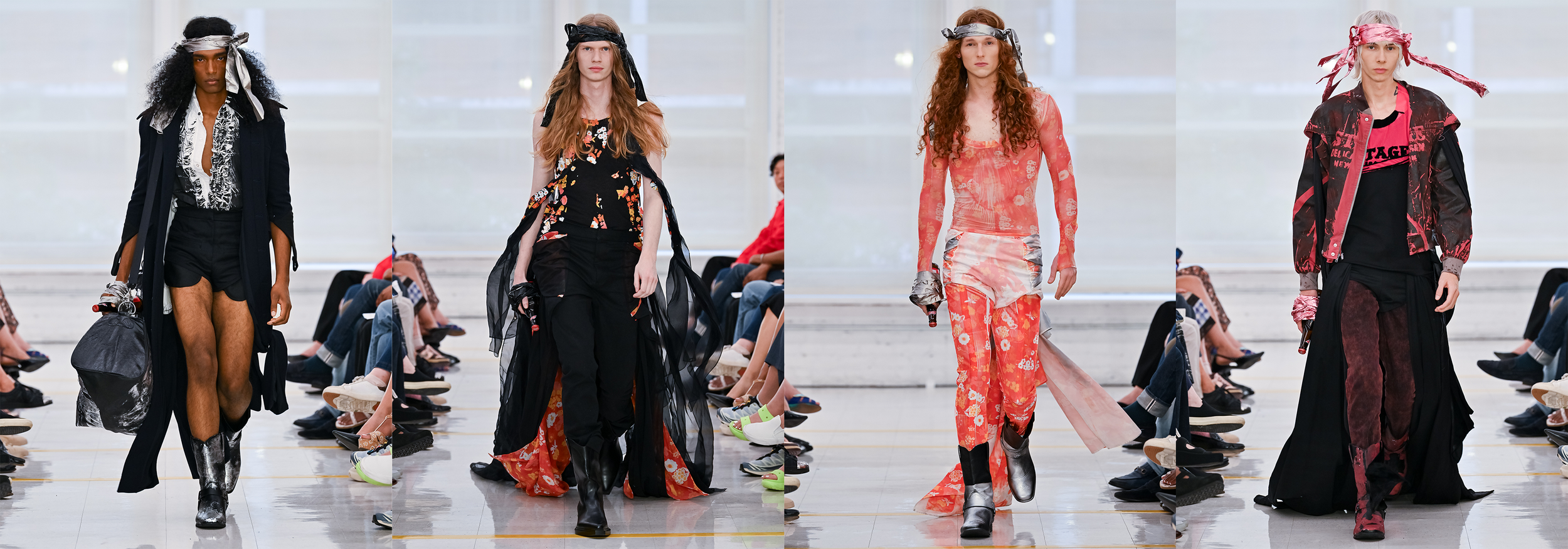
Anette Levin: Death of a Disco Dancer
@next__year__
Annette Levin is a Miami-born, New York-based designer and founder of next year, an experimental fashion project centered on print, embellishment, and textile innovation. A Parsons MFA and Central Saint Martins graduate, she has worked with leading brands including Thom Browne, Simone Rocha, and Chopova Lowena, developing a practice that combines research, craft, narrative, and construction.
Inspired by the 1977 New York City blackout and the gritty atmosphere of Saturday Night Fever, the collection explores the tension between masculinity and femininity, control and vulnerability, and public and private life. Times Square becomes a backdrop of anonymity, excess, and unconventional encounters. The clothing reflects this instability through smeared, melted, and overworked textiles created with screenprinting, sublimation, and dyeing techniques, evoking sweat, friction, and physical contact. Curtain-inspired details blur boundaries between concealment and exposure, while the collection finds beauty in imperfection, excess, and the fluidity of femininity within traditionally masculine spaces.
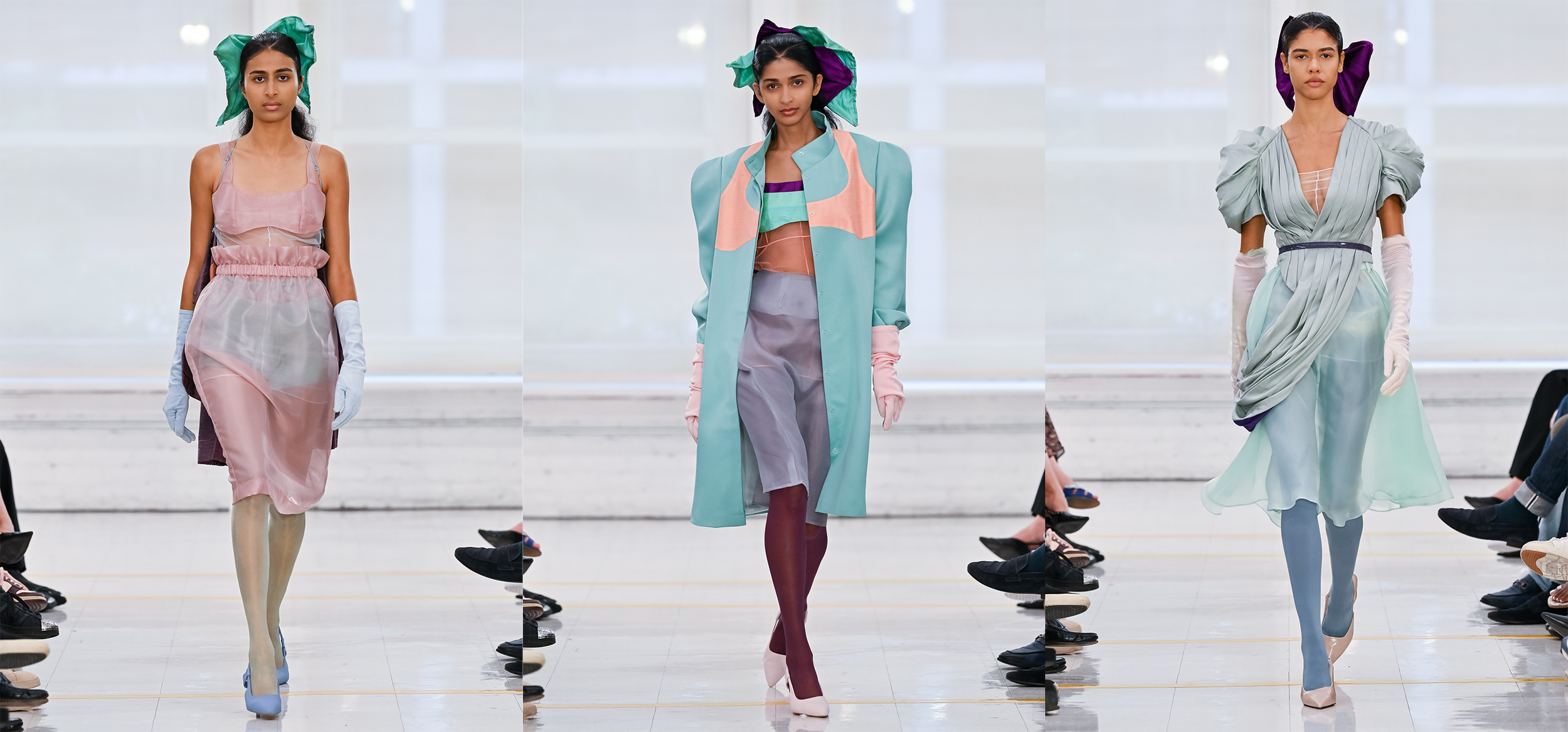
Khushi Bargava: Collection 1
@khushibhargava31
Khushi Bhargava is an Indian fashion and textile designer whose work merges Indian and Western aesthetics, using experimental draping to reinterpret traditional forms and challenge dress conventions. A 2026 Parsons MFA graduate and sustainability scholarship recipient, she explores cultural memory through a balance of homage and critique, translating heritage into contemporary silhouettes.
Inspired by photographers Pablo Bartholomew and Prabuddha Dasgupta, the collection explores intimacy, sensuality, and the construction of femininity within urban Indian domestic life. The color palette draws from the unpredictable tones of negative analog photography, translating distorted pinks, purples, blues, and greens into dyed fabrics alongside grey. Traditional Indian dress is reinterpreted through Delhi-sourced duchess satin and raw silk, Nivi-inspired diagonal draping, and exaggerated silhouettes. Cutouts, exposed hips, undone pleats, and visible lingerie deliberately blur the line between what clothing reveals and conceals, bringing traditionally private details to the surface.
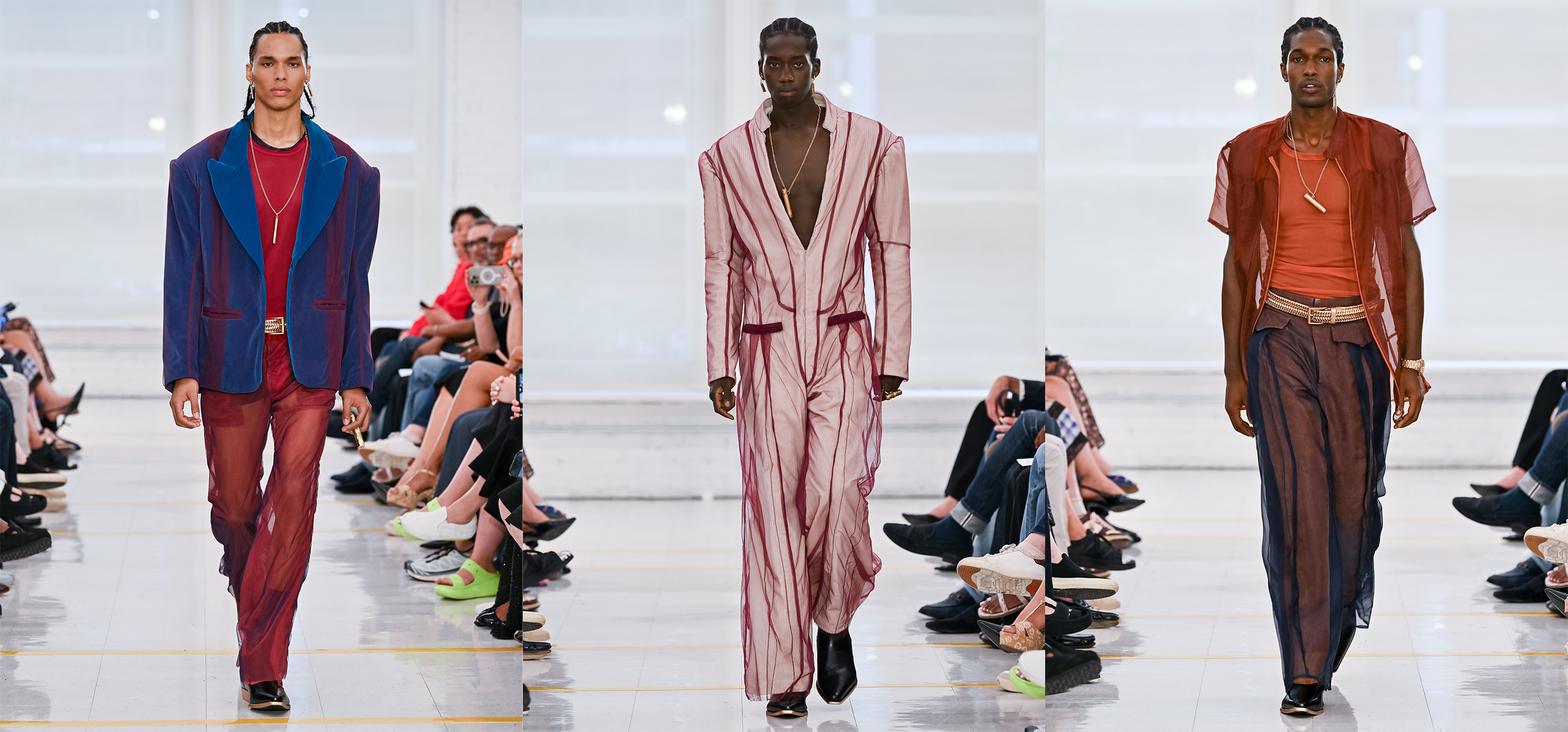
Ayinde Bradford: INCONEGRO
@bradfordayinde
Ayinde Bradford is a New York–based fashion designer and artist from Virginia whose multidisciplinary practice explores Black American identity, Afrofuturism, and cultural expression through fashion, architecture, and collaboration. Founder of INDEO and a 2026 Parsons MFA graduate, Bradford has created work for exhibitions and performances, including a collaboration with Philadelphia’s Wistar Institute inspired by biomedical HIV research.
Inspired by W.E.B. Du Bois’s concept of “The Veil,” the collection explores Black identity, self-perception, and freedom from societal expectations. Tulle and organza literally create the veil, layered over rich velvet and corduroy to symbolize both concealment and liberation. Drawing from 1970s Blaxploitation films, soul and funk musicians, and mid-century American department-store catalogs, the collection combines jewel tones, exaggerated pleats, and vintage-inspired details. Sheer fabrics are paired with luxurious, heavier textiles to create a flamboyant yet distinctly masculine aesthetic, with silhouettes emphasizing the shoulders and lower body.
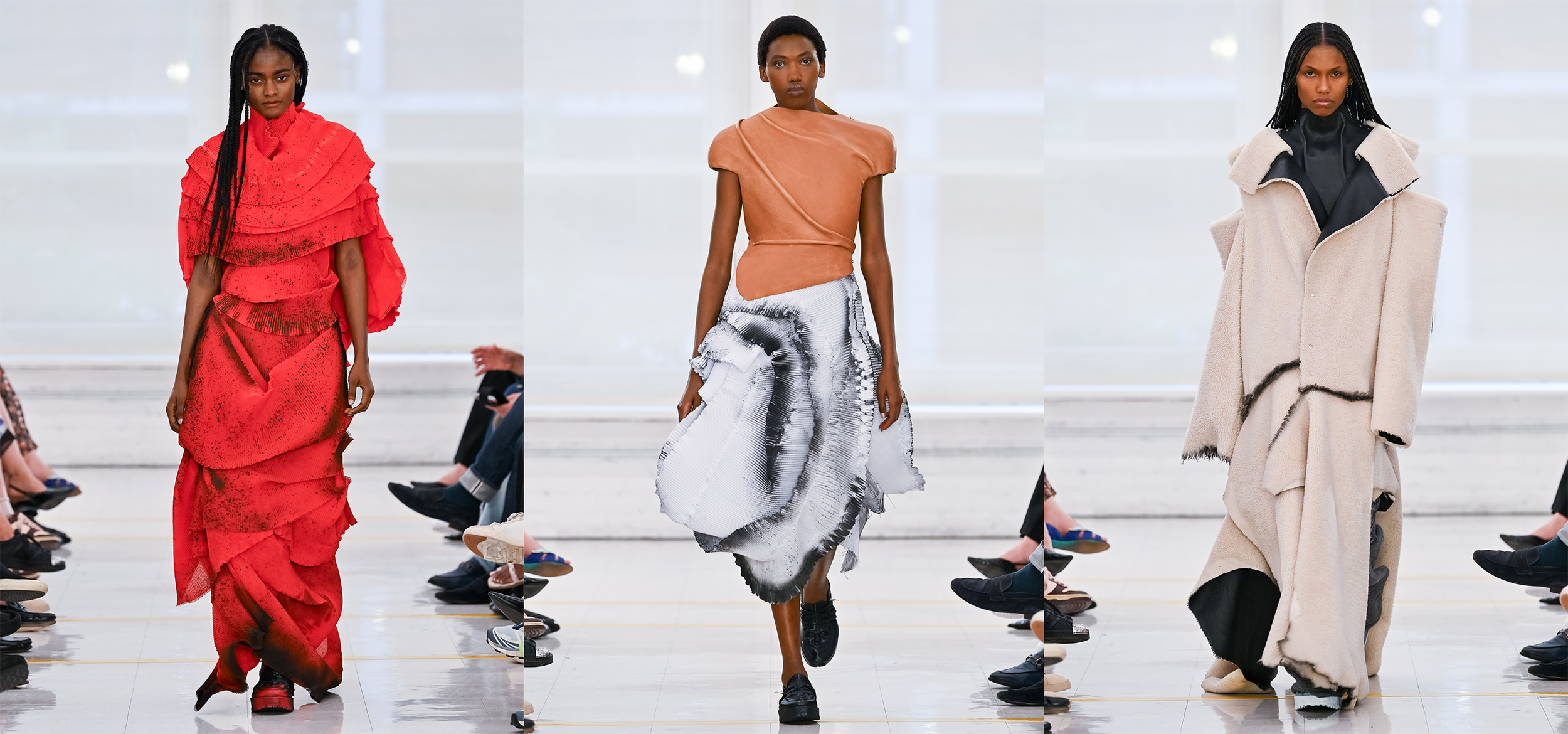
Mitch Kalungi: HER ITERU
@hctim.ignulak
Mitch Kalungi is a New York-based Ugandan artist and fashion designer whose multidisciplinary practice draws on African craft traditions, diasporic narratives, and material innovation to reimagine contemporary ideas of luxury. A Parsons MFA graduate and founder of IGNULAK, he combines traditional techniques with experimental materials while collaborating with artisans and organizations to explore the future of African craftsmanship and Indigenous knowledge.
Mitch Kalungi’s graduate collection explores the African diaspora, cultural exchange, and the evolution of Black identity, blending Pan-Africanism and Afrofuturism with traditional African craftsmanship.
The collection challenges conventional ideas of luxury by emphasizing the knowledge, labor, and history embedded in handmade processes such as leatherwork, embellishment, draping, and deconstruction. European military garments, including MA-1 and Napoleonic-style jackets, are dismantled and reshaped into softer, more fluid silhouettes. African mask-making traditions influence the accessories, shifting the focus from individual identity toward community. Overall, the collection presents craftsmanship as a way of preserving cultural memory while allowing tradition to evolve.
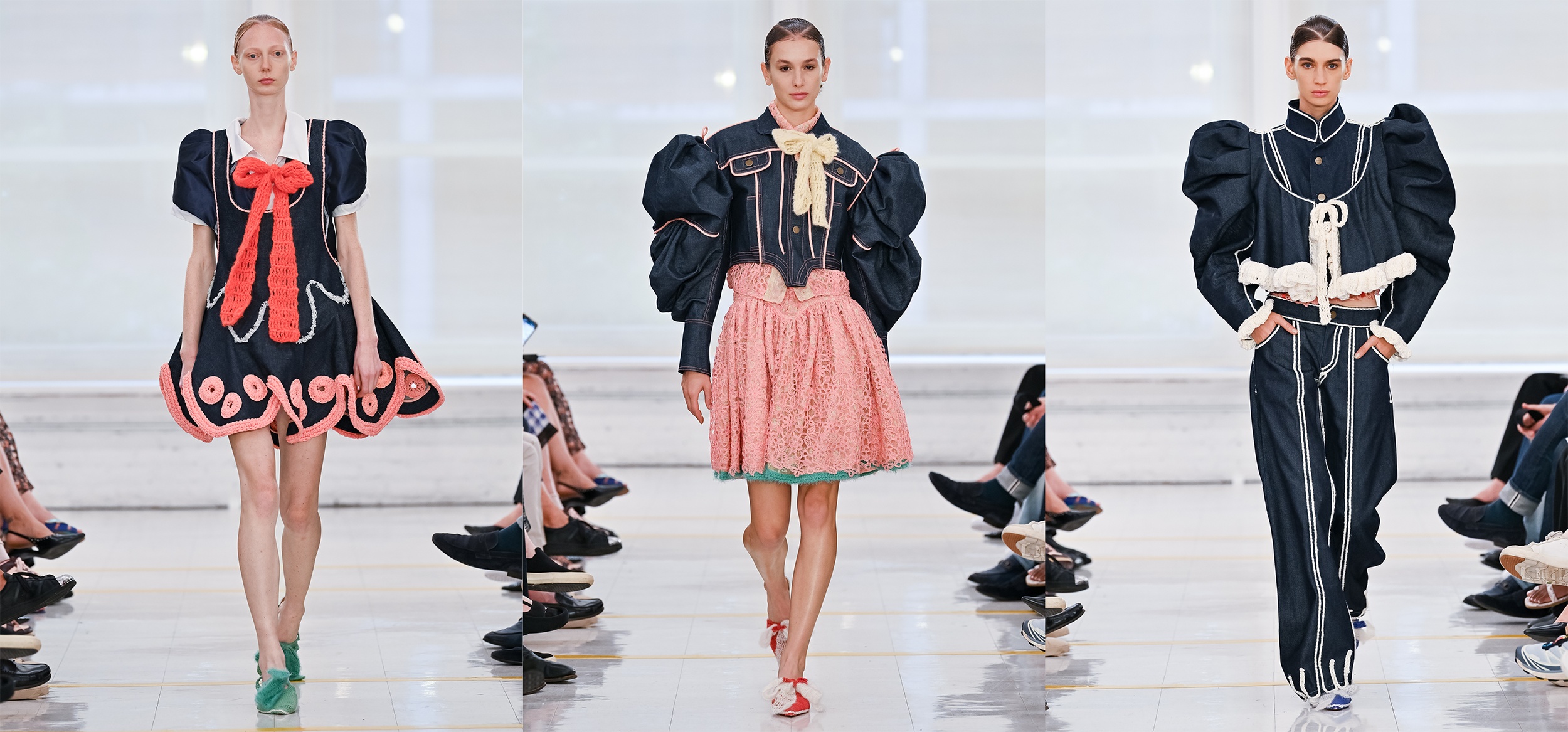
Cilia Dahl
@ciliaesthetic
Cilia Dahl is a womenswear designer trained in tailoring whose work combines historical references with contemporary construction, focusing on silhouette, volume, and functionality. A Parsons MFA graduate, she works extensively with denim, incorporating detailed craftsmanship and influences from second-hand culture to create nostalgic, practical, and enduring ready-to-wear.
Cilia’s collection blends nostalgia and personal wardrobe staples with historical fashion references, reimagining Romantic-era silhouettes through denim and activewear. Exaggerated sleeves, gathered details, decorative trims, and playful proportions are paired with raw Japanese denim and enlarged traditional construction details. Inspired by Tove Jansson’s Moomins, oversized crochet, colorful accents, and layered lace add softness, humor, and transparency to the collection.
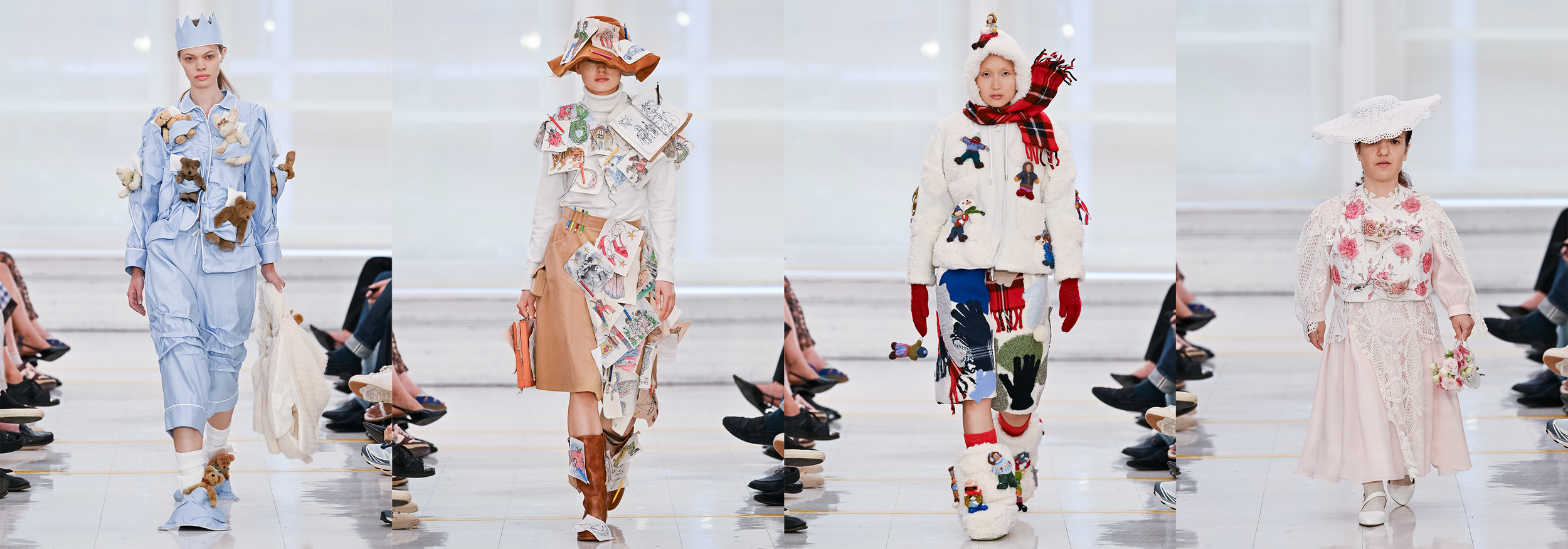
Caity Briare: Chase Ave. Collection
@ca8ty
Caity Briare is a New York-based artist and designer whose brand, Ca8ty, treats clothing as wearable art, combining whimsy, humor, and storytelling with intricate appliqué and free-motion embroidery. A Parsons MFA graduate, her practice centers on upcycling, sustainability, and inclusivity, with collaborations including KidSuper’s Spring/Summer 2026 collection.
The collection draws from childhood memories at the designer’s grandparents’ home in Portland, translating family traditions, games, art, and treasured objects into clothing. Inspired by the 1970s, the silhouettes and fabrics evoke the era while incorporating playful three-dimensional details such as teddy bears, game pieces, teacups, and ornaments. Many embellishments are interactive or upcycled, turning nostalgic objects into functional design elements. Hand embroidery, fused fabric, watercolor-inspired artwork, and whimsical details further capture childhood's creativity and warmth.
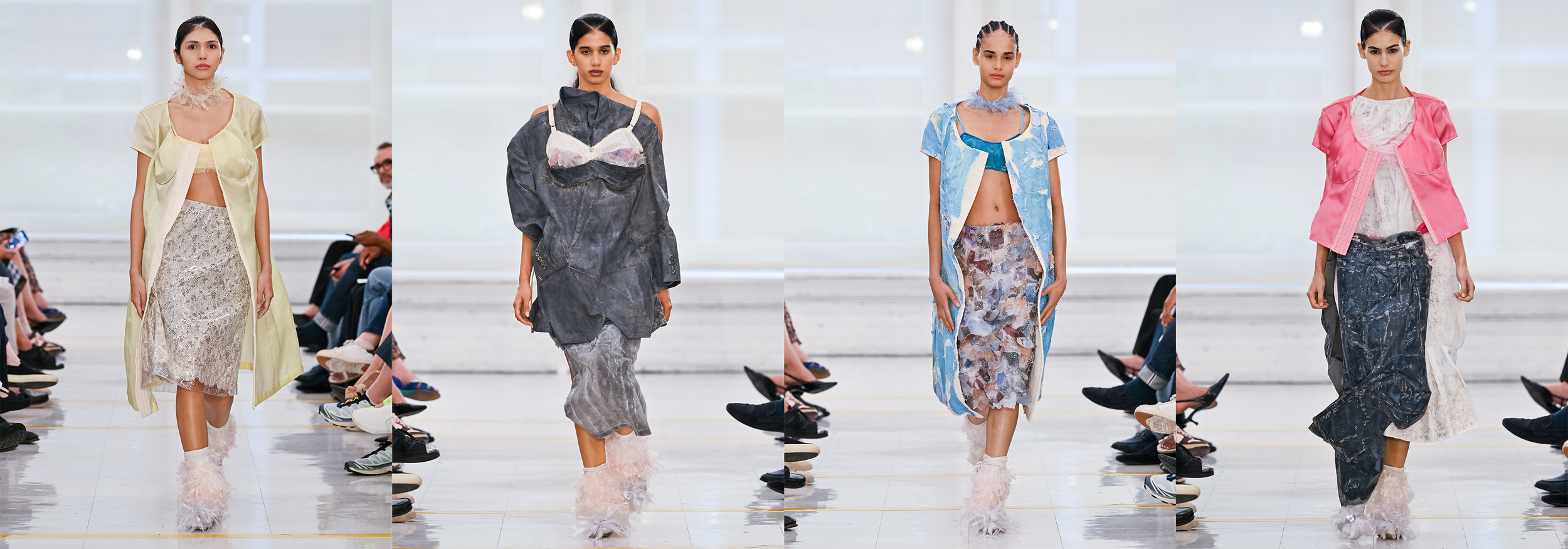
Melissa Rosales Parra: REMAINS
@melissa___rosales
Melissa Rosales is a Mexican-American fashion designer based in New York whose textile-driven practice explores femininity and the relationship between clothing and the body through sculptural construction, unconventional materials, and reworked garments. Raised in Ciudad Juárez, her work combines technical garment-making with deconstruction and experimental forms, informed by the cultural contrasts of the U.S.–Mexico border.
REMAINS is rooted in Ciudad Juárez, Mexico, exploring the life cycle of secondhand clothing sold in open-air pacas.
The collection reflects how garments accumulate traces of wear as they move through the city’s harsh desert environment. It contrasts idealized femininity—seen in Disney imagery and decorative surroundings—with the fading and erosion caused by sun, dust, and time. Unconventional construction distorts familiar garments, while materials are compressed, sealed, and embedded in silicone, latex, and PVC to capture physical wear and transformation.
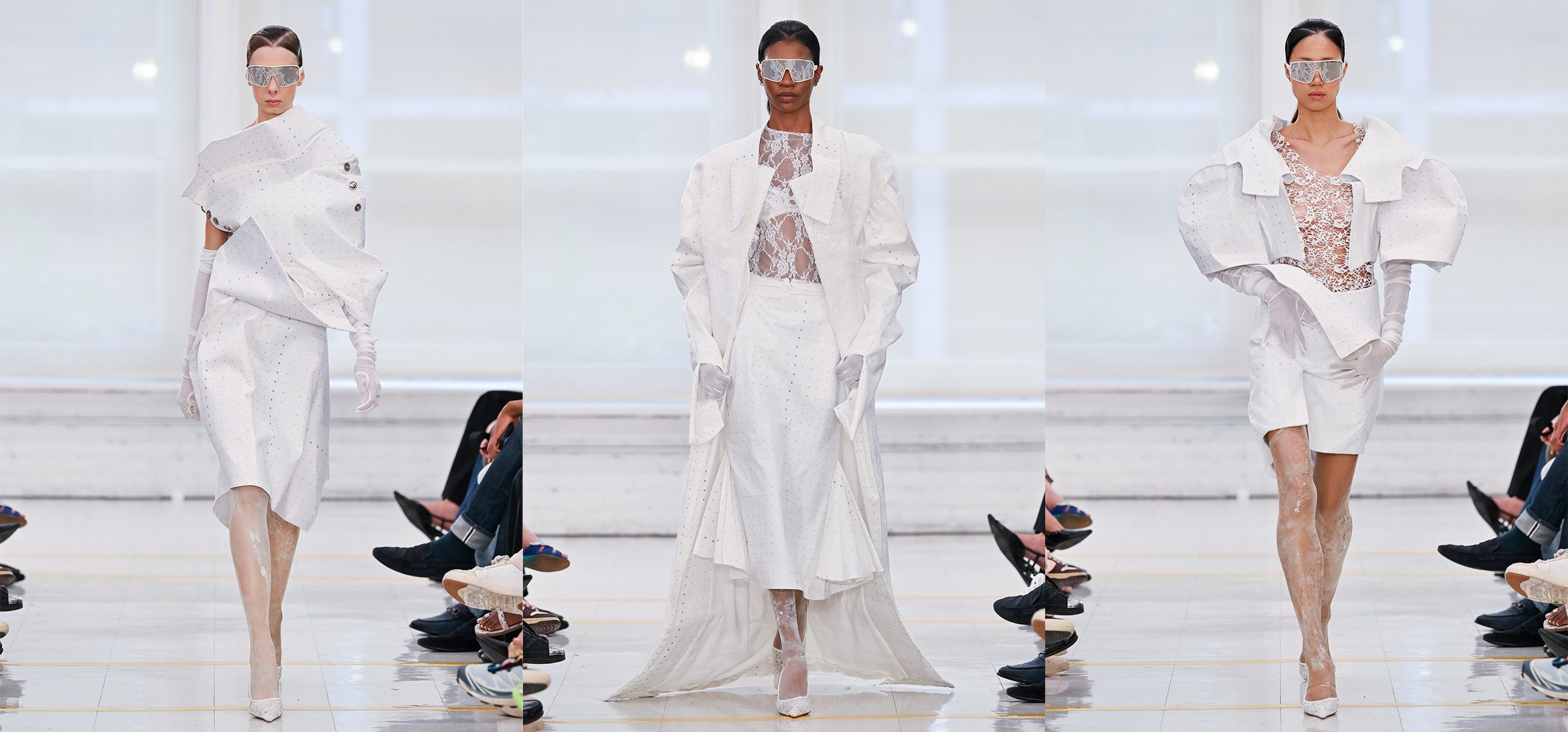
Mengbo Zhao: Roman/tic/ism
@maychawqaq
Mengbo Zhao is a New York-based conceptual fashion designer from Dalian, China, whose work merges architecture, deconstruction, and experimental construction to transform familiar clothing elements into unexpected forms. A Parsons MFA graduate, she explores presence and absence through distortion, repetition, printed textiles, 3D printing, and textile manipulation, treating fashion as both a spatial and conceptual medium.
Roman/tic/ism explores romance as both a personal experience and a system shaped by tradition. Inspired by Romantic-era garments, the designer deconstructs historical patterns and reassigns their functions—turning sleeves into other elements and waistcoat panels into collars—while maintaining enough familiar structure for the garments to remain recognizable. Blue-dotted pattern paper becomes a digital print, while lace and 3D-printed materials add texture and contrast. Ultimately, the collection questions how inherited ideas of romance and clothing can be dismantled, reinterpreted, and woven into everyday life.
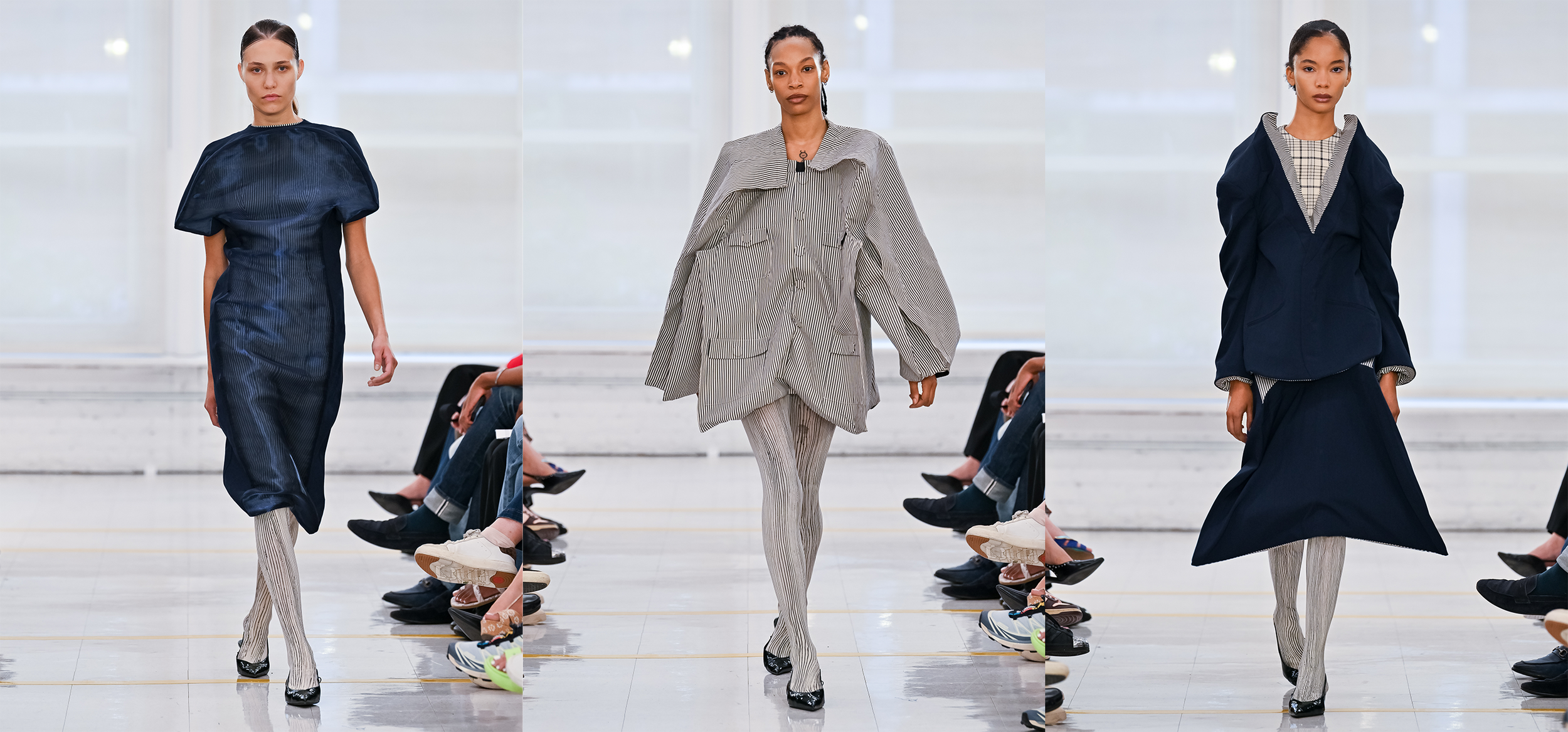
Ruihaonan Wang: Collection 1
@ruihaonan
Ruihaonan Wang is a Chinese fashion designer and artist whose concept-driven practice treats clothing as a medium for translating ideas into physical form, allowing construction to evolve through experimentation and process. A Parsons MFA graduate and 2025 CFDA Geoffrey Beene Design Scholar finalist, his work explores the shifting relationship between subject and object through couture-level conceptual garments.
The collection explores fashion as an experience shaped by perception, rather than something that exists solely within clothing. Garments are treated as fluid, temporary structures that exist between the body, the garment, and the viewer’s gaze. Organza, air, and negative space become central design elements, with concave silhouettes and sculptural cutouts emphasizing absence and the space surrounding the body. Geometric prints that reveal fabric grainlines reinforce the collection’s architectural and precise approach.
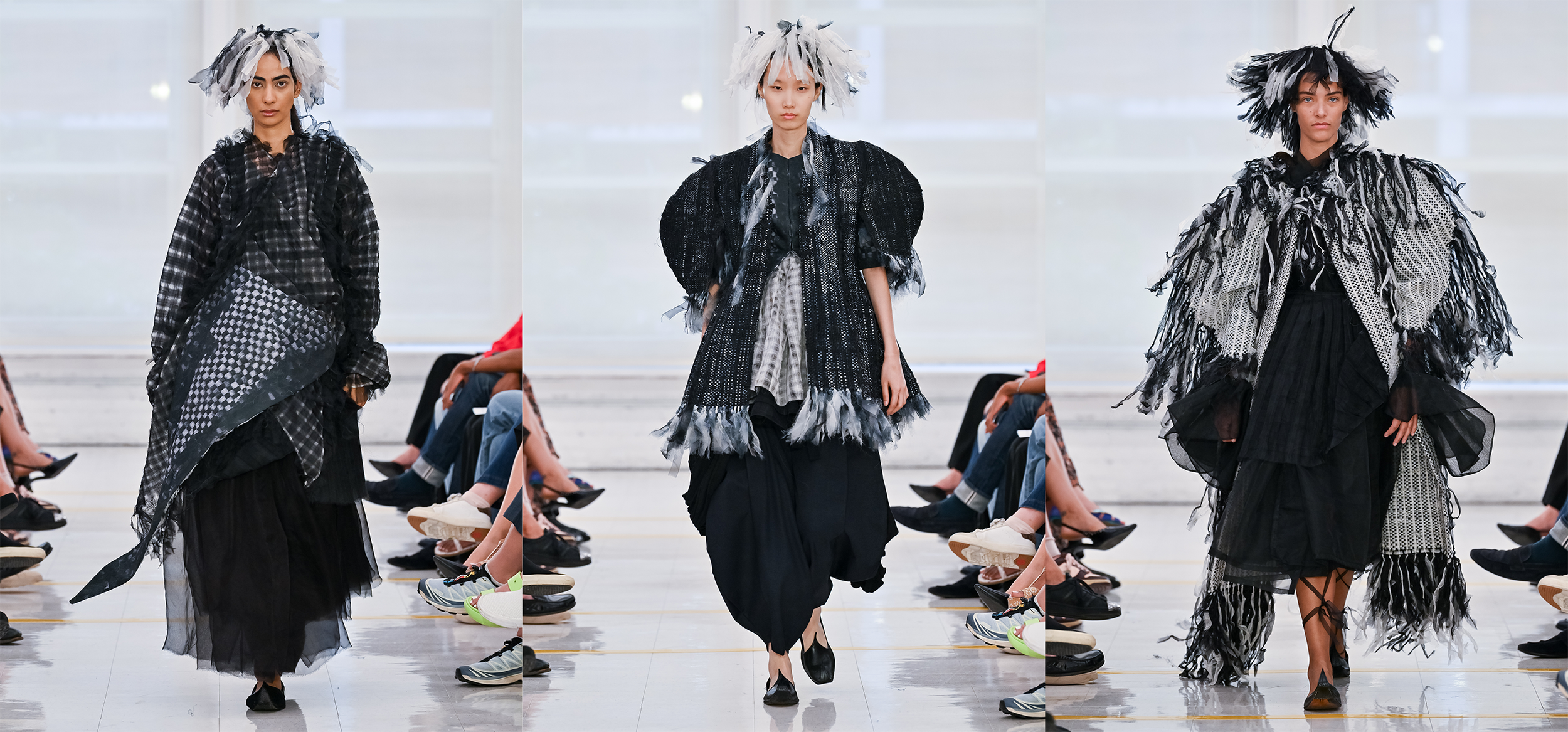
Sabahat Javed: Unbecoming
@sabahatjavedch
Sabahat Javed is a Pakistani fashion designer and textile artist based in New York whose material-driven practice centers on upcycling, mending, and traditional textile techniques rooted in her upbringing in Islamabad. A Parsons MFA graduate, she works instinctively through weaving, draping, and repurposing scraps, embracing materials' natural texture, movement, and imperfections.
Unbecoming reimagines mythical female creatures from Pakistani folklore, reclaiming figures historically portrayed as dangerous or frightening and presenting them instead as symbols of strength, autonomy, and misunderstood femininity. Inspired by the volume and layering of 19th-century Mughal dress, exaggerated silhouettes both conceal and assert the body, creating a tension between modesty, protection, and power. A black-and-white palette emphasizes texture, structure, and contrast, pairing transparent organza with rigid canvas and cotton. Off-loom weaving, pleating, layering, and hand construction leave the making process visible, while enlarged photographs of woven textiles become graphic prints. Traditional khussa shoes ground the experimental collection in South Asian heritage, while historic techniques and references are transformed into a new vision of the women and stories behind them.
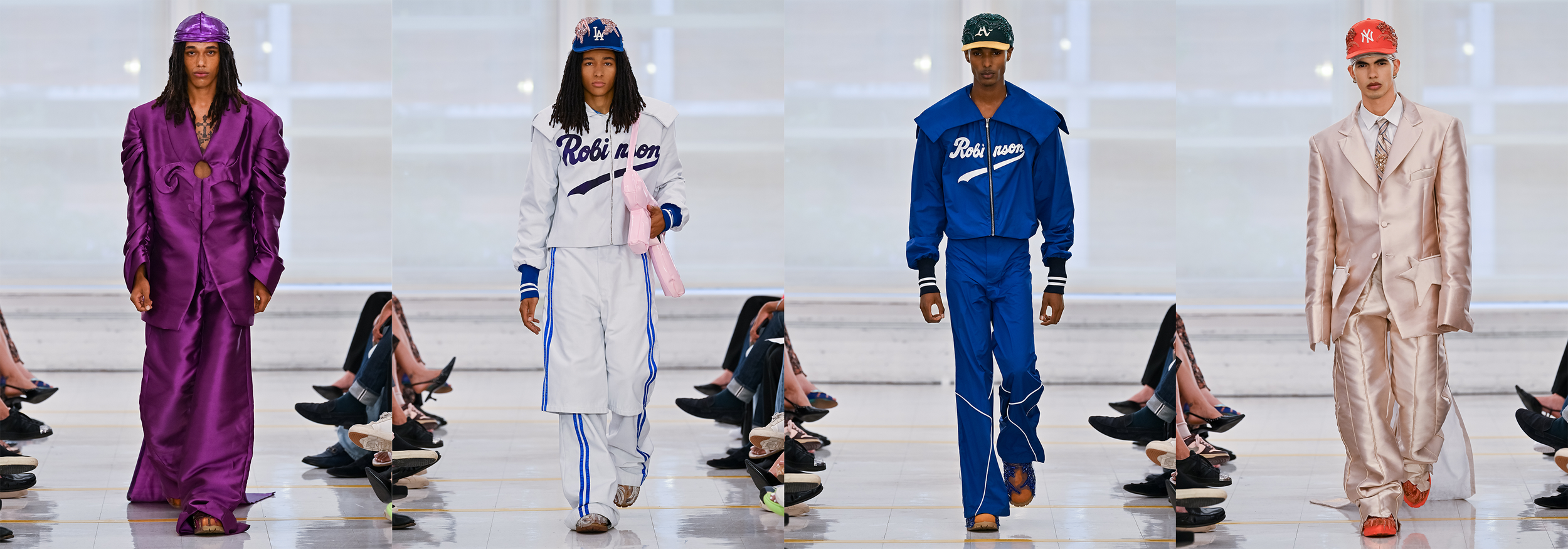
Akylai Sydykova: Backyard KGB
@ayaimage
Akylai Sydykova is a New York-based designer from Kyrgyzstan whose practice explores dramatic volume, experimental draping, and material manipulation to transform the relationship between clothing and the body. A Parsons MFA graduate, she creates maximalist silhouettes that balance imposing scale with a playful, romantic, and subtly whimsical sensibility.
Backyard KGB draws inspiration from the watchful grandmothers of post-Soviet neighborhoods and the surreal Soviet animated film Hen, His Wife. Familiar everyday garments are transformed through exaggerated proportions, adjustable internal straps, and unexpected openings, creating silhouettes that shift between the practical posture of a grandmother on a bench and the distorted characters of the film. Cotton twill references traditional outerwear, while floral wool-blanket motifs, densely ruffled tulle, and warped graphic prints evoke post-Soviet domestic life. A palette of red, blue, white, and grey, inspired by Lise Sarfatti’s Acta Est, brings together the collection’s nostalgic and surreal influences.
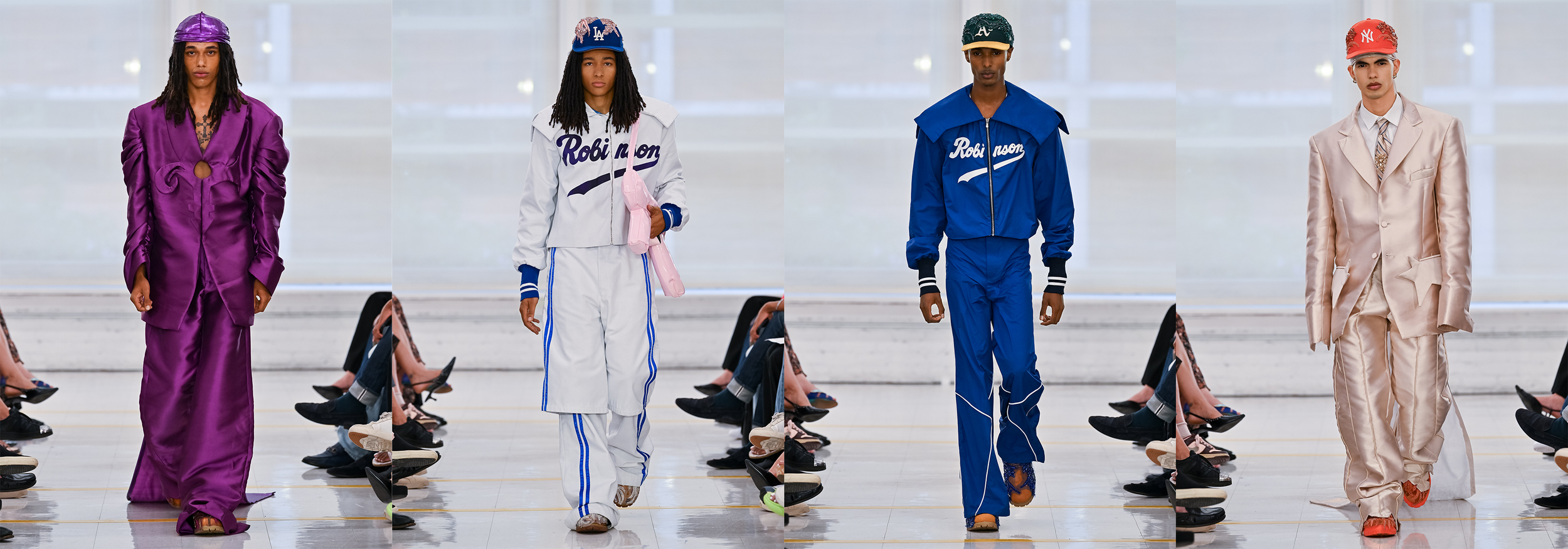
Robinson Brown: C o d e s t i t c h i n g
@robinsonbrown
Robinson Brown is a New York-based fashion designer and art director whose work reimagines American luxury through tailoring, sportswear, and Black cultural storytelling, drawing from his upbringing between Northeastern prep culture and the Bronx. A Parsons Merit Scholar with experience at Dior, Sotheby’s, Luar, and Christopher John Rogers, he brings together disciplined craftsmanship, contemporary urban movement, and references to Black American excellence.
Codestitiching, named after baseball pioneer Jackie Robinson, explores the legacy of Black figures who challenged boundaries and expanded ideas of possibility in America. The collection reflects the idea that clothing, like identity, can adapt to different environments and histories. Its design language merges New England prep-school tailoring with the style of the South Bronx, pairing structured jackets and ties with baggy denim, Timberlands, oversized proportions, and a youthful New York attitude. Each look translates the visual language of influential Black cultural figures into contemporary forms, reinterpreting recognizable references through tailoring, color, and silhouette.
Tearsheets by Daniel Lopez, Art Director, PhotoBook Magazine
*Images courtesy of BFA
Photo Credit: Darian DiCianno
RELATED STORIES