Loved Twice Bridal Is Giving the Wedding Dress a Second Life
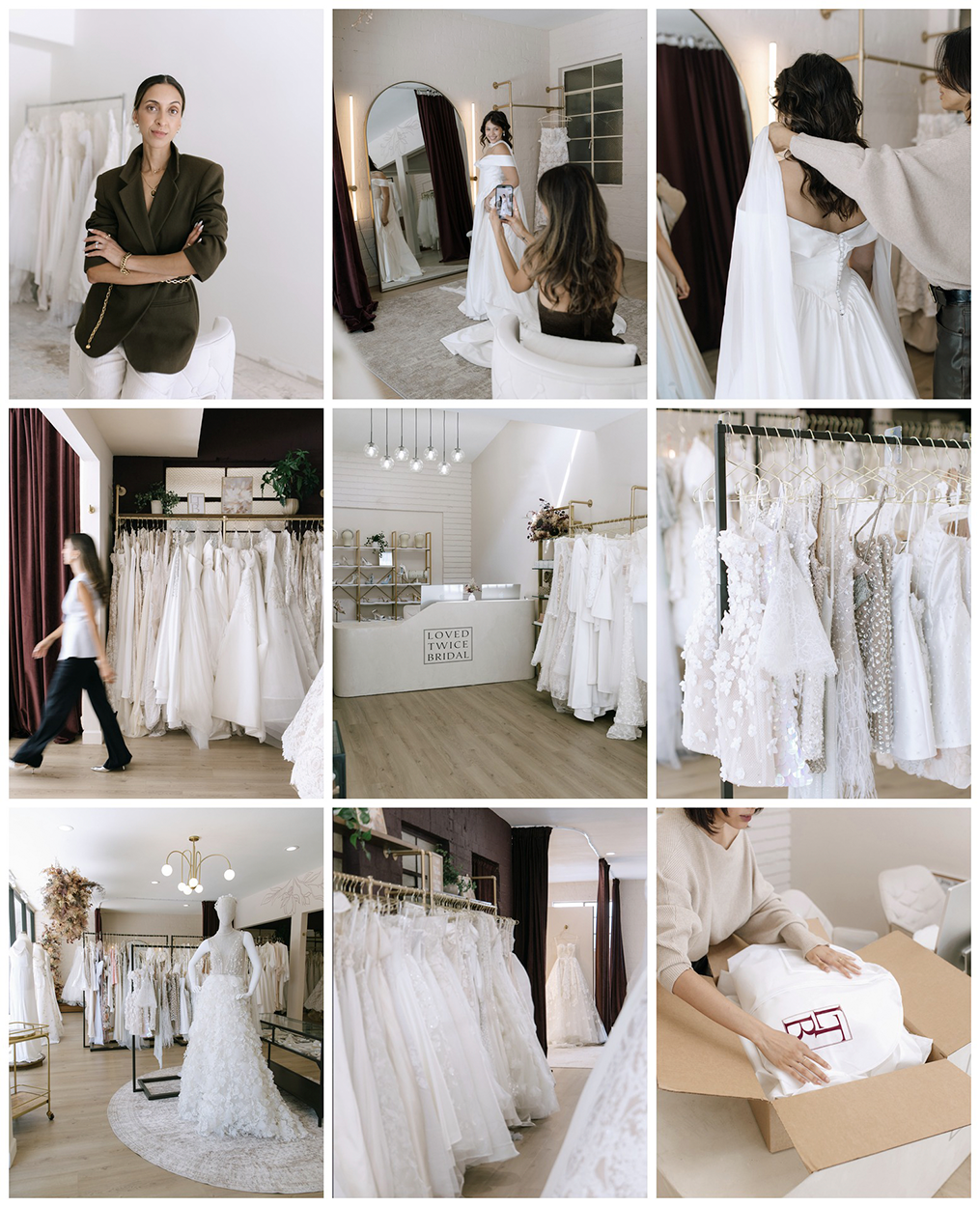
When the bridal industry came to a standstill in 2020, Sarah Ghabbour found herself calling brides whose weddings had been postponed or canceled and asking what they planned to do with dresses they could no longer wear. After nearly a decade working in bridal, Ghabbour had already seen the disconnect between the traditional boutique experience and the growing world of online resale. COVID-19 made that gap impossible to ignore. The experience ultimately led her to create Loved Twice Bridal, a curated resale destination built around the idea that buying a secondhand wedding dress shouldn't feel like settling. From its try-at-home program and tightly edited selection to its emphasis on sustainability and the personal stories behind each gown, Loved Twice approaches bridal resale with the same care and intimacy as a luxury boutique. We spoke with Ghabbour about the origins of Loved Twice, the emotional economy of selling a wedding dress, the realities of sustainable bridal, and why she believes secondhand should eventually become a standard part of the wedding-dress shopping experience.
Let's start at the beginning. How did Loved Twice come about?
COVID was a big thing. At that point in 2020, I had been in the industry for nine years. I opened the Pnobius flagship here in Beverly Hills in January 2020, and then the shutdown happened in March. During that time, I was responsible for calling people whose weddings were coming up and asking, "Your wedding's in April. What are we doing? Do you need your dress? Can I ship it to you?" And 50 or 60 percent of the girls just didn't need their dresses anymore. They would ask, "Can I return it? I don't know when I'm getting married. What can I do?" And unfortunately, I was the one who had to tell them, "All sales are final. You have to pick up your dress. We can't return it." That's really where the idea started. I realized there was this huge disconnect. You would have a bride try on a dress in a store, and then she'd go online and find the same dress for less. At the same time, all these women were sitting on beautiful wedding dresses they weren't going to wear again, and there wasn't really a local place for them to go.
So you saw an opportunity to connect those two sides of the market?
Exactly. I love vintage, I love thrifting, and I thought, "How do we bring these women together?" I also had a three-year-old at the time, and I was ready to get out of retail hours. I wanted to build something that had movement and purpose. There really wasn't a local bridal consignment store in LA. So I thought, okay, let's create it.
One thing that makes Loved Twice different is the try-at-home program. How does that work?
We authorize the customer's credit card for the full balance, and then there's a $75 deposit. They get the dress for three days, so they can take it to a tailor, show their mom, have their friends see it, whatever they need to do. If they keep it, the $75 goes toward the balance. If they don't, they lose the deposit and the shipping costs. Originally, the program was really designed for people who weren't local, but we've found that local brides use it too. Sometimes you just need another day to decide. I want people to make informed decisions. I think there's a way to balance being a business and also being human.
How do you decide which dresses actually make it onto the site?
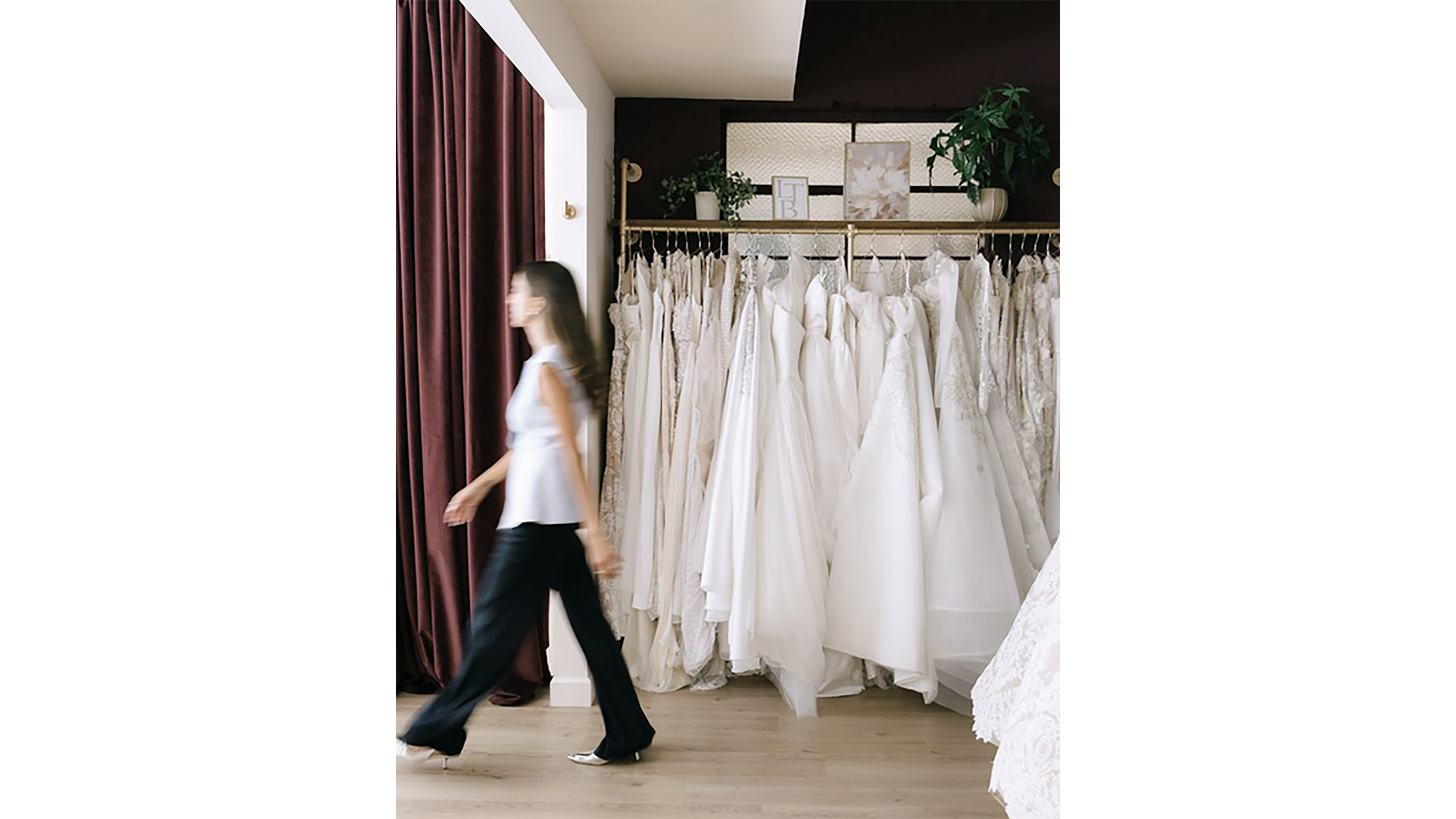
We don't take everything. Our general guideline is that the dress needs to retail for around $3,500 or more, but it's not just about the price. We look at the designer, how it's manufactured, whether the designer cuts sustainably, whether they work ethically, and then we curate based on style. Every single item that comes in is truly curated. We charge $25 for a consignment term and ask for exclusivity. If we don't wholeheartedly believe the item will sell, why would we take it? Think of it like your curated closet, but for your best friend's wedding. It's high-touch for every item.
What does that high-touch experience look like for the person selling the dress?
We do everything. We photograph it, list it, communicate with the customers, and handle the sale. We take 50 percent when it sells. But wedding dresses are so emotional. So if somebody comes in and says, "I'll give you this much for it," we don't just accept. We talk to the seller first. It's their dress. We also have a six-month consignment term. At the end of that, we can look at the analytics and say, okay, here's how many people viewed it, here's how many people saved it, here's what we think we should do. You can take it back, renew it, or adjust the price. The longest we've had a dress was three years. And then it finally found the perfect bride.
Does every dress have a story behind it?
Oh my God, yeah. They all have a name. They're like our children. They really are. Our main collection is four years or newer, with a very small archival vintage collection. We can tell you who the original bride was, what store she bought it from, what alterations were done, if and when she got married, and where she got married. Then there's the personal side of the story, and we can also tell you about the brand itself. So there's so much information behind every gown.
That emotional history seems like a big part of the experience.
It is. I feel like we're 100 percent therapists. And we're also kind of brokers. When you get an offer on a house, a broker has to tell you the reality. It's not necessarily what you wanted to sell it for, but given that it's been on the market for 60 days, maybe you should take the offer. It's very much the same thing. Someone might have paid $20,000 for their dress and think, "I want $20,000 back." But that's not necessarily how the secondhand market works. Maybe the dress is worth $10,000 now. Sometimes I'll even tell people, if you just want to get rid of it, donate it. I don't want you to sell your dress unless you actually want another person to wear it.
Are there moments where you get to see that connection between the original bride and the new one?
All the time. We had one bride who had just had a baby, and her mom called us. I told her that her dress had sold to a Thanksgiving backyard bride who fit perfectly and was there with her mom. The original bride cried. It's really special. Sometimes we know everything about the dress — who bought it, where she bought it, where she got married — and then we get to hear the new bride's story too. I call it the "Sisterhood of the Traveling Wedding Dress."
How do you see Loved Twice fitting into the larger luxury resale landscape?
Bridal is different. The RealReal is a huge company, and their model is volume. That's their business model. But bridal is such a high-touch, appointment-based experience. If you expect a bride to buy secondhand, you have to give her that same in-store boutique experience. She shouldn't feel like she's sacrificing the experience because she's buying something secondhand. We want her to feel like she's shopping with a friend and getting the full-price boutique experience without compromising on sustainability.
Sustainability seems to be becoming an even bigger part of the conversation around Loved Twice. Has that always been the mission?
Sustainability has always been the mission, but I've definitely become more vocal about it in the last six months. It's really just how I live my life. My nephew turned one, and my sister was looking to buy him one of those little activity gyms. I said, "Wait a minute, I have one. My daughter doesn't use it anymore." I gave it to her, and it blew her mind. It was like, "Oh, you don't have to buy new. That's the same mentality I have with everything. If my son needs a desk, I'm going to try to buy it on Marketplace. With bridal, there's such a huge opportunity. If you can save the resources that go into producing another wedding dress and give an existing dress another life, why wouldn't you?
Are there parts of the bridal industry that you think still need to change?
Unfortunately, I think some brands that don't cut sustainably are doubling down. One thing that really bothers me is private label. A private-label collection is something that's only available to wholesale accounts. It's not online, and it's not necessarily shown at market with the same kind of imagery or promotion. You can have a designer whose normal collection wholesales for $500 to $700, and then their private-label gowns wholesale for $300 to $500. They market them to the bride as something exclusive or special to that boutique. But those are often the ones that are made cheaply overseas and in bulk. We actually have to be the ones saying, "Actually, your private designer? We don't take those."
You've also talked about changing the way the industry thinks about production and seasons. What would that look like?
I think there's a lot of waste in producing two collections a year. You go to market in October, you buy your stock pieces, they arrive in March or April, and then you haven't even had enough time to understand how they're performing before you're already buying again. I'd love to see one annual market around May. Give people more time to see what works, understand the core busy season, and slow down production. We also work with brands and boutiques that have samples sitting in warehouses that they can't sell. So I'm always thinking, what can we do to give that gown a second chance?
Has COVID changed what brides want from their wardrobes, too?
Definitely. A lot of brides bought dresses during the pandemic, their weddings got postponed, and then they went shopping again. Suddenly they had two dresses and felt guilty about it. But then that created the second look, the party dress, the after-party dress. It became this whole weekend wedding wardrobe. So in a weird way, COVID created this shift toward having multiple looks for your wedding.
How do you think about trends when you're curating resale?
We don't necessarily curate for a particular trend. That's where I think our unicorn gems come in. Certain styles everyone wants at one point. A good example is the Galia Lahav Maya dress. Everyone wanted it. Then six to twelve months later, everyone knew somebody who had worn it, and suddenly it wasn't as desirable. There's a science to inventory. You have to know how many of something to take, when to stop taking it, and when the market is moving on.
Your background is interesting because you didn't initially set out to work in bridal. How did you get here?
I was a biology major. I thought I was going to be an optometrist. Then I got married after college, and my husband joined the Navy, so we moved around. I started as an unpaid intern and worked my way up. I became a stylist, then an assistant manager, then an alterations manager. I worked in upstate New York, San Diego, Carlsbad, and LA. Every place and every business model taught me something. I wasn't formally trained in business. I learned everything in the trenches.
How has your cultural background shaped the way you think about bridal and resale?
I grew up in an Egyptian immigrant family. I got married at 22, which is very normal in Egyptian culture, although now I look back and think, "I don't know if I'd let my own kids get married at 22." There can also be a taboo around buying secondhand in Middle Eastern families. Some people want a dress that's never been worn. That's one reason our boutique and designer samples matter. We have gowns that have never been worn by a bride. That way, we can still serve the customer who wants something untouched while giving the dress a second life. Being a woman in fashion and business within my cultural background has also made me comfortable pushing boundaries a little bit. I think that's important when you're trying to change an industry.
What is the experience like when someone comes into Loved Twice to shop?
We're very clear that all sales are final. But that's why the try-at-home program is so important. I will sometimes tell somebody, "Don't buy this dress." If it doesn't fit, if it's not right, I would rather lose the sale than have someone regret spending thousands of dollars. We also don't serve champagne. Part of that is because of the California liquor permit, but honestly, I don't want alcohol to cloud someone's judgment when they're buying a dress that could cost $16,000. I want you to make a clear decision. I want you to save thousands of dollars and have a great experience. Then the sale can also benefit the original bride who consigned it.
What do you want Loved Twice to become?
I want secondhand bridal to become much more mainstream. I want it to just be part of the rotation when you're shopping for a wedding dress. I want Loved Twice in every city. Right now, our physical location limits us, and the online business helps with that. But bridal is so experiential that I believe we need more of these spaces. Ultimately, I want secondhand bridal to be normal. I don't want it to feel like a compromise.
Interview by Alison Hernon, Editor-In-Chief, PhotoBook Magazine
Article by Emma Green, Assistant to Editor-In-Chief, PhotoBook Magazine
Tearsheets by Daniel Lopez, Art Director, PhotoBook Magazine
*Images Courtesy of Loved Twice Bridal
RELATED STORIES