Inside Imperial College London's , After the Heartbreak
Inside Britain's second wave of sustainable fashion, where regulation, science, and the runway are quietly rewriting the wardrobe.
I. The Coat
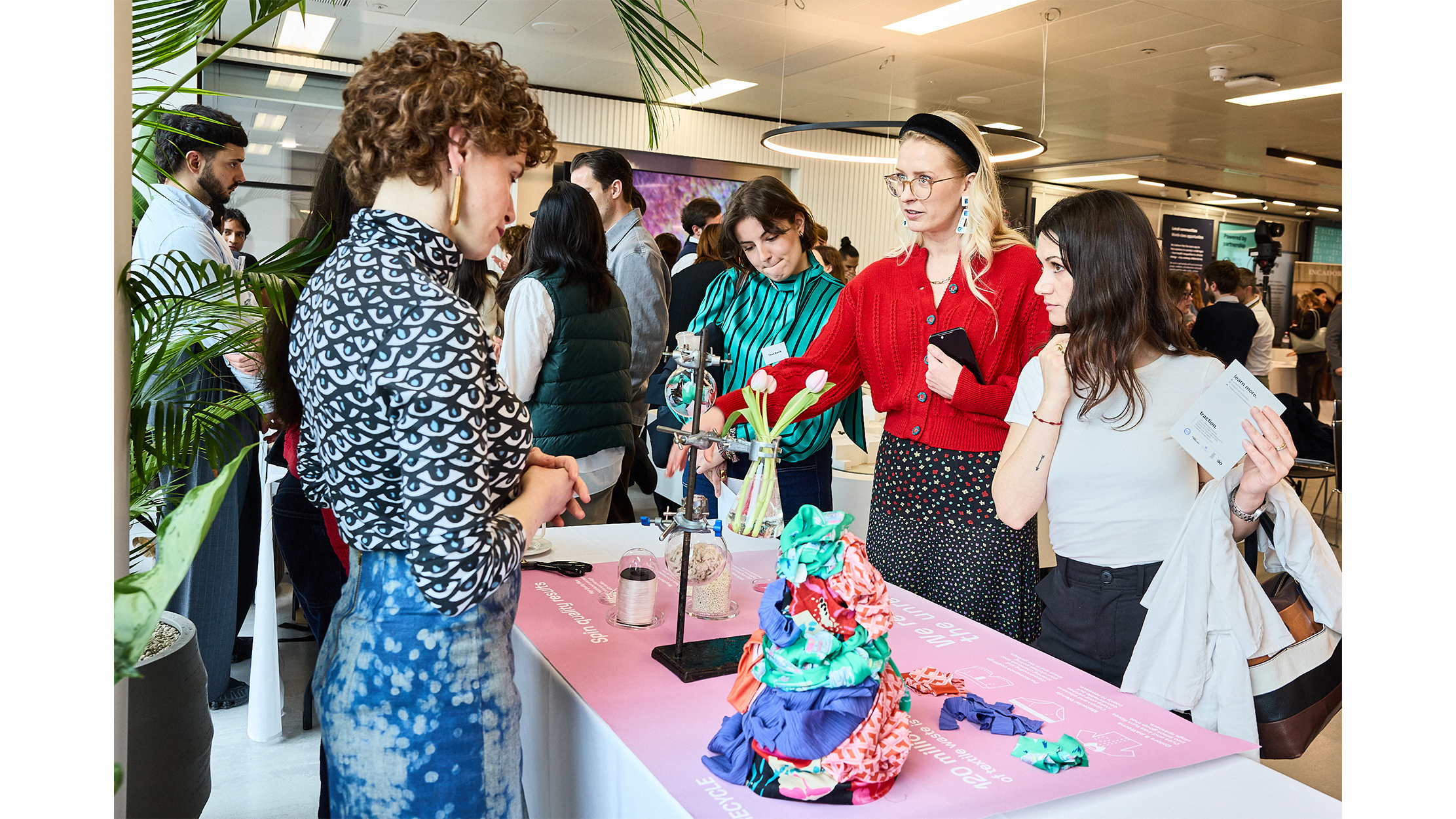
The April light inside Imperial College London's White City campus had that particular Thursday morning cleanness, the kind that flattens colour and sharpens edges. Along one wall of the room, an exhibition had been assembled with the quiet confidence of people who no longer needed to persuade anyone: children's jackets cut from patterns inspired by satellite-folding geometry, fine jewellery forged from the copper and gold of discarded electronics, sequins engineered to behave like beetle wings because that is, in fact, where their colour originated. Most of it could have passed unnoticed in a department store. That was the whole point.
Among the coats hung one Genaro Rivas had walked on the London Fashion Week runway some weeks earlier. Standing at arm's length, it read as unremarkable outerwear: a clean silhouette, confident proportion, a fill that caught the light with the soft mass you expect from good down. What you could not see, without being told, was that the fill had been grown on bullrushes in British wetlands undergoing regeneration. That every metre of it represented up to ten square metres of restored peatland. That the coat was not a garment in the conventional sense but a vehicle, carrying climate infrastructure across a runway and into a wardrobe without declaring itself.
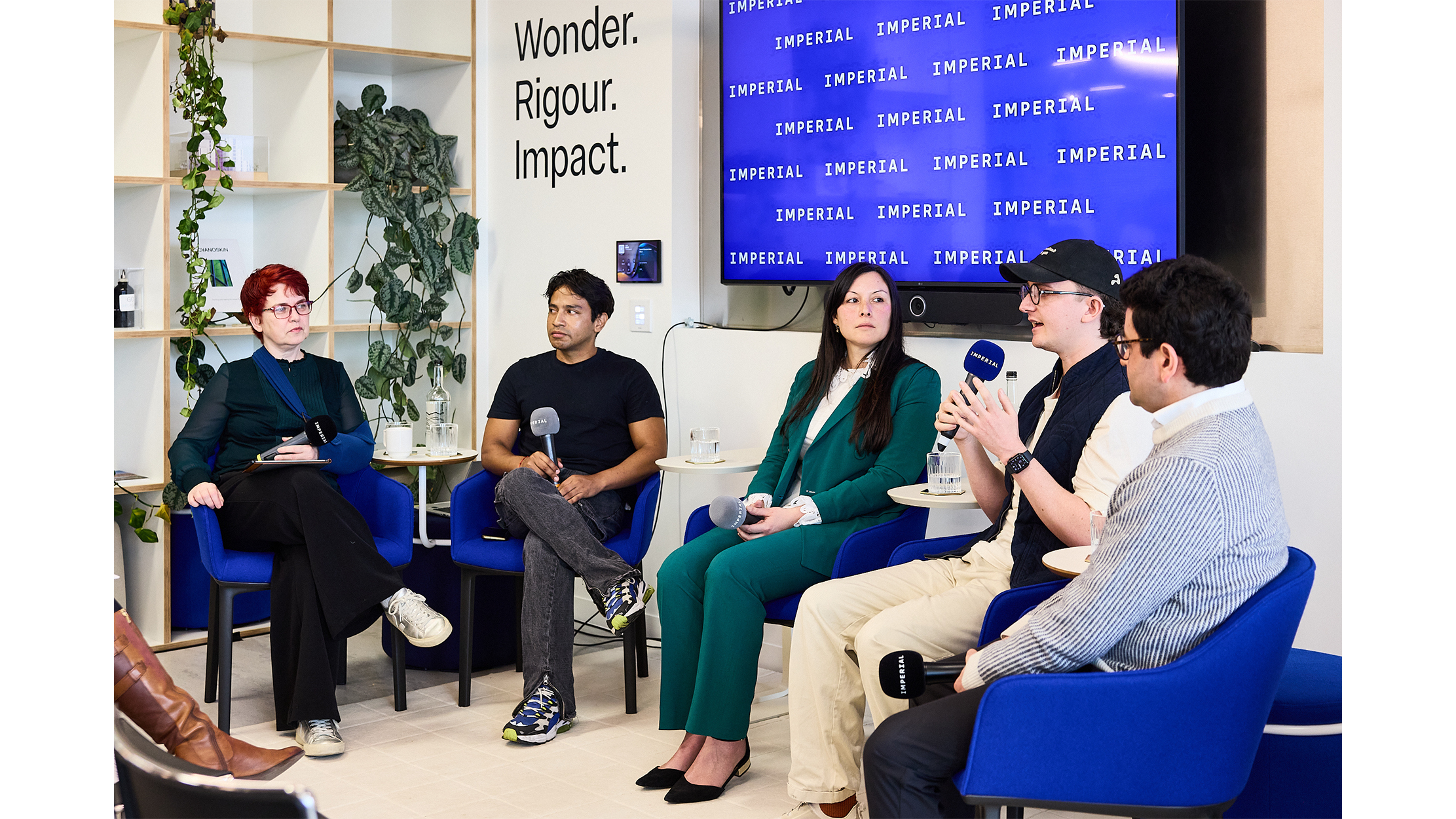
For most of the last decade, sustainable fashion has worked the other way around. It declared itself constantly. It was a vitamin, in the framing Julian Ellis-Brown, Forbes 30 Under 30 entrepreneur and co-founder of Ponda, offered from the panel a few feet from the coat. Brands took it where it flattered the story and left it where it threatened the margin. Global fashion R&D hovers near one percent of revenue, a fraction of what deep-tech sectors consider survivable. Petroleum-derived polyester flooded supply chains at prices no regenerated bullrush could meet. Heritage brands ran sustainability campaigns while fast fashion ran the economy. The vitamin, as vitamins do, went untaken.
II. The Tsunami
Irene Maffini does not soften the word. Fifteen years of clean-tech investing have taught her that industrial transitions run on pressure rather than persuasion, and the pressure arriving in textiles is, in her phrase, a tsunami. Thirty to sixty major pieces of regulation are moving through jurisdictions across Europe and North America, each one restructuring a different seam of the industry. PFAS, the category of forever chemicals that lives in water-repellent finishes, are being banned in California, in France, in Denmark by July, with the wave now breaking across Europe. Extended producer responsibility is rewriting the incentive logic of garment design: how clothes are made, how long they last, how they come back.
The ban on destruction of unsold stock, which at its peak has absorbed up to sixty percent of what some brands produce, is closing. Digital product passports are about to make the chemistry of every garment a matter of public record. Once, Maffini said with the economy of a woman who has delivered this line many times, consumers know what is in their clothing, they cannot unknow it.
Her argument, sharpened across portfolios in batteries, solar, and now textiles, is that this is how transitions actually function. Solar cost reductions of ninety-nine and a half percent over fifteen years did not happen because the technology was more beautiful than oil. They happened because regulation created demand,demand attracted volume, volume produced scale, and scale did the rest. Fashion, she suggested, is entering the same arc roughly two decades late. The painkiller is arriving. The question is who builds the infrastructure to deliver it.
III. The Second Wave
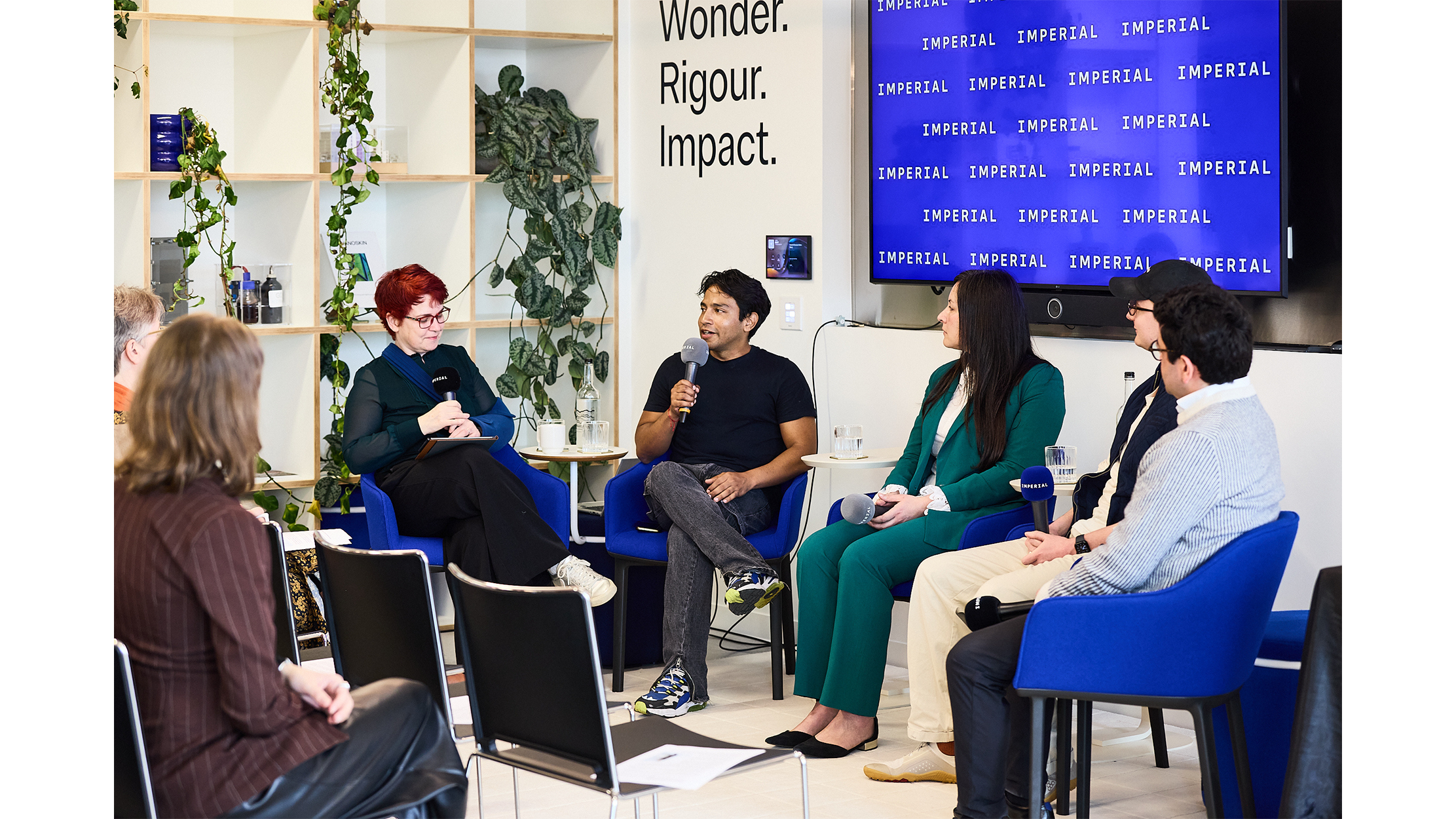
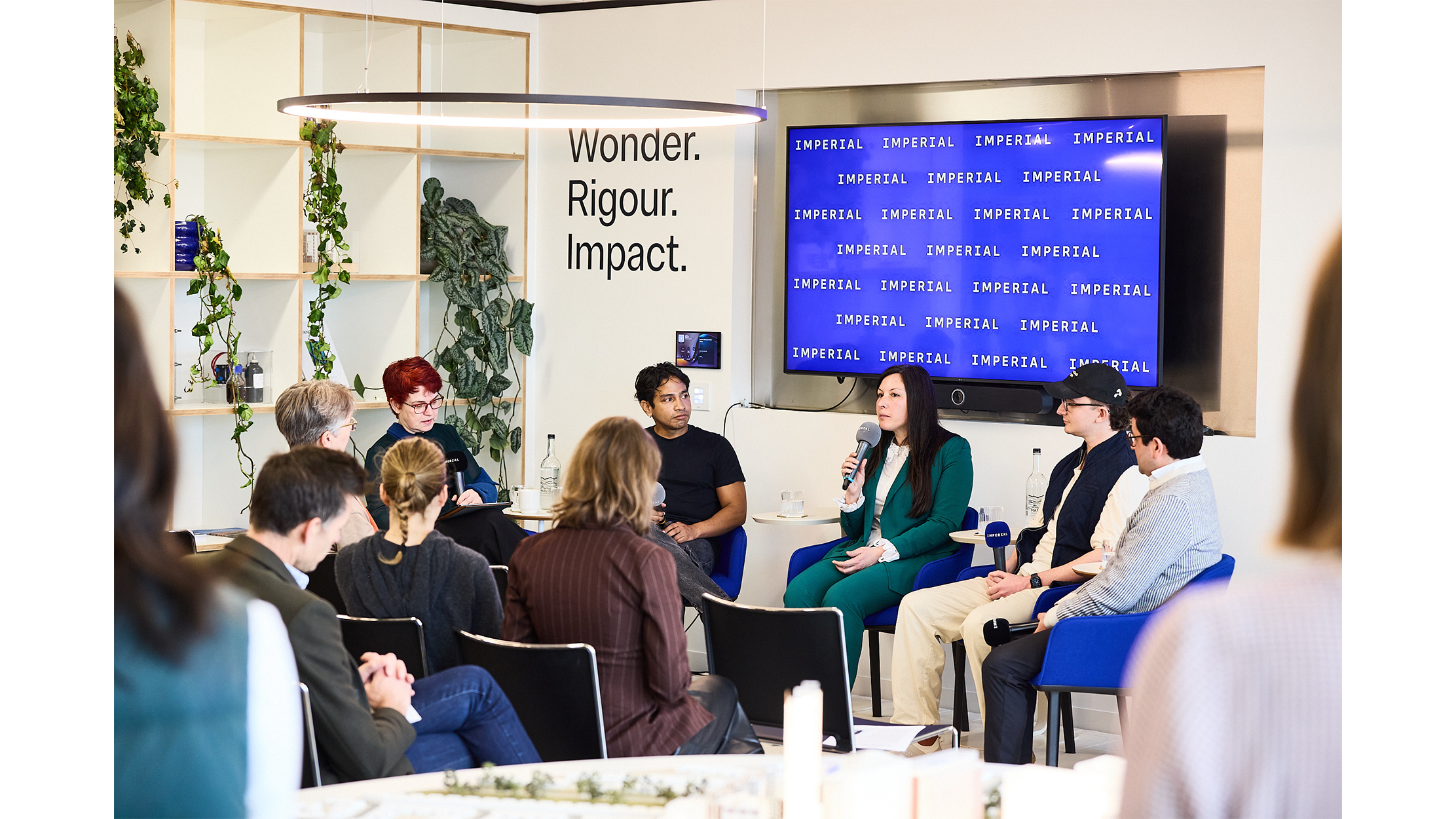
Inside the laboratories quietly multiplying across London, Cambridge, and the industrial estates of the M25, that infrastructure is assembling itself one strange, specific technology at a time. Solena Materials, the Imperial spin-out led by James MacDonald, designs textile fibres using AI on non-petroleum feedstocks, engineering the moisture management of wool into the mechanical performance of synthetics. MacDonald speaks like the materials scientist he is, which is to say he explains a revolution in the same register he might use to describe a good afternoon in the lab. Epoch Biodesign is using AI-engineered enzymes to break down nylon the industry had until now classified as unrecyclable; the company recently signed an MoU with INVISTA, the world's largest nylon manufacturer. DyeRecycle strips dyes and finishes from textiles to return white fibre to the recycling ecosystem, a pre-processing step on which everything downstream quietly depends. Sequinova is commercialising biodegradable sequins with Stella McCartney for Spring Summer 2027. Brilliant Dyes is building algae-based colour systems. PulpaTronics is printing metal-free RFID tags. Radiant Matter is engineering structural colour from cellulose, the way butterfly scales produce iridescence without pigment. Fibe is making fibre from the residue of the UK potato harvest. Ponda's BioPuff, now stitched into Rivas's runway, doubles as a vehicle for wetland regeneration at landscape scale.
None of this resembles the first wave. That wave was American, lavishly capitalised, and collapsed with a speed that has become industry folklore. Renewcell and Natural Fiber Welding are the cautionary tales, both back on their feet now in modified form, both having taught the field a set of lessons the British second wave has absorbed at close range. Unit economics matter more than narrative. Brands are end users rather than customers.
The real customer lives at tiers two and three of the supply chain, inside mills and dye houses and finishing plants, and a material startup that cannot plug in there with minimal friction will never see the off-take agreement that keeps it alive. What Maffini calls the heartbreak phase of the cycle, sitting between the hype and the breakthrough, is doing its work: burning off the bad capital, teaching the survivors.
The British wave is quieter. It raises less money. It bootstraps. It validates the science before it makes public promises, embeds with manufacturers before it approaches brands, and treats the supply chain as architecture rather than obstacle. Ponda embedded itself with DEFRA and with British farmers; two weeks before the panel, Ellis-Brown's team was seeding new wetlands in Cumbria from drone-compatible pellets. Solena secured a brand contract while still inside Imperial. The companies at White City have collectively won significant grant capital, Innovate UK awards, a £3 million Royal Academy of Engineering fellowship for Fibe.
What they have not secured, and what every speaker returned to with the patient frustration of people who have been making this point to the wrong rooms for years, is the layer of growth-stage equity that carries a material company from technology readiness level six to full commercialisation. Maffini has argued, in a report with the British Fashion Council and UKFT, for a £500 million UK venture fund focused specifically on this gap.
Nothing in the current industrial strategy approaches it. The strategy mentions creative industries. It mentions advanced materials. It does not mention textiles once. This is, to be direct about it, a political failure in slow motion. London attracted around £3.5 billion of private venture capital into AI last year alone. A new £500 million state AI fund adds further capital to an already saturated category. Textiles, an industry in which Britain retains genuine industrial heritage and houses whatEllis-Brown called an outsized density of global innovation, receives nothing comparable. The innovators stay, for now, because Britain is where the science lives and where facilities like Imperial's newly opened Grapht Works, a converted industrial estate a few kilometres from White City with twenty-eight reconfigurable units for pilot and demonstration manufacturing, make scale economically possible. Whether they remain is a question of whether growth capital materialises before American or European terms look better.
IV . The Final Mile
Rivas, seated at the end of the panel, carries the argument the science cannot make for itself. He is Peruvian, London-based, a Visa x V ogue Business Young Creator Award winner, and he speaks about fashion with the clarity of someone who has had to translate between continents and industries his entire working life. The material, he said, does not reach the wardrobe through the lab. It reaches the wardrobe through the collection. A biodegradable sequin is a chemistry project until someone stitches it onto a dress women want to wear. A regenerative wetland fill is a policy instrument until someone builds a coat around it that reads as desirable. Fashion is a business, he said, and the designer's role is to make the innovation carry its own weight inside that business. His most recent LFW collection blended BioPuff with plant-based leather and plant-based fur, three separate technologies folded into single garments that asked the viewer to think about none of them. This is the final mile of the industry's decarbonisation: not the molecule but the silhouette, not the patent but the styling, not the press release but the coat on the rail that someone picks up without asking what it is made of.
What the White City morning suggested, in aggregate, is that the technical problem is closer to solved than the capital and cultural problems surrounding it. The materials exist. The companies exist. The runway proof exists. The regulation is doing its conversion work, moving sustainable textiles from the moral ledger to the operational one. What remains is whether Britain treats this moment as the industrial opportunity it is, or whether, as with so many British innovations before, the second wave designs its future somewhere else.
The ten-year horizon that closed the panel sounded almost unremarkable because, if the thesis holds, it should: fibres that regenerate the landscapes they come from, dyes that wash in and out on demand, garments with digital twins that route themselves back through recycling without friction, unsold inventory as a historical artefact. Fashion, finally, operating as a system that does not require apology.
Most of the companies in that White City room will not be there in ten years. That is what venture capital means. But the few that survive will have rewritten what a wardrobe is made of, and by then the vitamin will have become so ordinary that nobody will remember calling it one.


Article by Aayush Anima Aggarwal, Contributing Editor, PhotoBook Magazine
Tearsheets by Daniel López, Art Director, PhotoBook Magazine
*Images Courtesy of Imperial College London
*Contributor bio (if useful): Aayush Anima Aggarwal is a creative director, brand strategist, and editorial journalist covering fashion, AI, and material innovation. He writes on the intersection of cultural representation and emerging technology.
Institutional @imperialcollege, @sustainableimperial, @undaunted, @britishfashioncouncil
Panel @genarorivas, @ponda.bio (Julian Ellis-Brown's company), @solenamaterials, @dyerecycle
Innovators featured or referenced @epochbiodesign, sequinova, @pulpatronics, @brilliantdyes,
@radiantmatter, @fibe.works, @petit.pli, @incadorjwellery
Brand references in the piece @stellamccartney, @berghausofficial
RELATED STORIES