Sean Murray, Celebrates 500th Episode on "NCIS"

Suit by Clara Son
Shirt by YSL
‘Badass Motherfucker’ Cufflinks by Terry Singh
Sean Murray is an actor best known for his longtime role as Special Agent Timothy McGee on NCIS, a character he has portrayed for more than two decades. As NCIS celebrates its 500th episode, Murray reflects on the beginning of his career as a child actor, the mentors who shaped him, and the experiences that have influenced his approach to acting. Throughout the interview, he shares insight into his career, McGee’s growth over the years, and the evolution and longevity of NCIS. Murray also opens up about his father, a longtime Navy captain, and the influence his father’s hard work, discipline, and values had on him growing up. From his early years in the industry to becoming one of the longest-standing members of the NCIS cast, Murray’s career has been shaped by commitment, loyalty, mentorship, and a genuine passion for his craft.
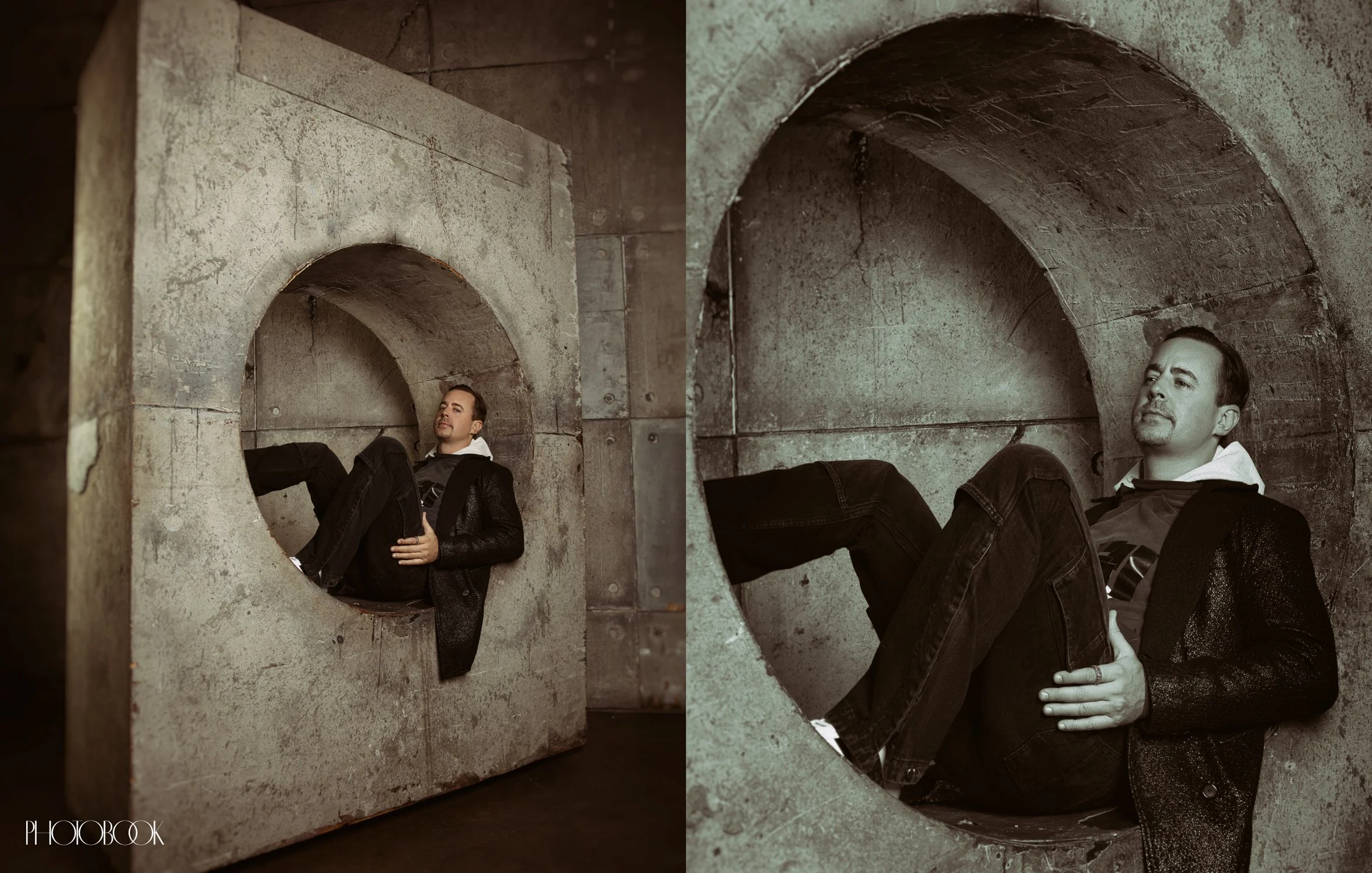
Hoodie by Fear of God
Pants by Urbane & Gallant
Jacket by Le Catou
Rings by Chrome Hearts
Sneakers by Adidas
You’ve been working as an actor since you were very young, so in many ways, you’ve grown up within the industry. Looking back, how do you think those early experiences and everything you learned along the way contributed to the career and perspective you have today?
You know, I did. I started young, around 12 or 13, and I did pretty well. I think it was harder for a lot of kids who were in the business, especially those who did extremely well and then went through puberty, started growing up, and weren’t little kids anymore. It was a tough business for a lot of people. I did pretty well as a kid and stayed working, which was nice. I was also in a position early on where I kind of knew what to expect. I had a good idea and a good framework for what the business was going to be. I had hits and misses—auditions that worked out and ones that didn’t. By my teenage years, I think, in a lot of ways, I got lucky. I’ll just be honest with you—I think I got lucky in a lot of ways. For a lot of kids who stayed working, worked quite a bit, or became very well known, it was harder because things change as you get older. I was fortunate. I worked pretty consistently as a kid, and I kept working through my teenage years. It definitely slowed down because that’s just what happens when you’re 16 to 18 in the business. They hire everyone over 18 to play younger, so that’s the way it always was. It’s kind of a hard deal being an actor between 16 and 18. But you get through those years, and I just kept my head down and worked. I had a lot of mentors coming up, so I had a lot of people in my life who kept me grounded and taught me the right kinds of things early on, which was really important. I didn’t quite know at the time how important they were, but as I got older and saw some of the nonsense in this business with a lot of actors, I realized I had been taught some pretty good habits early on. I think a lot of that had to do with me being able to just keep my head down, do the work, and let the work speak for itself. Luckily, I was fortunate enough to be able to work pretty consistently. I think all those things that I learned from my first manager, Gary Scialzo, Arado, and from a number of people I worked with over the years on different projects—I mean, hell, Mark Harmon on NCIS, to a certain degree, was a mentor to me. There were so many things that I was always learning, and I’ve just sort of always stuck to that. Those are really the things that were taught to me when I was young. They’re the kinds of things that form you and shape the way you approach things. I remember the first job I did was a Honey Smacks commercial. It was a cereal commercial. We were finishing the day and wrapping out the first day, and I came out of my little honey wagon trailer. My manager, Gary, was there and asked how everything went. “Everything went great.” He said, “What’d you do with your wardrobe?” I said, “What do you mean?” He said, “What did you do with your wardrobe? The wardrobe that they gave you this morning. You changed out of it, right? At the end of the day, what’d you do with your wardrobe?” I said, “Oh, well, it’s in the trailer. I left it in the trailer.” He said, “Did you hang it up?” I said, “Oh, no, no, no. I just put the clothes on the bed in the trailer.” And he goes, “Yeah, they gave it to you hung up. Costumes handed that to you hung up. You should probably just give it back hung up.” Little things like that taught me how to approach things. So I had a lot of good people in my life, and I won’t discount that.
You’ve said that you developed your strong work ethic from your father and his qualities. Growing up with a father who dedicated so much of his life to the Navy, what values did you take from him that continue to guide you today?
You know, my father was a captain in the Navy for 30 years before he retired. It’s funny because I knew early on that I wasn’t cut out for the military. That probably wasn’t going to be in my future, but I could pretend to be someone in the military. That I figured out. So that’s kind of what I do, which is funny. My father was always an incredibly hard-working, level-headed, and fair guy. It would be hard to figure out how I wasn’t affected by that, just by growing up with him, his outlook on everything, and the way he is. Again, that kind of goes back to that first question a little bit, too, about having people who shaped me. And it’s funny, you know, because my dad is a military guy. I remember when I first started working, I was doing a movie called Hocus Pocus, and he came to visit me at work. It was a big Disney movie, and we were on a stage at the Disney lot. We had this big backdrop that they had made, with the witch’s castle and the whole thing. My dad was visiting, and I remember him kind of standing in the rafters, watching, and then coming over to me and saying, “I don’t understand any of this, but I really am proud of you.” So it’s so out of my dad’s wheelhouse, this whole entertainment industry thing. But at the same time, he is as supportive as anyone has ever been.
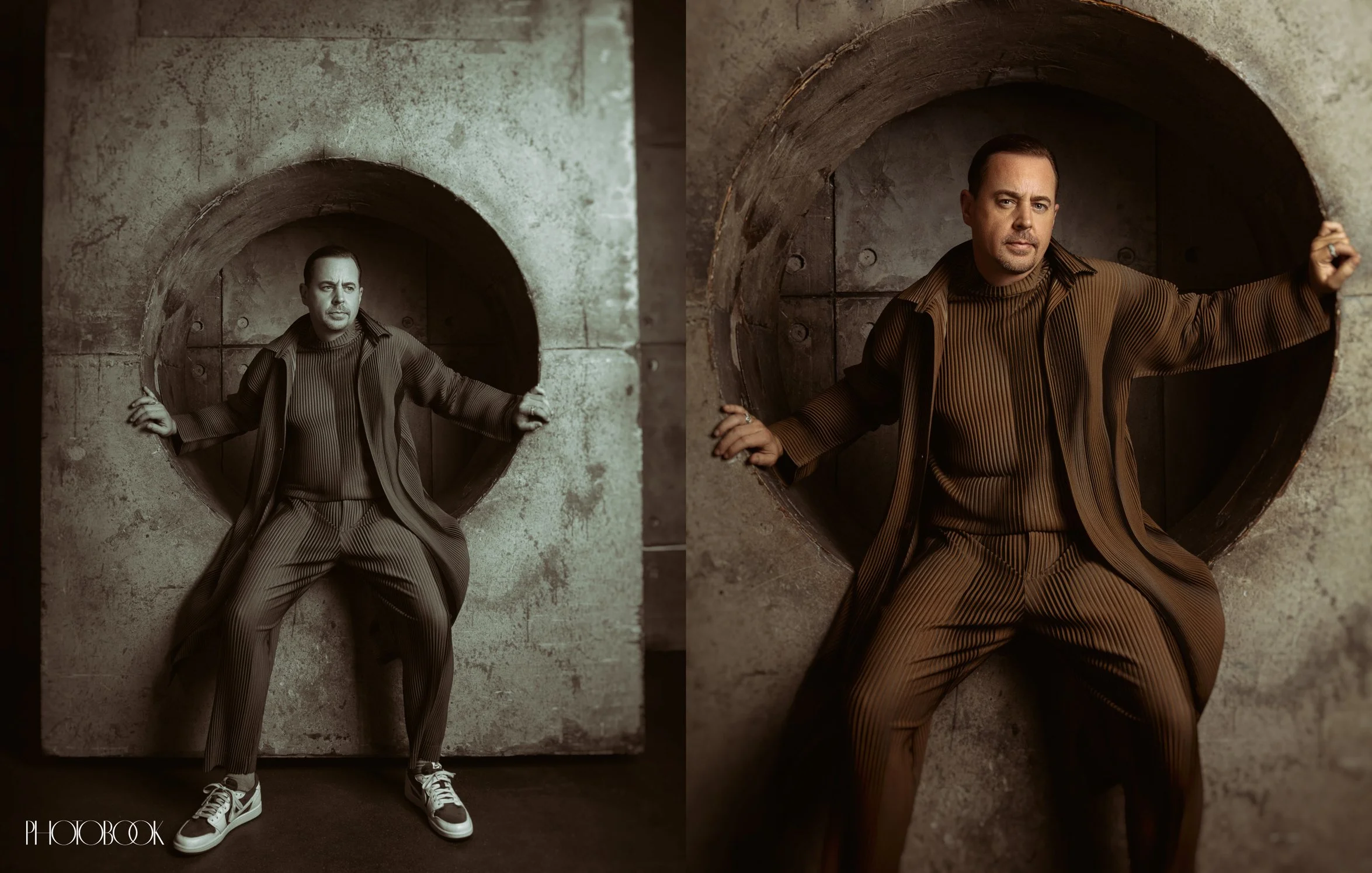
HOMME PLISSÉ BLEND OF LIGHTS TOP IN BROWN by ISSEY MIYAKE
HOMME PLISSÉ BLEND OF LIGHTS PANTS IN BROWN by ISSEY MIYAKE
Rings by Chrome Hearts
Sneakers by Nike
Your father’s career in the Navy meant that, from a young age, you grew up around military bases, which helped shape your commitment to supporting organizations such as the USO (United Service Organizations), which works to keep service members connected with their loved ones throughout their service. What does supporting the USO and its mission mean to you personally?
Well, when you grow up in a military family, even if you’re not enlisted per se, you’re still part of a military family. You’re part of the military, especially when you’re someone like me who lived on base. Military and family communities have a really important element of support, especially among military members. But the support that exists between families on bases, you know, serving together, creates a real sense of community and a strong support system. When someone is deployed, their whole family is dealing with it. It’s a whole thing. You just learn to take a little care with that stuff because it’s hard. It’s hard for the partners of service members who aren’t in the military but whose partner could be stationed somewhere else, on active duty. The children—it’s a life. It’s kind of a hell of a life. And, yeah, I just grew up with that stuff around me. So, to be supportive of these organizations just kind of seems like, how could you not be?
Prior to NCIS, you had already been in the industry for some time, taking on projects like Hearts of the West and Hocus Pocus. Looking back, how do you think those earlier experiences prepared you for NCIS and shaped how you approached taking on McGee?
Hearts of the West when I was 15 or 16, which was a one-hour network show. I’ll tell you right now, the one-hour network schedule is as brutal as it gets. When I did Hearts of the West, I learned how hard the work was. But nothing prepares you for getting on a show and doing a run of years at a time, doing 20-plus episodes a year, and the pace and stamina you need to do that. It’s funny. It’s almost like when you start a show. When we started NCIS, we were doing 15-plus or 16-plus hour days regularly. We were often working 60-plus-hour weeks. It almost feels like you’re going into battle for a period of time, and nothing can really prepare you for that until you go through it. As you go, you have new experiences and pick up new things along the way. I think I was taught some good things early on. I learned how to approach characters and how to work on set. All of that helped me figure out a way to play, have fun, and come up with things. I remember watching an interview with Philip Seymour Hoffman. People asked him a lot about acting and the art of acting because he was so bloody good. One thing I watched him talk about was how hard it is to describe what we do as actors. It’s just sort of something you feel your way through. That’s sort of what I did, even with my career and the way it goes. You feel your way through it. It’s rarely a situation where you know exactly what’s going to happen.
Looking back at the person McGee was when you first started playing him, what part of his character do you feel has changed or grown the most over the course of the series?
Oh, McGee has grown tremendously over the course of the series. I mean, he still struggles with the same stuff he always did, but he’s gotten a lot better at it. When McGee started, he was all skills and tech and really wasn’t particularly good at being social, verbalizing himself, or doing so many other things. He was great with the books, but so much wasn’t part of his wheelhouse. He’s learned to become an agent, and I think that’s a lot of what this character is about: learning to become an agent and growing as an agent. Over the years, he’s gotten so good and so comfortable with a lot of things, especially interrogation, which is something Gibbs taught him and that became his specialty, as well as doing fieldwork. Also, as the senior agent on the team, he’s often in a leadership role, which I think would have frightened McGee to death early on. But I think he knows his strengths now, and he sometimes looks at them...
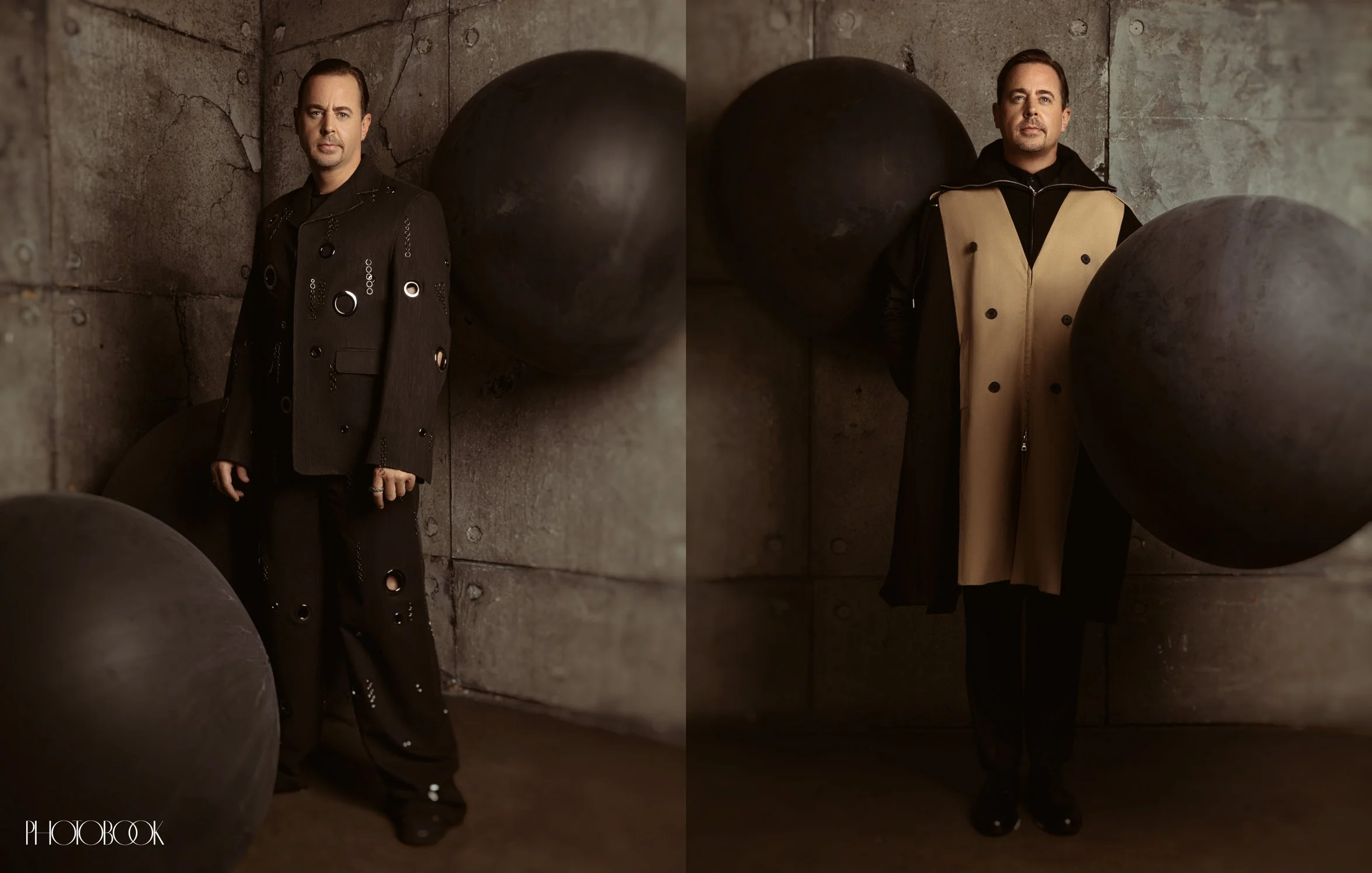
Left
Suit by Clara Son
Shirt by YSL
Sneakers by Nike
Rings by Chrome Hearts
Right
Jacket by Romeo Hunte
Pants by Urbane & Gallant
Shoes by Magnanni
Shirt by Hugo Boss
Working alongside such a close-knit cast for so many years, what has been the best part of carrying those relationships off-screen, and how have they shaped your experience on NCIS?
I mean, it has allowed NCIS and McGee to have such a— the relationships with the people on the show are everything. That’s what we’re all still here doing two decades later. So, I’m still doing it. That’s why I’m still interested in doing it and love showing up to work every day. Honestly, I don’t mean to make it sound like a love fest, but it kind of is. We’ve all been together for a long time, and we've had different iterations. You know, the people in front of the camera have changed. We’ve had people behind the camera change. We’ve had people in front of the camera go away and come back. You know, that’s happened. I am working with my family because, you know, when you’re doing one-hour television, you spend more time with these people than you do with your own family. That’s just a fact. So, it’s a good thing if you get along really well. And we do. I mean, I’m not saying everyone is best friends all the time and always has been—that’s never the case across the NCIS universe—but I go to work every day, and I get to play with Wilmer or Gary or Michael Weatherly, who’s back on the show now. I have so much fun with those guys. Like, so much fun. And I have a lot of history with those guys. So it’s really fantastic in every way. I can’t imagine being somewhere for a long time and working with a group of people you didn’t have strong relationships with—like, really strong. I mean, that’s what keeps us playing together all these years later.
Reaching 500 episodes is an incredible milestone, especially as television series get shorter. What do you think has allowed NCIS and McGee to achieve such remarkable longevity while maintaining a loyal audience and attracting new generations of viewers?
It’s, you know, as you know, it’s unheard of for a show to go this long. It’s pretty wild to be part of something that’s been successful as a TV show for more than two decades. It’s really wild. I think so much of it is—you’ve got to give it up to Don Bellisario, who created the show. Don built the boat that is NCIS, and it’s still sailing 24 years later. It was built right. I think things worked out very nicely, and I think the show has always, even through its different iterations, appealed to a lot of different people across the board. As for our characters, we don’t have any that are interchangeable. Everyone is—I used to compare it to a pizza pie, where everyone was a slice, and each slice was important to the whole pie. That's what I used to say. But, yeah, there’s something about it. I used to kind of go, “Ah, yeah, who knows?” But someone brought it to my attention and was like, “Well, wait a second. What is it about this show where the whole family kind of wants to watch? You’ve got everyone—all different people from different demographics—who want to watch the show and watch it together.” That’s not really something that happens anymore. Everything is these microcosms, these micro-demographic kinds of things, these limited runs of things that are meant for very specific demographics. That’s a whole way of doing business, too, and that’s great. But it’s also kind of amazing to be part of something that I think people can get together as a family and watch. There’s very little you can say that about, where you’ve got different generations who are like, “Oh yeah, we like this. We like these characters. This appeals to us.” And I think the longer we’re on, the more history there is with these characters and the dynamics and everything, so you just kind of get to know them even more. So, I think by 500 episodes in, it’s like they’re your neighbors at this point. You’re watching your buddies. I don’t know exactly how that works, to be honest. I’m just guessing.
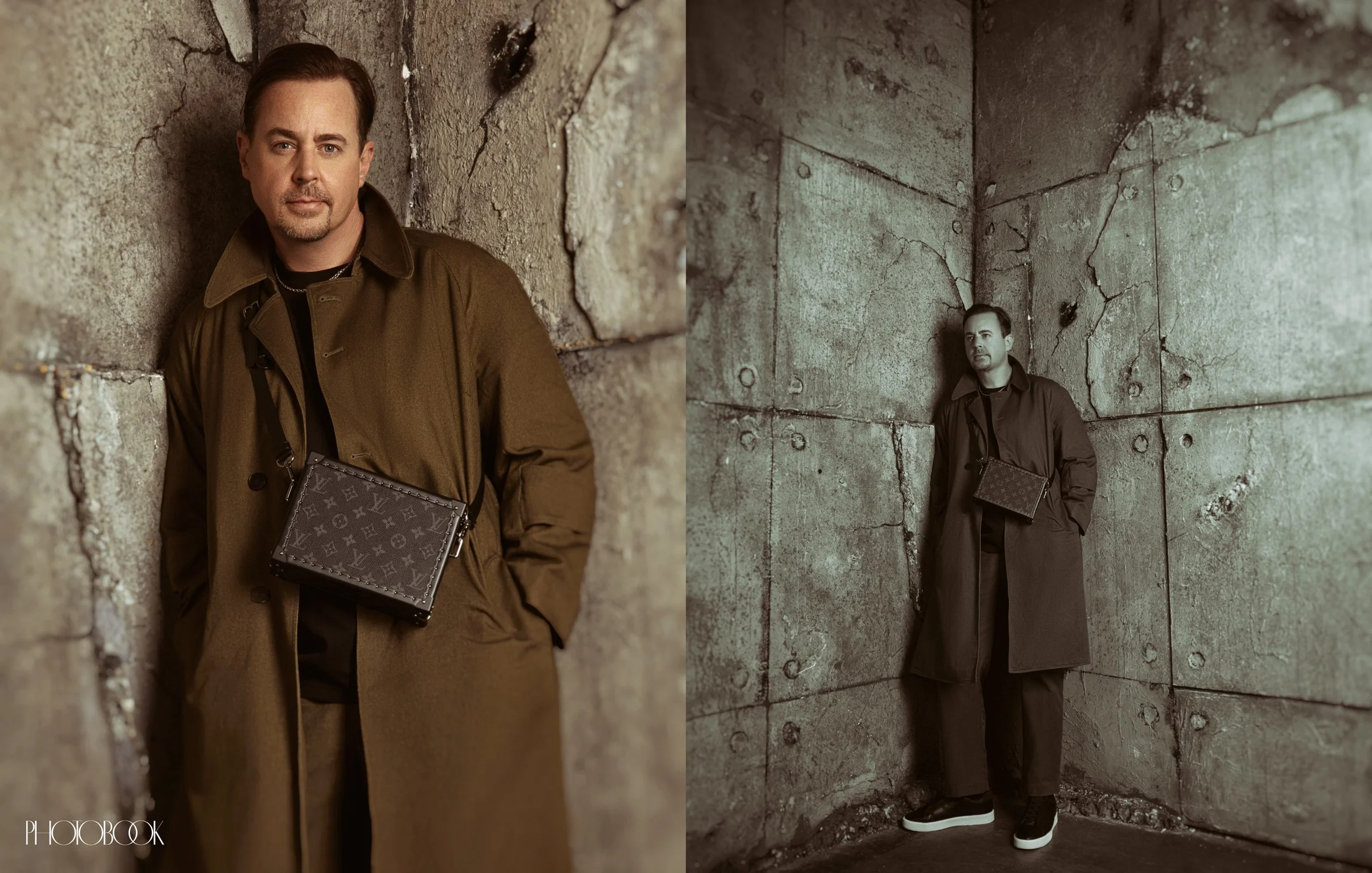
Raglan Coat and D-Ring Tab Pant by Sivan
Shirt by YSL
Jewelry by Chrome Hearts
Bag by Louis Vuitton
What do you hope your children learn by watching how you approach your career?
You know, when I was young, I used to be like, “My kids will never be actors. I’ll never allow my kids to be actors.” A lot of actors will tell you that, right? But, of course, my daughter grew up, and all she wanted to do was act as a kid. So she always has been, and she is. I don’t know. I’ve never really thought about what my kids would learn from me as a career, I guess. I mean, I’m a hard worker, and I’m pretty grounded. I guess if they were to carry on in what I do, they never saw much nonsense around me, so I’d want them to carry on the same way. I don’t know. That’s weird. I’ve never really thought about that.
Reflecting on your journey so far, from starting as a young actor to reaching 500 episodes of NCIS, what accomplishment are you most proud of throughout your career, and what do you hope to achieve as you look toward the future?
I hope to just keep working. I hope to keep doing something that interests me. Something that Wilmer, Baldarr Ama, and I talk a lot about on the show is how easy it can be to get sucked into the minutiae of everything. We always remind each other that what we’re doing is fun. We’re having fun. Ultimately, what we're doing has to be fun. That’s something that we talk about and try to keep in mind. I just want to keep making it fun. When it’s not fun, then I’ll figure something else out.
Who have been some of your favorite guest stars on NCIS throughout the years?
Favorite moments of the show? There are like a gazillion that come to mind, so it’s hard to think of just one. But, if we were going to talk about guest stars, we’ve had some really cool ones over the years. We had Charles Durning early on, as well as Hal Holbrook and Bob Newhart. R.J. Wagner has done a bunch of episodes, and Lily Tomlin played my grandmother, which was pretty cool. Lily was fun. We’ve just had a lot of fun over the years on the show. We’ve seen so many things, so many people, so many locations, and so many scripts. It’s good. It’s a good time.
What do you enjoy doing outside of work when you’re not on set?
I’m a bit of a cinephile and a music historian. I’m like so many other actors or people in this business. I’m a big nerd when it comes to music and movies and all that stuff and love all that nonsense. I don’t know if there’s much of a story to that.
CREW CREDITS
Talent: Sean Murray
PhotoBook Editor-In-Chief: Alison Hernon
PhotoBook Creative Director + Photographer + Producer: Mike Ruiz
Fashion Stylist: Alison Hernon at Exclusive Artists
Groomer: Thea Istness for Exclusive Artists using Armani Beauty
Photo Assistant: Ozzie Gutierrez
Fashion Stylist Assistant: Yurga Juozapa
Tearsheets by Daniel Lopez, Art Director, PhotoBook Magazine
Interview by Ali Rosoff, Contributor, PhotoBook Magazine
RELATED STORIES