Tribeca Film Festival: IX XI, Diving Into Personal Untold Stories
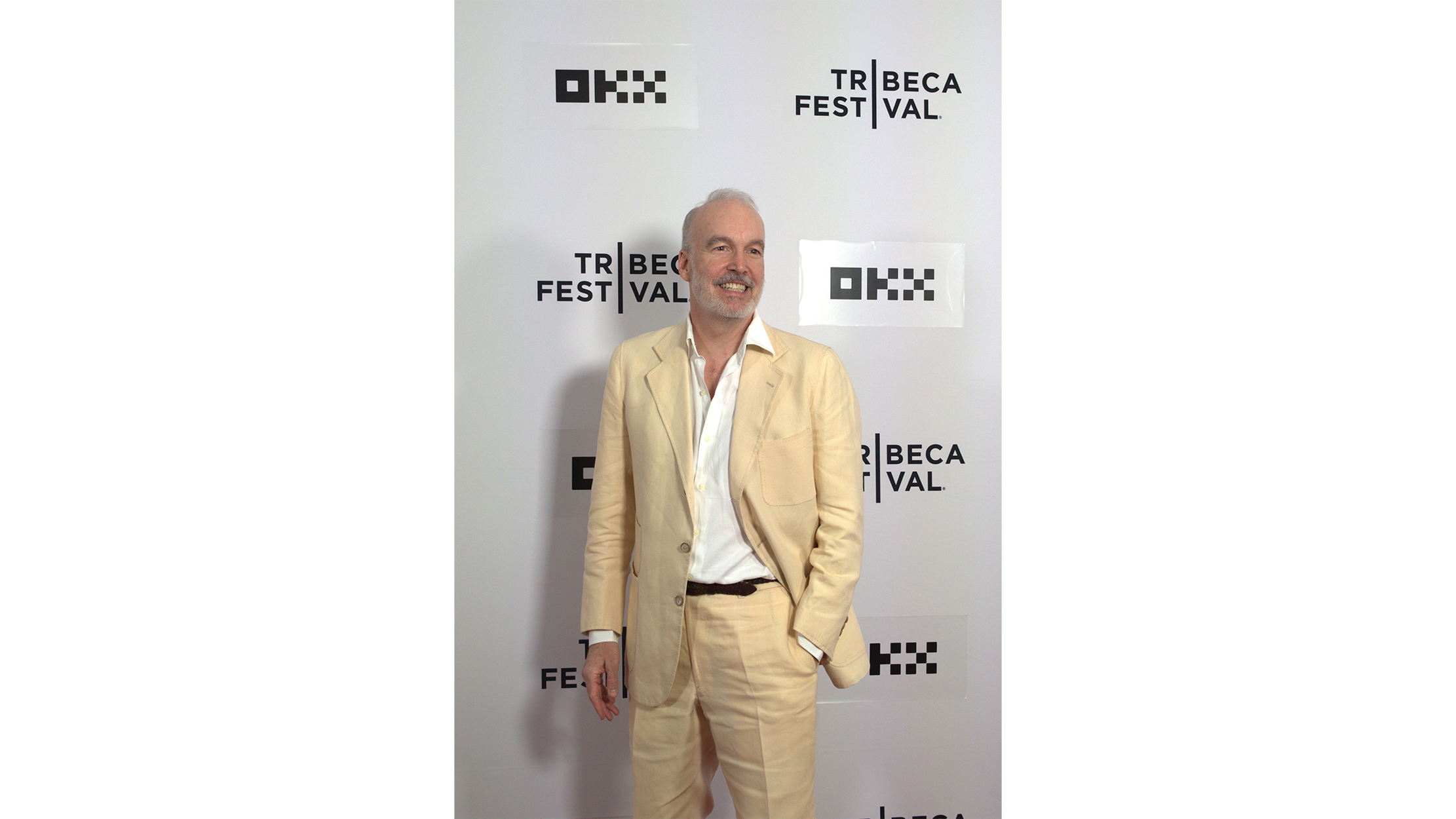
Sean Wilsey
Photo by Micaela Barros Zelaznik
IX XI, is an intimate documentary that revisits September 11, 2001, not through political analysis or historical reconstruction, but through the personal memories of twelve ordinary New Yorkers whose lives were forever altered by the attacks. Rather than focusing on government responses, media narratives, or the mechanics of the tragedy itself, the film is structured as a mosaic of individual testimonies. The participants, including artists; writers; delivery workers; journalists; immigrants; and lifelong city residents, recount where they were before the attacks, what they witnessed on that day, and how the event reshaped their understanding of New York and their place within it. Through these intersecting stories, the film reconstructs not only the horror of 9/11 but also the texture of everyday life that existed immediately before it: the routines, relationships, ambitions, and mundane concerns that were suddenly interrupted. The documentary emphasizes the individuality of each experience, demonstrating how a single historical event can generate countless personal narratives. Rather than presenting a unified account, IX X/ reveals the diversity of emotional responses: from fear and confusion to resilience, grief, humor, and unexpected moments of connection. As the stories unfold, the film becomes less about the attacks themselves and more about what remained afterward: the vulnerability of a city, the fragility of everyday life, and the unexpected ways trauma can connect strangers. Some participants describe direct encounters with the destruction, while others recall how the attacks intersected with unrelated but equally profound personal events in the years that followed. By focusing on ordinary people rather than public figures, it creates a portrait of New York as a community of individuals whose lives crossed a shared historical threshold. IX XI argues that the true legacy of 9/11 lies not only in the event itself but in the countless personal stories that continue to shape how it is remembered.
As a filmmaker, you were dealing with an event that has been documented and analyzed possibly more than any other event in modern day American history. What responsibility did you feel to find a new visual and emotional entry point into this subject, and what did you hope audiences would see differently through IX XI?
I felt like New York had so much energy that was not expressed in a lot of what people have seen and done about 9/11 that was, you know, more drawn back away from the immediate people who were killed or people who were first responders, but everybody was affected. Everybody in this city was deeply affected and people process that kind of grief and that kind of loss and trauma in really different ways. Some of them incredibly creative and I think generative and moving. I just felt like there was a way to celebrate new york, while honoring what happened on 9/11, and that nobody had quite combined those two things, as far as I can remember and then I think the memorial is a really successful memorial, I really think it's beautiful, its really moving. So I wanted to bring that into the film, but in a way you wouldn't immediately make that association.
Like its kind of like "oh there's mirrors and the water", they kind of evoke the past they kind of evoke the things you aren't going to say immediately, but that you're thinking. Its like the subtext.
IX X/ shifts the focus away from the grand historical narrative of 9/11 and toward deeply personal recollections. What drew you to individual memory as the primary lens for telling this story, and what do personal testimonies reveal that historical documentation often cannot?
I’ll answer the second part first: I think personal memories can really tell you what it felt like and sometimes its hard to relate to the emotions that are so incredibly intense, like people who really lost people on that day. But what it felt like in the city ad what happened to the city, that wound, I felt like getting at that through these personal stories and then, I think the first part of your question, I would say a friend of mine who watched the film was like "you know you have some moments that are very almost trivial in the film", but the thing about those moments is like with an eclipse, when you can't look at it, you have to look aside, they kind of functioned like that when its something that's so overwhelming you can't really look right at it. So I was like maybe you can understand more through these tiny moments. So that's the goal, just to like communicate that.
Directed by: Sean Wilsey
Featuring: Amadeus Broger, Roz Chast, Michael Cuomo, Griffin Dunne, Irma Ellis, Neria Goodsell, Kevin Langford, Colin Moynihan, Kifah Shah, Pat Coda Smith, Stefan Springman, and Nell Zink
Article by Emma Green, Contributor, PhotoBook Magazine
Tearsheets by Daniel López, Art Director, PhotoBook Magazine
RELATED STORIES