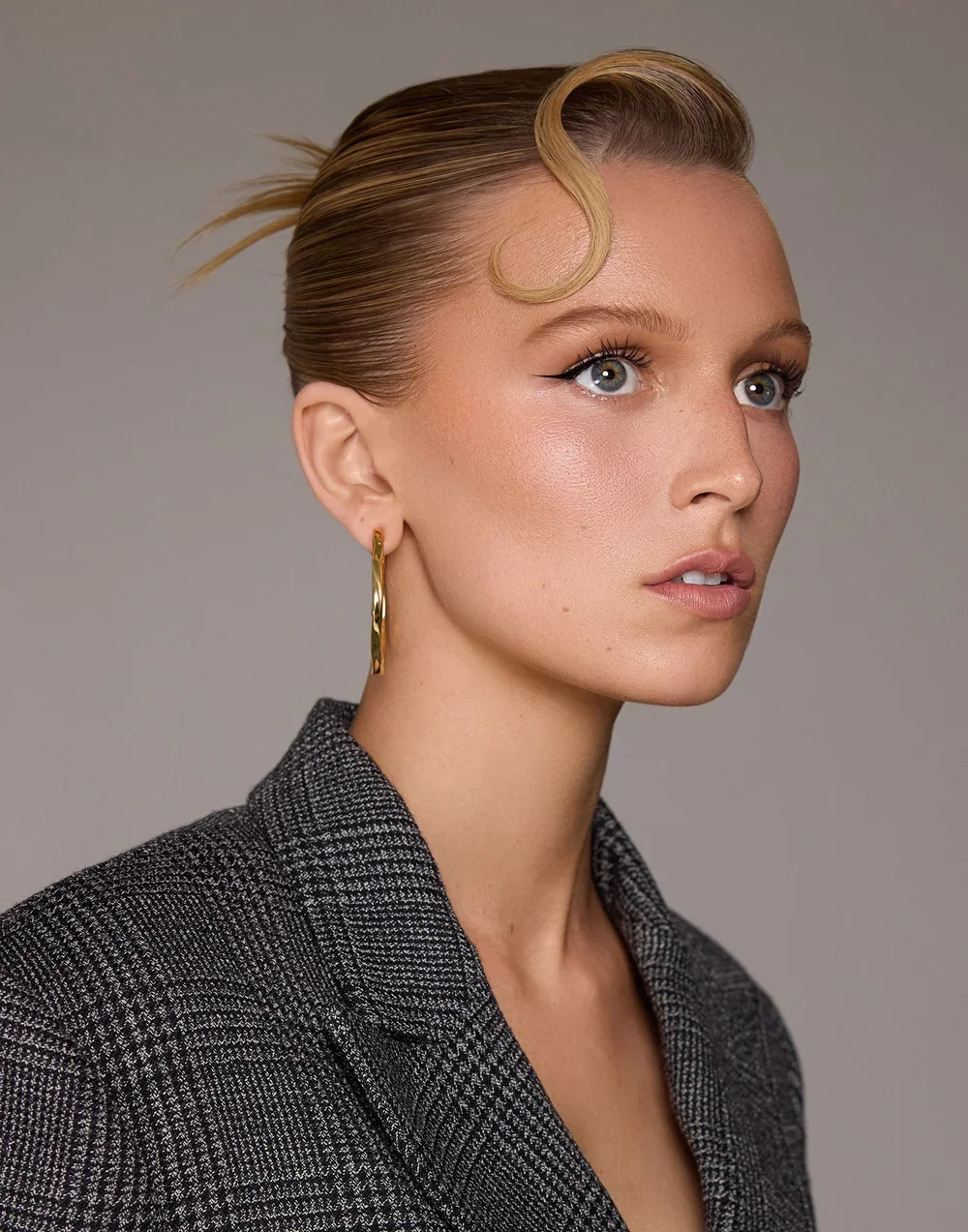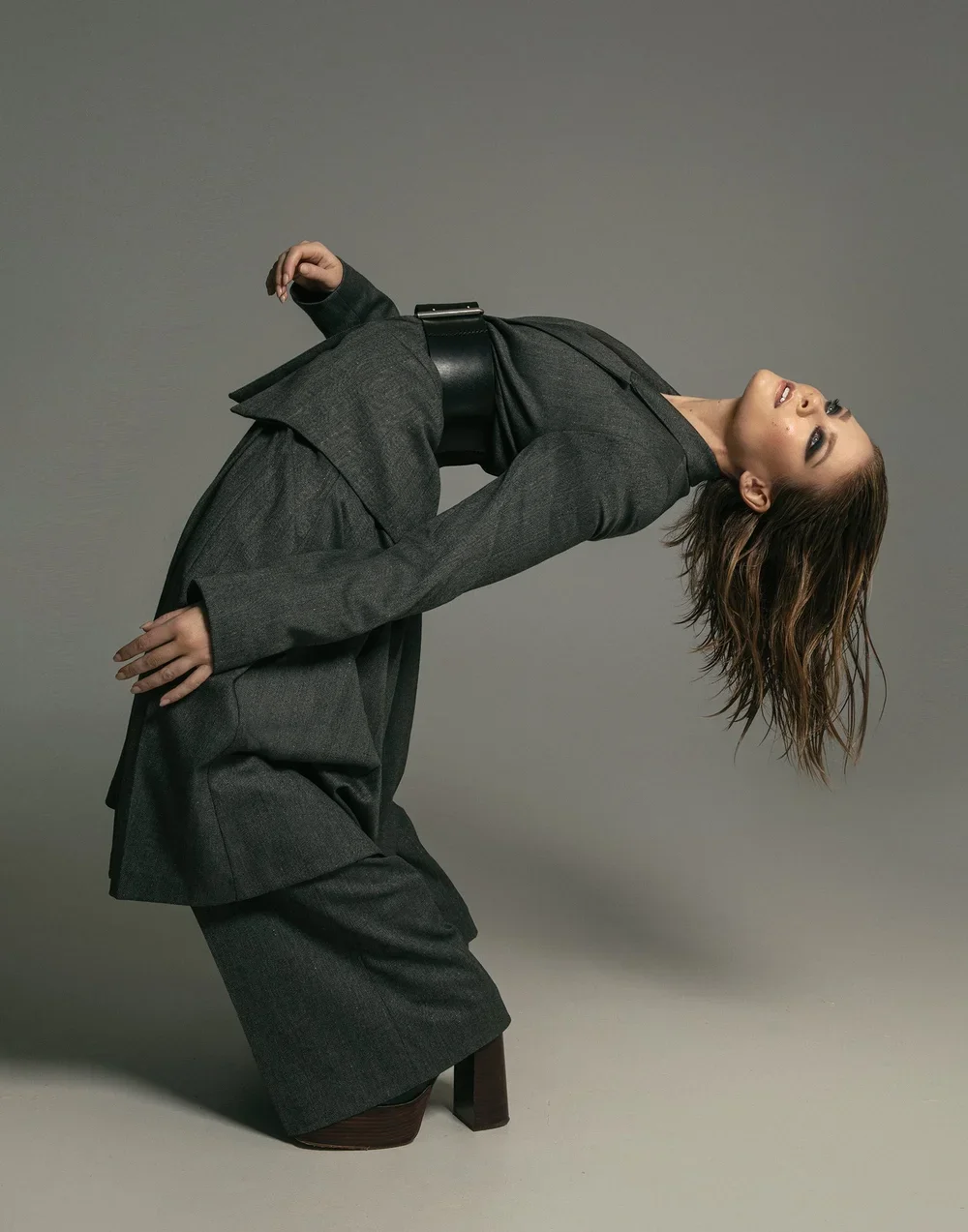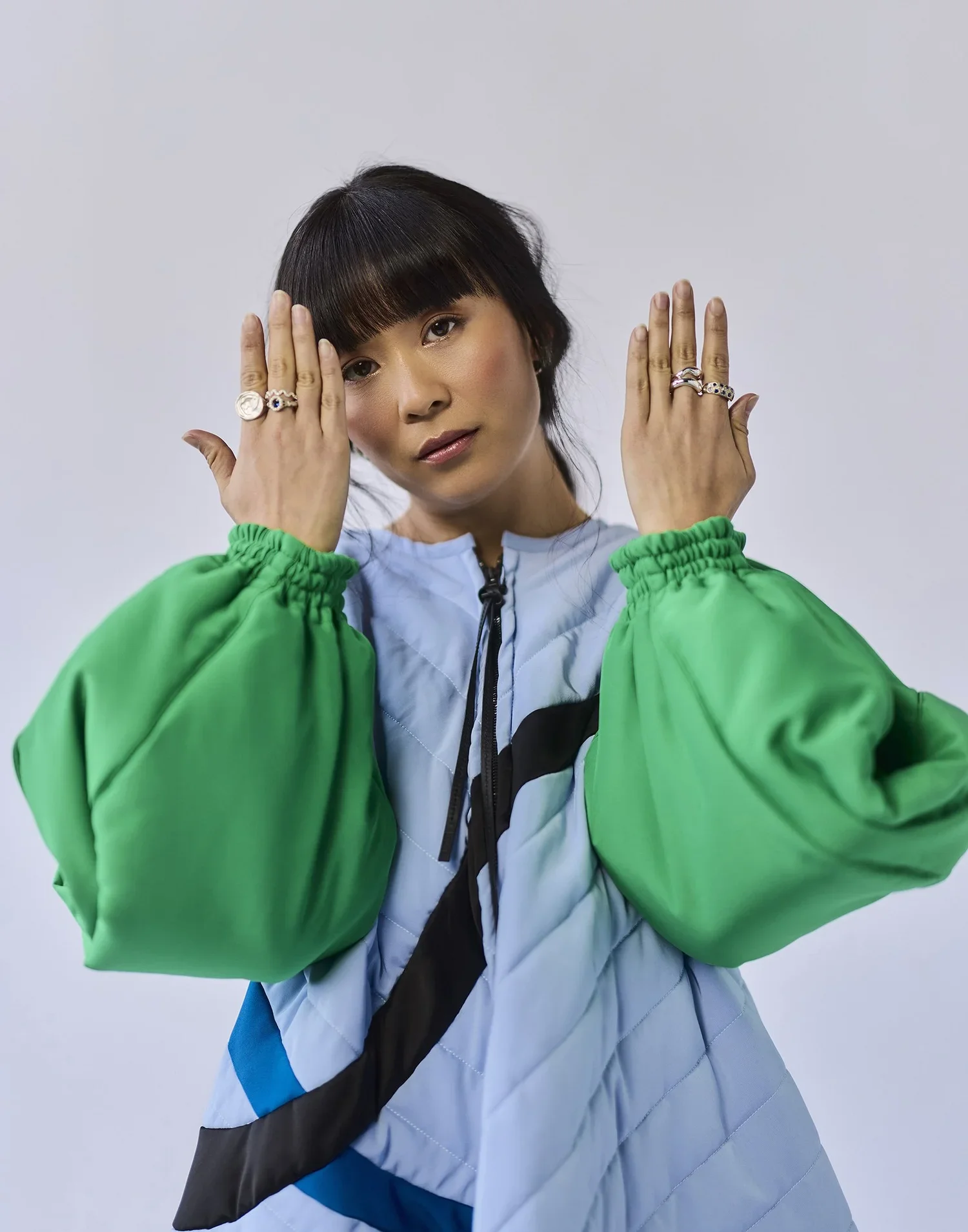
Hijack's Christine Adams on Acting, Flow, and Portraying a Character’s Truth
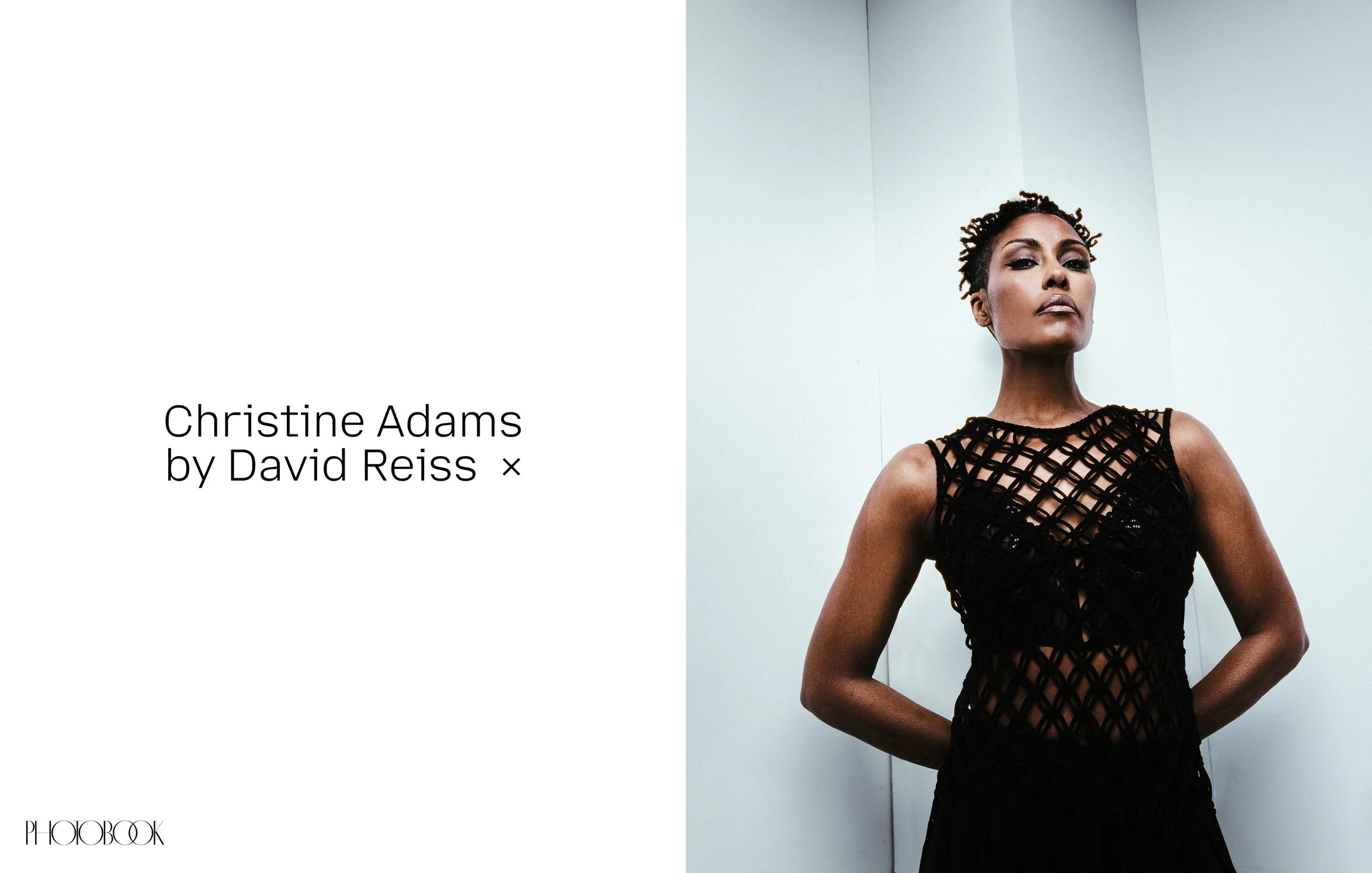
Bra by SKIMS
Top by Dries Van Noten
Trousers by The Frankie Shop
For British actress Christine Adams, acting is all about getting into the zone.
“It’s a bit like what athletes do,” she explains that playing a character as honestly as possible means tuning into their internal story, whether it’s their backstory, recent events, or what’s coming next.
Adams has an impressive CV built over the last couple of decades playing notable TV roles in shows such Agents of S.H.I.E.L.D., The Mentalist, Terra Nova, NY-LON, Counterpart, Feed the Beast, Pushing Daisies, Castlevania and The Mandalorian. Her credits also include multiple blockbuster films including The World Is Not Enough, The Girl with the Dragon Tattoo, Submerged alongside Steven Seagal and Vinnie Jones, Batman Begins, Tron: Legacy, as well as Miller’s Girl alongside Martin Freeman and Jenna Ortega.
Whether a character stays with Adams beyond the role depends on the character breakdown—a little piece of writing about who they are and their journey. “I always want the character to be three-dimensional,” says Adams. “I don’t want to play someone who doesn’t feel like someone I know.”
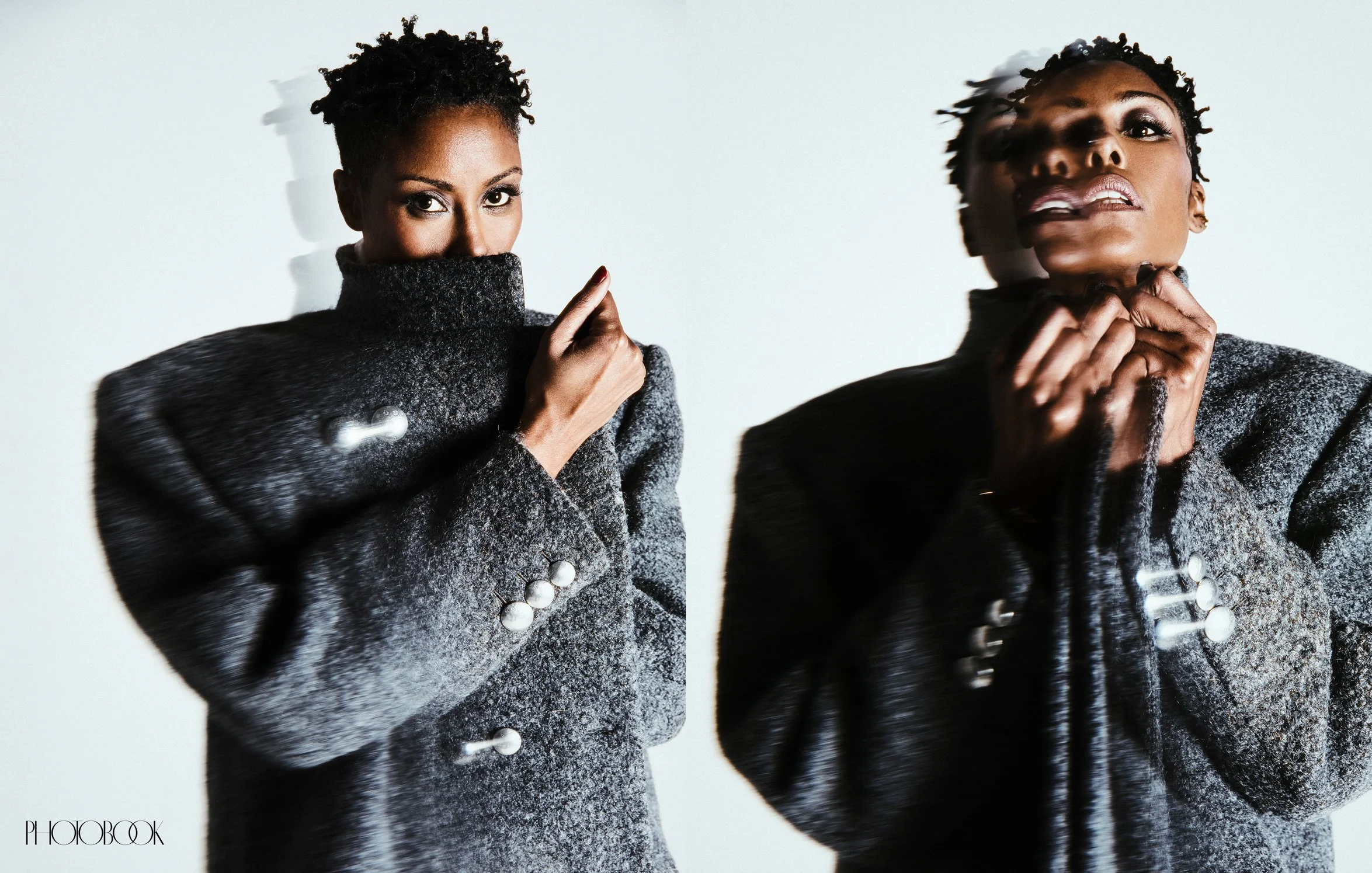
Coat by ISABEL MARANT
Christine, you’re best known for your role as Lynn Pierce in Black Lightning, a series celebrated for its authenticity and emotional depth. As your work now moves into projects like Dreaming Whilst Black Season Two and Malice, what feels different about the stories you’re choosing to tell at this point in your career?
There are things that are different and things that are the same. In many ways, I’ll always gravitate toward strong women—characters with emotional complexity. With all of them, there’s a quality I naturally fall into. One of the biggest differences is that in these projects, the characters feel a bit messier, more flawed, which wasn’t necessarily the case in Black Lightning—and that makes them more interesting to play. The interpersonal relationships are also more complex. Black Lightning was very much about family—a superhero family navigating having a teenager and a daughter who was gay. In these shows, the relationships between characters are more layered, with a bit more edge.
In Hijack, Marsha’s calm under pressure became quietly pivotal. How do you approach portraying restraint in moments where the stakes are actually at their highest?
I think so much of acting is about what’s going on underneath, not what you’re presenting to the audience. I really believe you don’t want to play your hand too much—especially in a show like Hijack, where you know what’s coming but the audience doesn’t.
In this season, especially the first two or three episodes, people seemed a little confused about Marsha—why she’s here and why she seems different from the first season. I love the idea of unfolding a story in small steps and letting the character breathe, so that when the big climax comes, it’s a real shock for the audience. As long as you have that internal journey and monologue, you give the audience enough to be intrigued without telling the whole story.
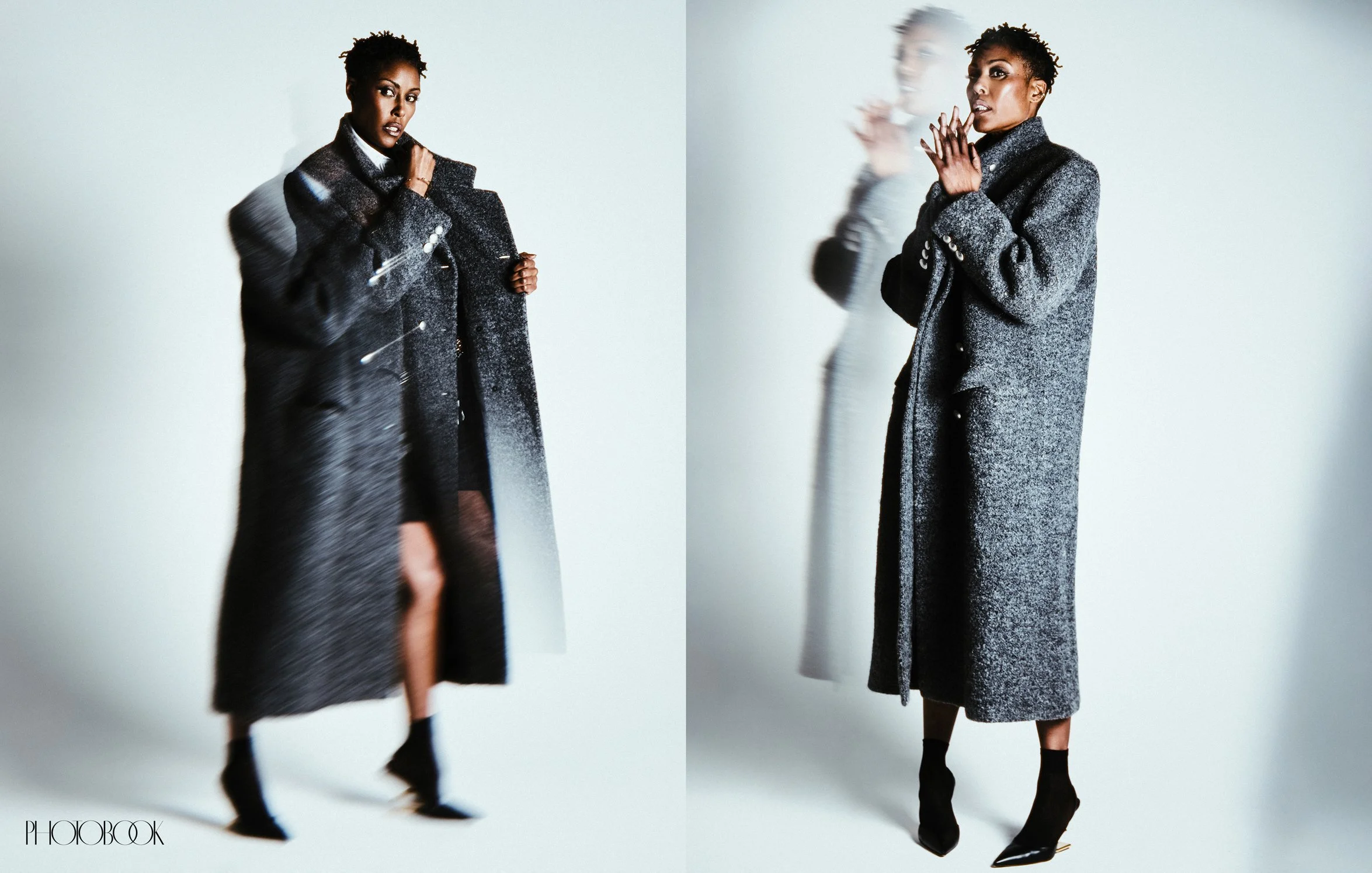
Coat by ISABEL MARANT
Socks by FALKE
Shoes by Fendi
Marsha and Sam share a long emotional history. How did working with Idris Elba shape the way you approached their dynamic?
Yeah, it’s quite unusual with this show because Idris and I don’t appear in any scenes together. We share an emotional journey and a child, so you’re trying to build that without much time on set together. The writing really helped—it was strong—and Jim Field Smith, our director, made sure I knew where I was in the story and how it connected to Sam’s journey. What’s great about Marsha is that she gives the show an emotional anchor that wouldn’t necessarily be there otherwise. In the first season, when he’s on the plane and the stakes are high, there’s a real relief when you return to Marsha’s world and something emotionally grounded.
As an actor, I think about all those emotional dynamics. I still really care about him—he’s the father of my son. There’s always that tension: they’re not together, but the thread of connection is always there. She knows him better than anyone else and, when push comes to shove, is probably one of the only people who could really talk him down or persuade him to make the right choices.
Being part of projects spanning Apple, Amazon, and the BBC places your work inside very different cultural environments. What excites you about telling stories in this moment of television?
I mean, I think when you’re an actor, you’re a storyteller. I’m really interested in people, and I find them endlessly fascinating and surprising. And I think what interests me most, particularly in that creative environment, is how you tell a story about someone or something that really excites and intrigues an audience.
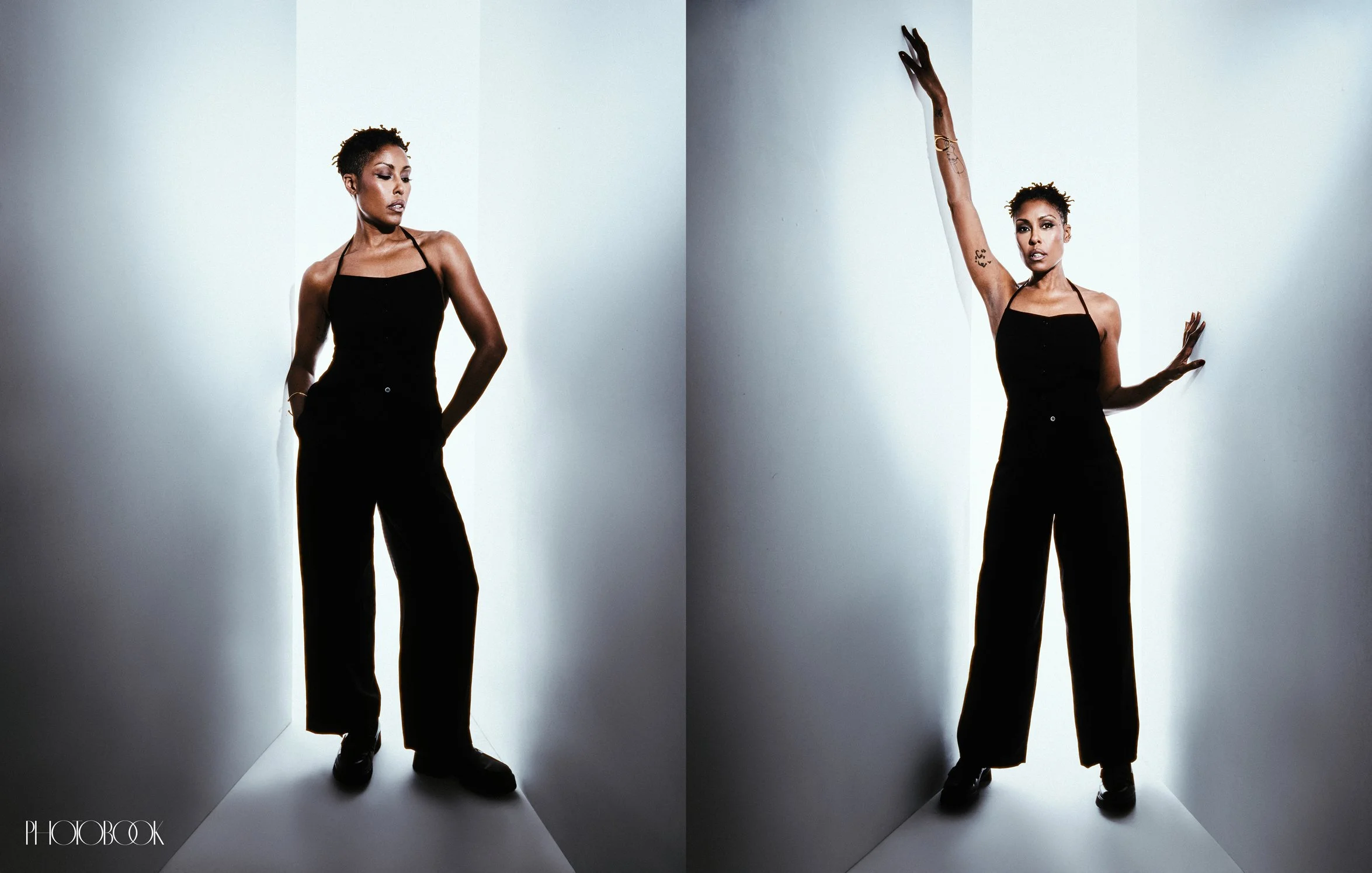
Top by The Frankie Shop
Trousers by Acne Studios
Loafers by Grenson Shoes
You’ve stepped into worlds as varied as The Mandalorian, Batman Begins, Pushing Daisies, and The Girl with the Dragon Tattoo. How do you recalibrate your instincts when moving between such different universes?
Honestly, just real life. For actors and creators, it’s important to have a foot in reality—that’s where I get most of my inspiration. I love people-watching, seeing little stories unfold on the street. It keeps me grounded. I’ve had busy years bouncing from project to project, but I always make time for my family—doing the school run, making snacks, just normal life. Those everyday moments are so important. I never want to be detached in that bubble of show business. It’s magical, but much of it is smoke and mirrors. I think it's quite hard to be a storyteller if you're not getting inspiration from real life things and real life stories.
You’ve often portrayed women who are emotionally self-contained, yet deeply affected by the choices of others. How do you ensure their inner lives remain legible, even when they aren’t verbally expressed?
There are techniques actors use, but it really depends on the material—its tone, its demands. For heavier or darker material, you have to get your body and mind prepared…with Marsha, a lot of my work is on my own, not feeding off other actors, so it’s about really getting in that zone and being truthful in the moment. And honestly, less is often more. Sometimes the less you do, the more it reads.
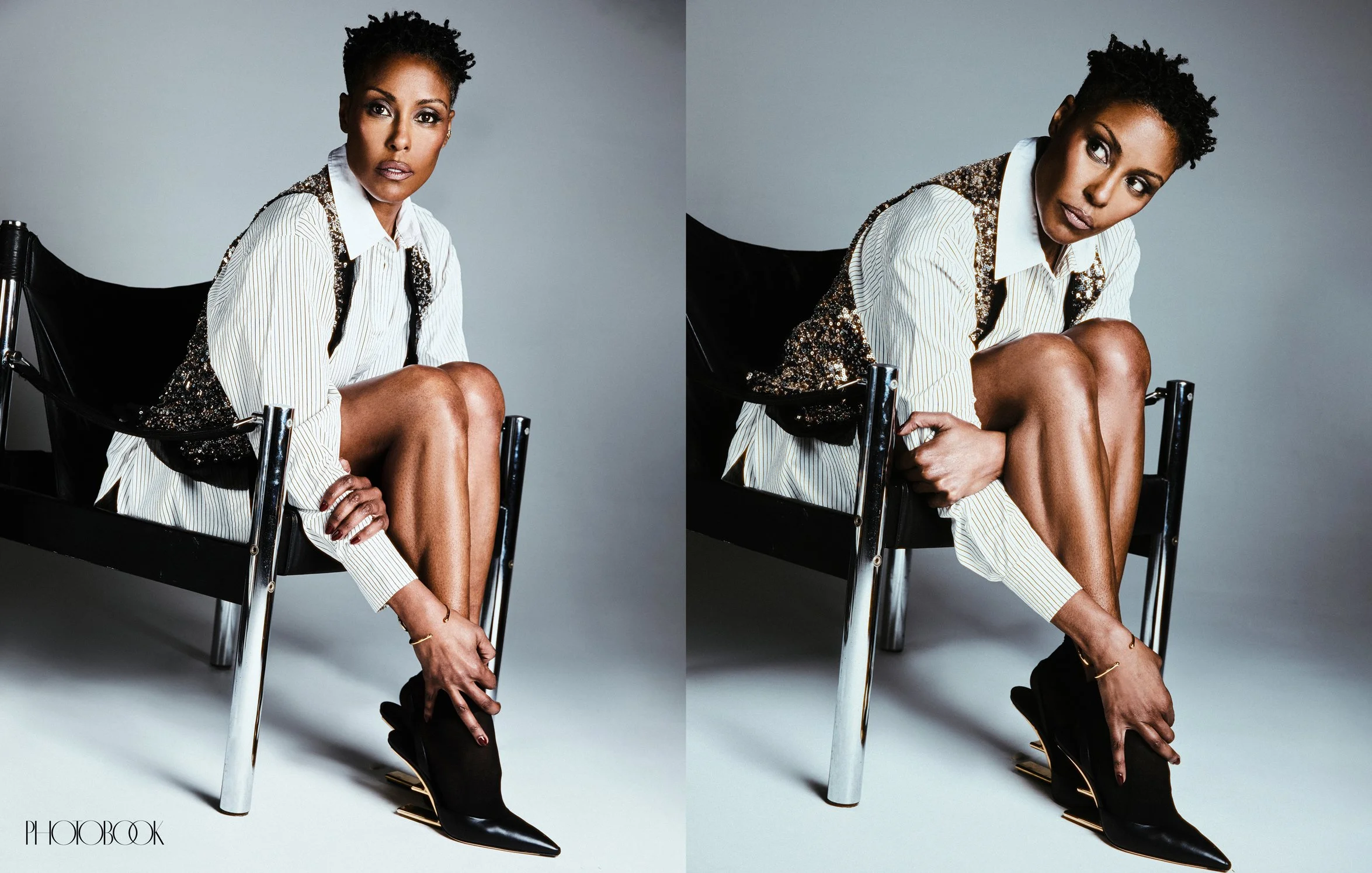
Shirt, Waistcoat, Shorts all by ISABEL MARANT
Socks by FALKE
Shoes by Fendi
What does success look like to you when no one else is watching?
Honestly, for me, just making a living as an actor and doing a job I enjoy every day—that’s always been enough. I feel really lucky because not everyone gets that. Success, to me, is working in a creative field I love, collaborating with interesting people, and continuing to grow. It’s also about being invited back to projects, building relationships, and working with people who genuinely enjoy working with you.
With a return to Hijack alongside several new projects, do you feel like audiences are meeting a different version of you—or simply seeing more clearly what’s always been there?
Yeah, I think it’s interesting this time because we’re meeting Marsha in a very different place. She’s much more raw and vulnerable, and obviously she’s gone through some things, as has Sam. What’s interesting is that her journey really starts to unravel the deeper you get into the series. We’re only three episodes in, but I know what’s coming, and it will be interesting to see how the audience reacts to seeing Marsha at this completely different level. She starts off grounded, and by the end of the show, she’s in this incredibly tense, anxiety-inducing scenario that’s scary for her—and maybe for the audience too. It’s a real roller coaster. I’d love to be a fly on the wall watching people react; I think there will be a lot of shouting at the TV, which is really fun.
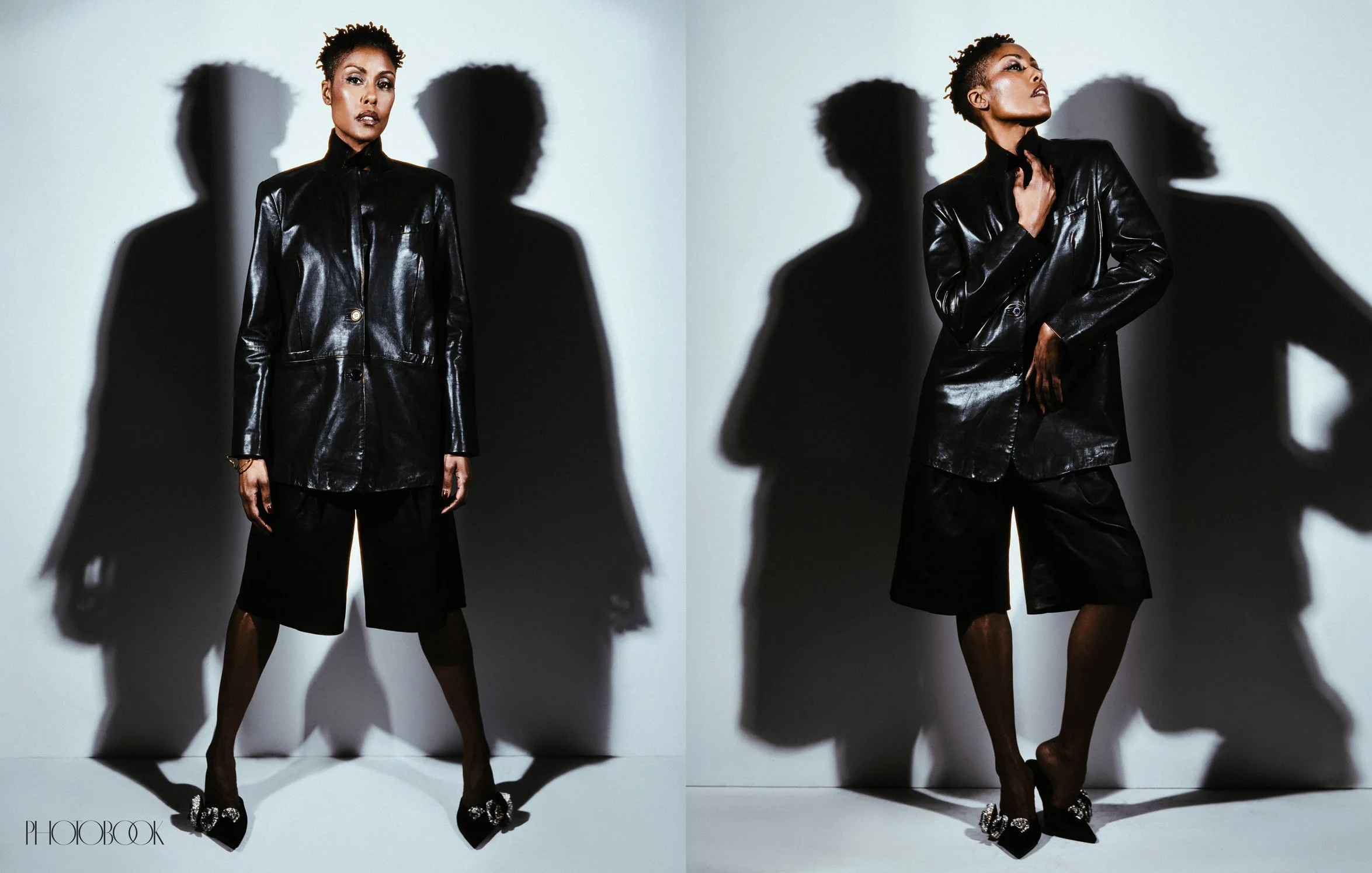
Blazer by Tod’s
Shorts by ISABEL MARANT
Shoes by Vintage
You’ve wrapped up filming Kill Jackie, a series based on the novel The Price You Pay written by bestselling author Nick Harkaway. As multiple projects surface around you, how does this influence your perspective on what’s ahead?
I try not to think too much about what’s down the line. Once a project is done, I put it away and focus on the next one—what scripts I’m reading, what’s interesting to me, what I want to be a part of. Overall, I’m happy with the direction things are going in. I’m really pleased that these projects are all very different. Kill Jackie is unusual—both the show and the character are highly stylized—so it will be quite a leap from what people have seen in Hijack. I don’t try to anticipate how things will land. You never know how an audience will respond, so I just try to stay present in the job.
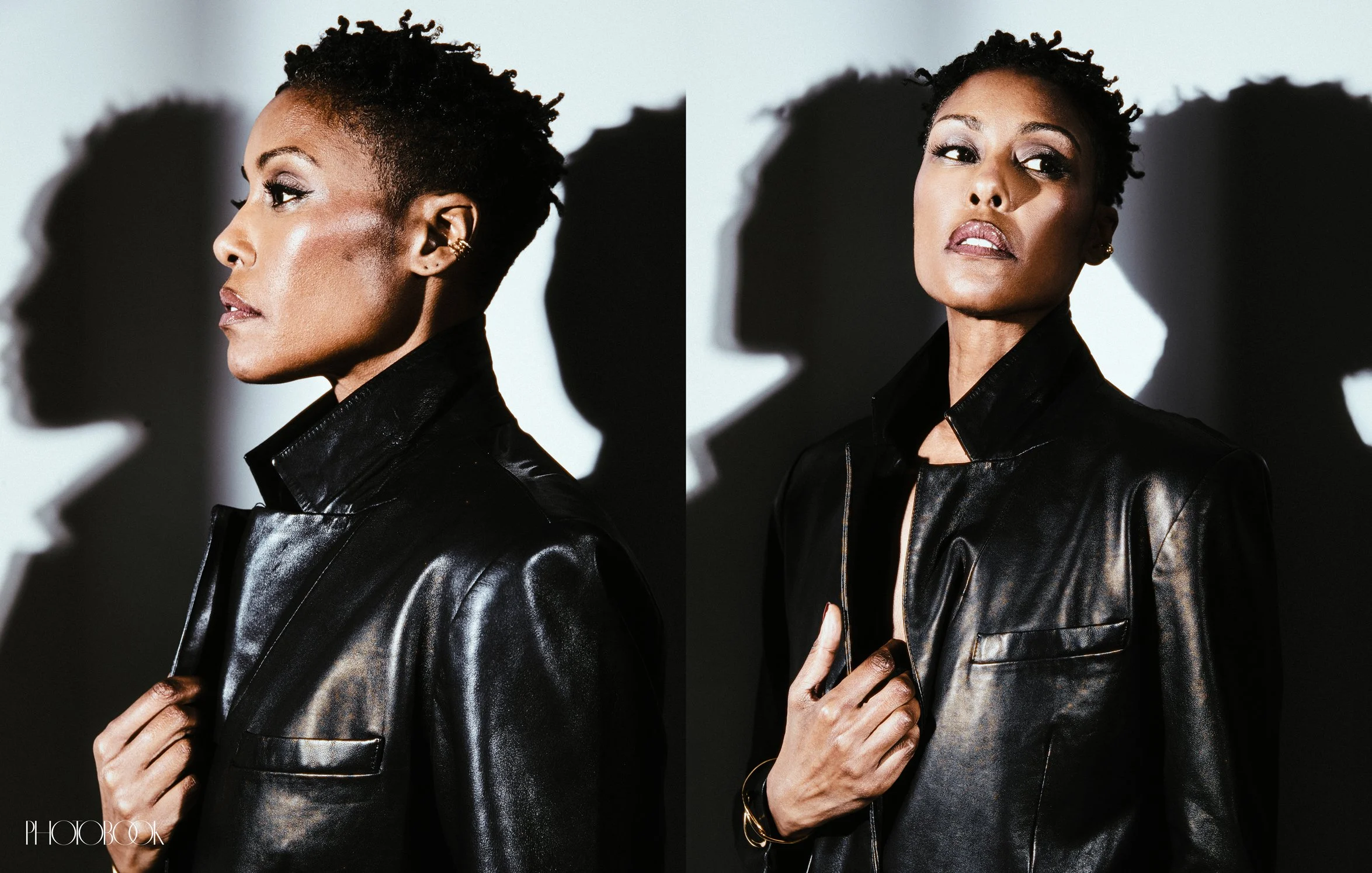
Blazer by Tod’s
Shorts by ISABEL MARANT
CREW CREDITS:
Talent: Christine Adams
PhotoBook Editor-In-Chief: Alison Hernon
PhotoBook Creative Director: Mike Ruiz
Photographer: David Reiss
Fashion Stylist: Sarah Rose Harrison at The WallGroup
Hair: Abigail Ignacio
Makeup: Min Sandu
Tearsheets by Daniel López, Art Director, PhotoBook Magazine
Interview by Brya Sheridan, Assistant to Editor-in-Chief, PhotoBook Magazine
RELATED STORIES