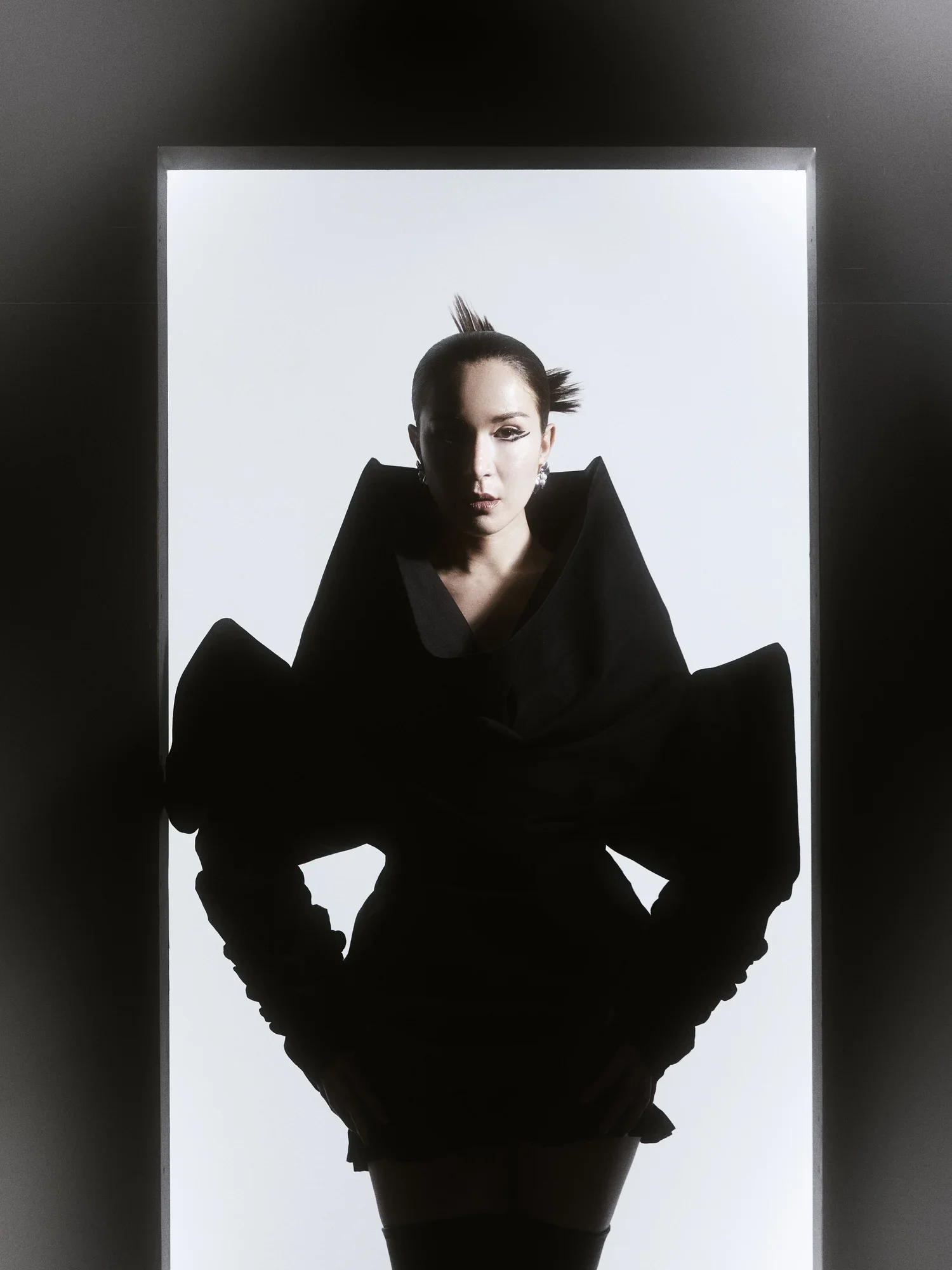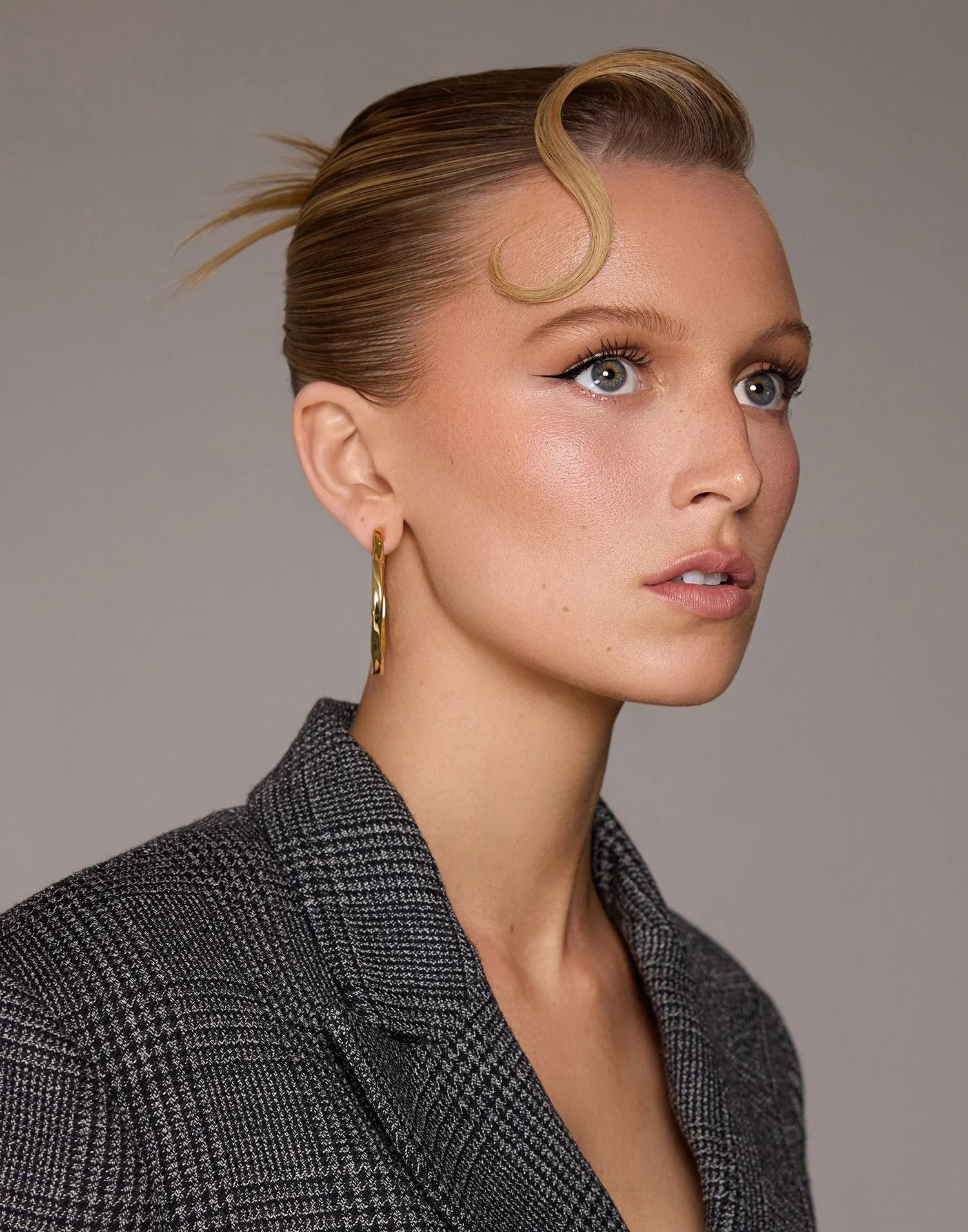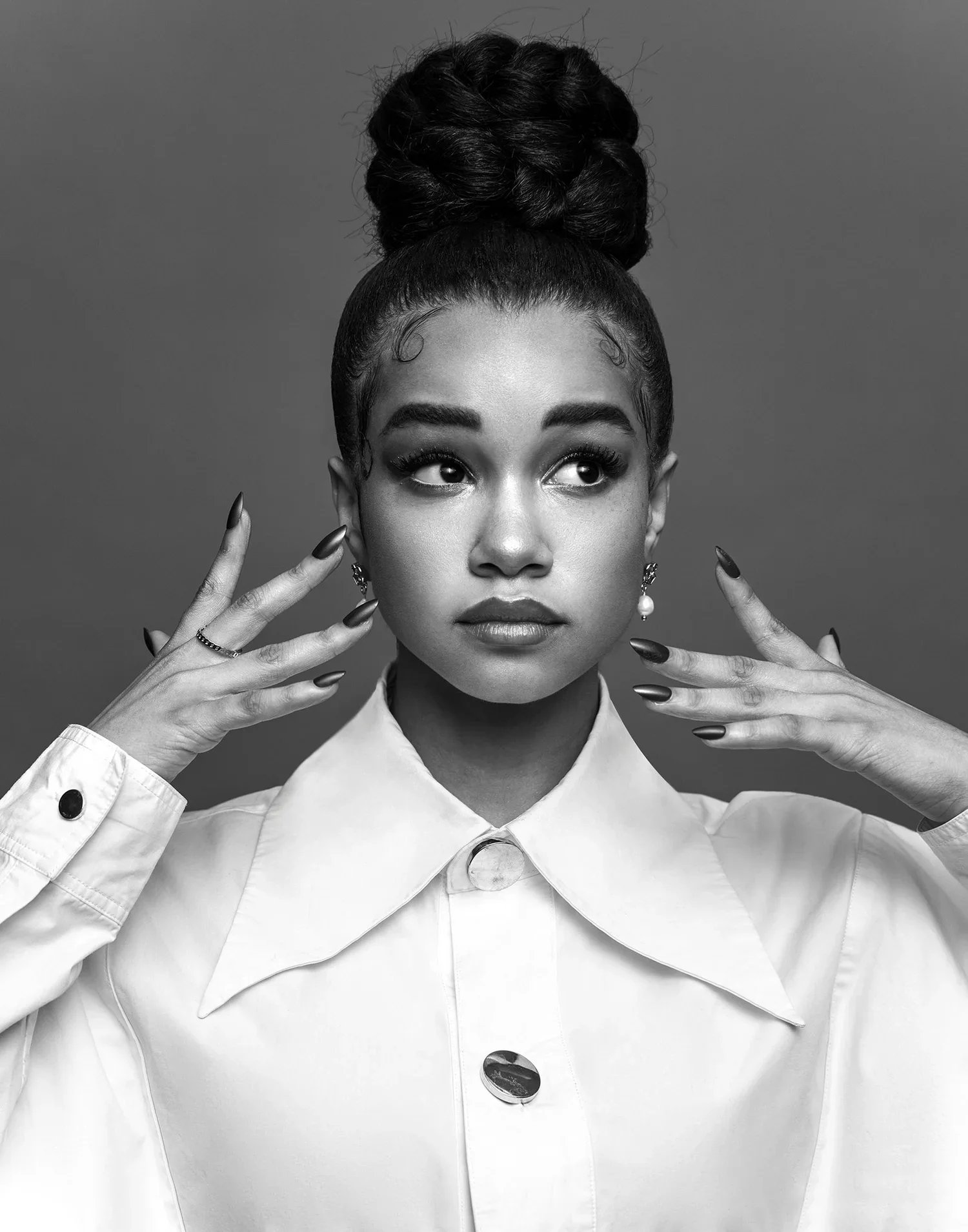
How Naomi Yang’s Nontraditional Path in Acting Shaped Her Work on 'Under Salt Marsh'
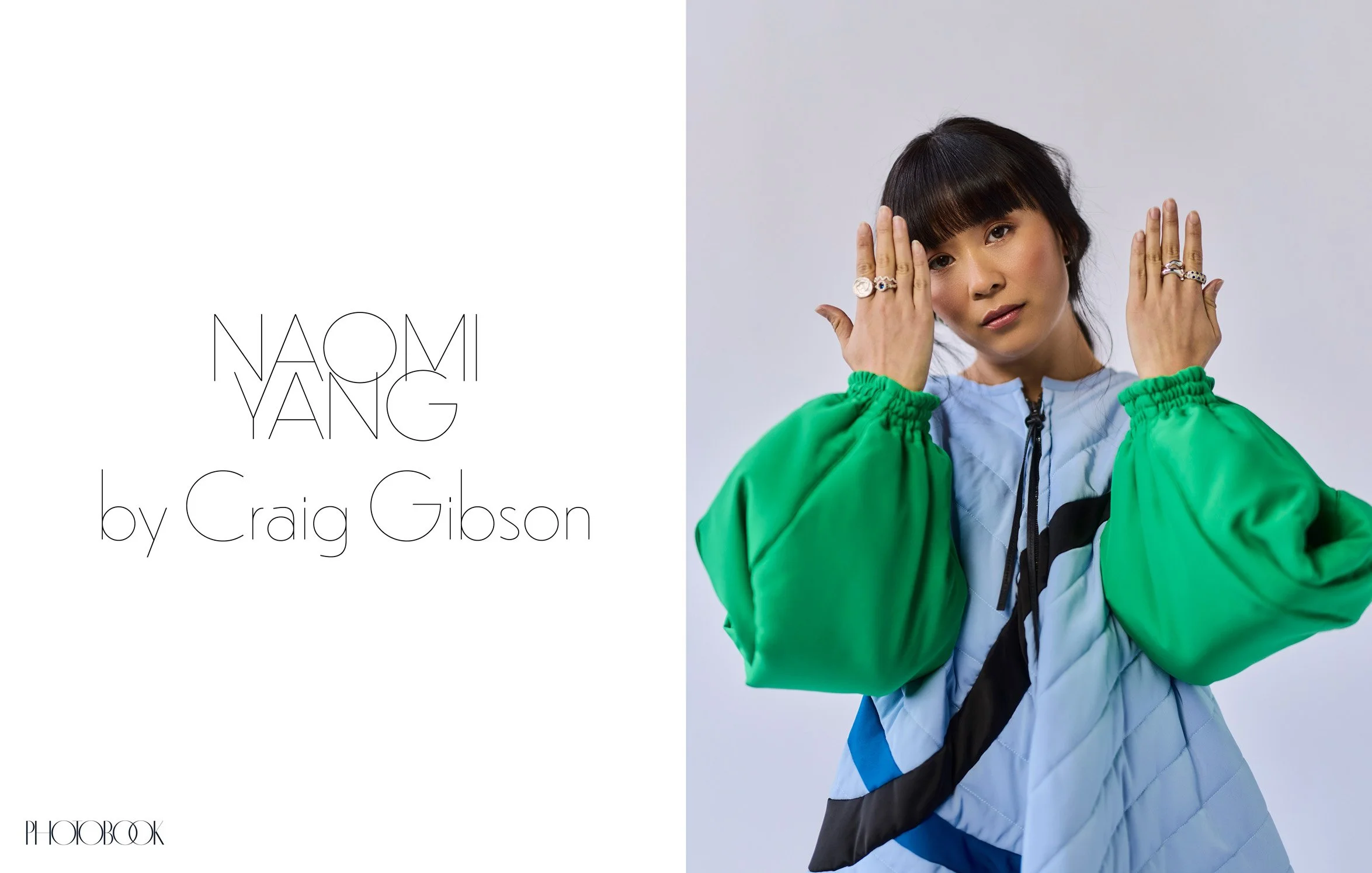
Coat by LOEWE
“Most people, when they think of actors, think someone who went to drama school—maybe wanted to act from a young age, graduated, and then entered the industry,” says crime-thriller actress Naomi Yang. “That wasn’t my experience at all. I was a really shy kid, and acting wasn’t even on my radar.”
After studying sciences at university, Yang couldn’t help but feel that wasn’t her calling. She spent years feeling adrift, until she saw an open audition for a film—and got the part. “I took all my holiday from the admin job I was doing to do the film, and then kind of forgot about it because it took 18 months for it to come out.”
But the film, Lilting (2014), actually did really well. It got BAFTA and BIFA nominations, which inspired Yang to give acting a go. While it wasn’t an easy process, she never went back to her day job. Yang’s been acting for thirteen years now.
“It really was random—I was in a place where I was open to new experiences because I didn’t know what I wanted to do,” she explains in an interview with PhotoBook Magazine. “I feel so grateful to still be doing this, finding great projects, and loving the job. I could have easily not gone to that audition, and my life would look very different.”
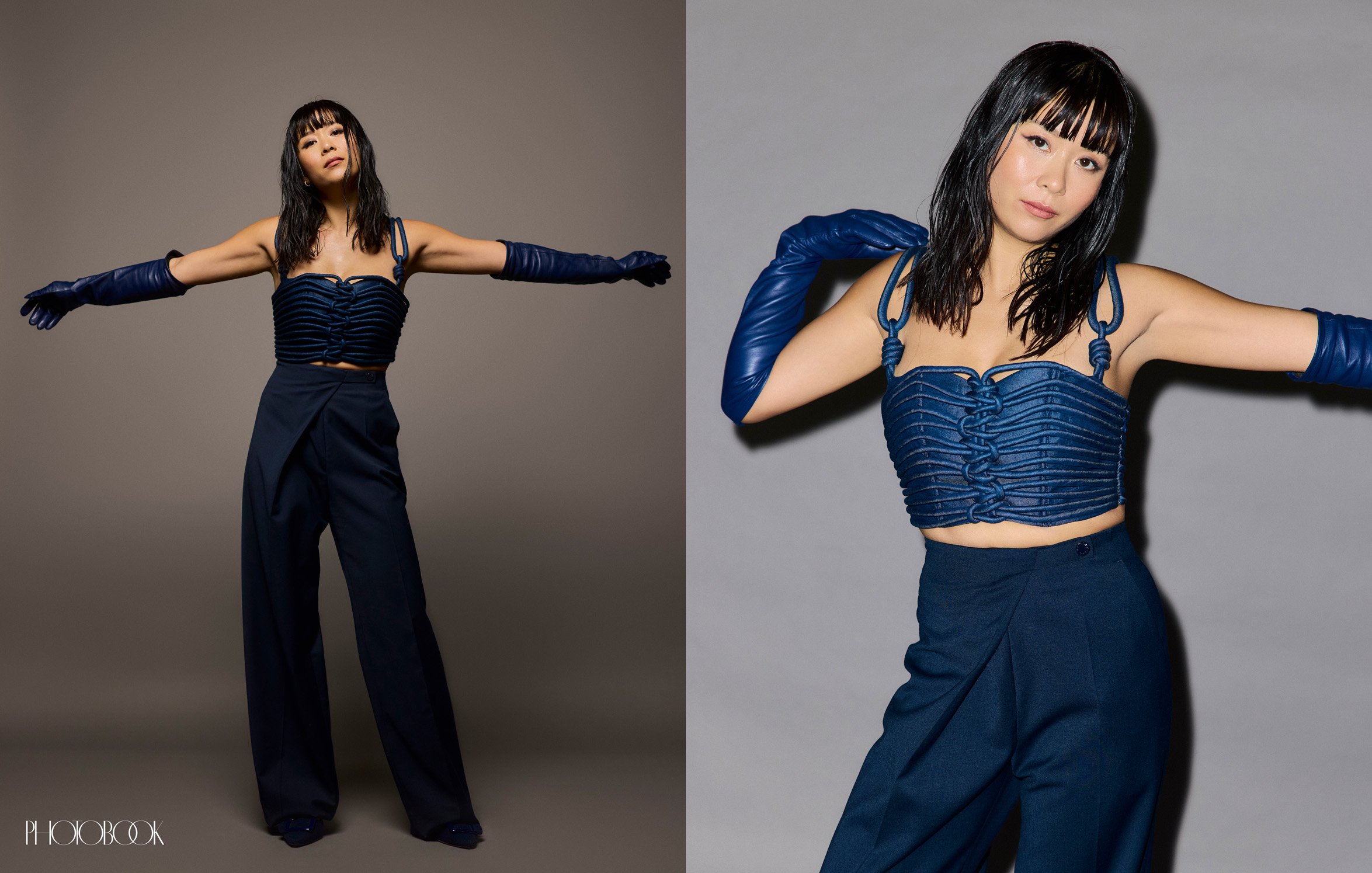
Gloves by FALKE
Top by Andres Otalora
Trousers by EUDON CHOI
For many viewers, Wolfe was their first encounter with you as Maggy. How do you think that character sits alongside the work you’re doing now?
Yeah, I mean, that show was my first series regular job, so it was really exciting to get my teeth into a character who was going to have a journey over the whole series, which I’d never had before. I look back on that job as a real turning point in my career. Paul Abbott is obviously an incredible writer, and it was this exciting, stylized, kind of loud show. I loved working on it, and Babou Ceesay is amazing. I probably carry a little bit of Maggy with me through everything I do now, because that was my first proper series-regular role.
I just remember that she had these glasses that I was always pushing up on the top of my nose. That’s honestly my biggest memory of the job—that little bit of characterization that kind of became part of her.
You’ve worked across a wide range of television dramas, from Peaky Blinders to DI Ray. What draws you to a project when you’re deciding what to take on?
I mean, I feel really lucky to work on so many great projects. When the writing is good, that’s what really draws me in—as an actor, you just want to be part of something like that. When great characters are written, it’s exciting to step into them. Acting allows me to explore different parts of myself, to really connect with a character. After each job, I feel like I come away with a deeper sense of myself and the world. I love that. I’m really lucky to do a job that lets me explore all of that.
When you first read the scripts for Under Salt Marsh, what stayed with you most?
Yeah, I think with Under Salt Marsh the sense of place is so key. It’s set in this coastal Welsh town, this close-knit community, and that immediately creates tension. You’ve got all these great characters in a small town who all have relationships with each other. Then there’s this huge part of the show that’s almost like another character: the impending storm. It feels like this big, looming presence that you can’t help but be affected by, and that’s such a unique thread running through the series.
Claire’s writing is just so great. She’s created these beautifully human, complex characters that you can’t help but lean into. And with my character, Jess, being the only outsider coming into the town, I was actually watching a lot of Twin Peaks at the time. Totally different, obviously, but there was that same sense of a place with its own set of unique characters—where the town is part of them and they’re part of the town. There’s a whole identity there, and I think that’s a really interesting part of the show.
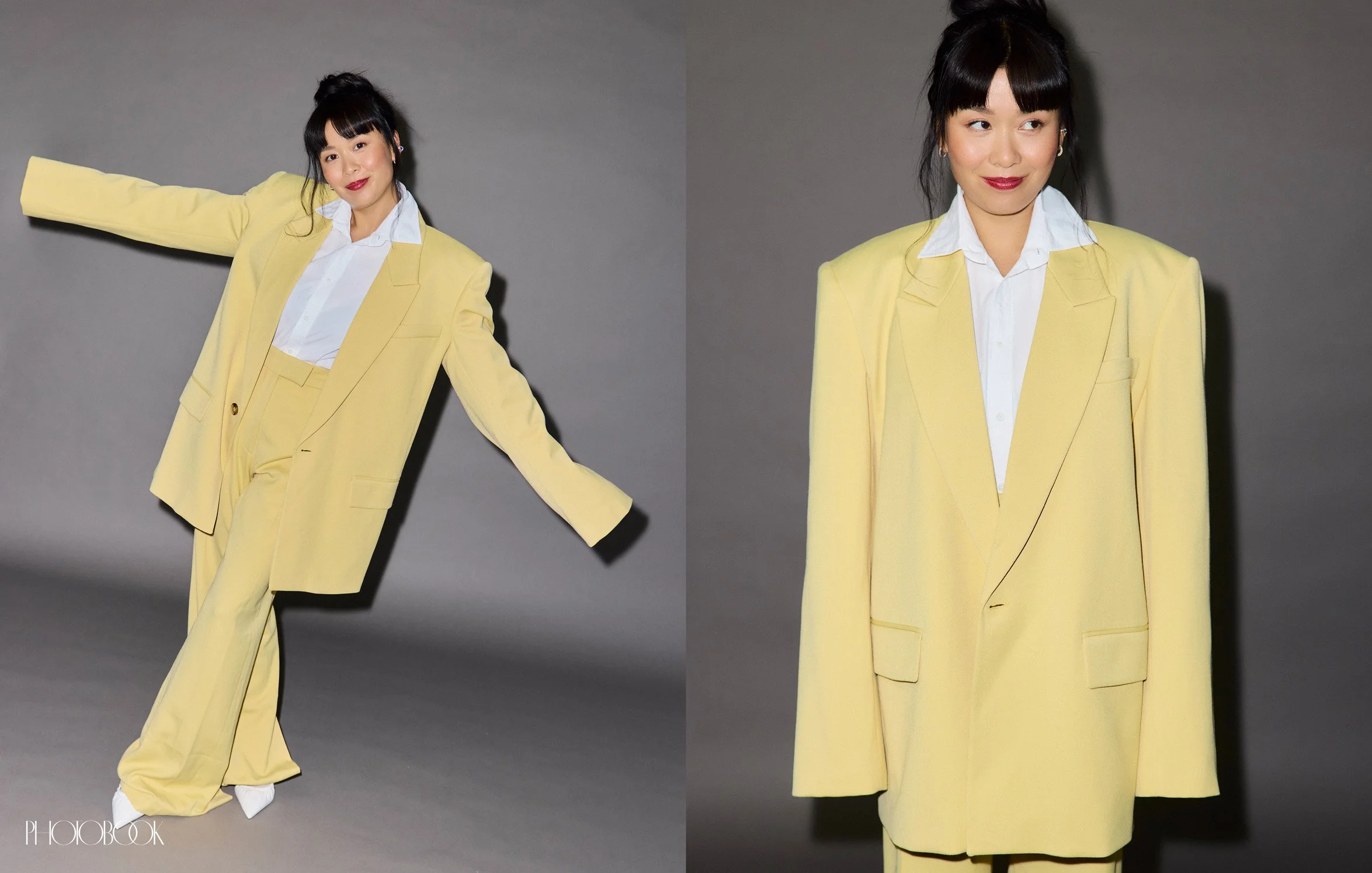
Shirt by FILIPPA K
Blazer by Trousers, both by RAEY
Shoes by Jimmy Choo
Working alongside actors like Kelly Reilly, Rafe Spall, Jonathan Pryce and Harry Lawtey, how did the ensemble dynamic help build the pressure and complexity of this fractured town?
I mean, you’ve got Jonathan Pryce, Rafe Spall, Kelly Reilly—they’re such powerhouses. They’ve worked so much in the industry and done such great work, and they all have this really deep understanding of the craft and what it takes. So when you’re acting alongside them, they somehow make it all seem so easy.
Probably the hardest part of the job was the weather. When it wasn’t actually raining and stormy, we were creating those conditions with rain rigs and wind machines. Those tough conditions really bonded us as actors. You’re working long hours in the cold and wet, and you just end up really connecting. By the end of the day, you’re just so grateful to be back in warm clothes and in a hot room. So we had a great working relationship on and off set—it was a very collaborative environment.
A lot has to be said for Claire too. She created the show, wrote it, and directed it. She knows exactly what she wants, but she’s also such a calm presence. She’s a real actors’ director and gives you time to discover things. She’s very open to feedback, and that helped the atmosphere a lot.
What role does your character, Jess Deng, play within the world of Under Salt Marsh?
Jess Deng is a recently promoted detective. She comes into Morfa Halen as the only person who doesn’t already have a relationship with the town, and she’s working with Rafe Spall’s character, Eric Bull, on a case. But quite quickly—especially through Bull’s relationship with Jackie and with this impending storm—she realises that in order to get answers and find the truth, she has to let herself be carried into the dynamics of the town and really be immersed in it.
Across the series, her whole journey is about challenging what she thinks she needs to do to get the job done. She believes in staying detached, but she comes to understand that sometimes it has to be personal—you can’t help that. That’s something she realises later on, and I really love that about her. She has real integrity and strong beliefs, but she’s also open to having those beliefs challenged. I loved playing her, and yeah, I miss her.
As a police officer, there’s a part of her that thinks you come in, you ask questions, you connect with people, but you still have to keep a certain distance from what you’re investigating. But because this town is so close-knit, and with the storm and all these external pressures, she can’t just rely on that anymore. She has to break free from what she knows and allow herself to feel things—to feel the pressure, and to understand where people are coming from. It’s a threat to their identity, to the place they call home, and she has to really let herself go there to see how far people are willing to go.
If you had to sum up Under Salt Marsh in a few words—without spoilers—what would they be?
I'd say it's a crime thriller, but truly it's about community and what we'll do to protect it.

Coat by LOEWE
Socks by FALKE
Shoes by Grenson Shoes
You’re joining Vigil for its third season, set in a remote Arctic research station. What excited you about stepping into that world?
I mean, I’m just a huge fan of Vigil itself. It’s always so exciting as an actor when you get to audition for something you’ve watched and loved, and then actually get the job. I love that show, and getting the opportunity to be part of it—it’s just a dream.
Watching seasons one and two, the storylines are so epic, and season three is no different. It’s going all out, and as you said, it’s set in the Arctic—we’re filming in Svalbard. When I knew that was happening, I was like, absolutely.
You’ve built such a strong body of work in crime thrillers. How does Vigil feel familiar to you, and where does it push you somewhere new?
Again, I think the setting is such a big part of the show. Similar to Under Salt Marsh, Vigil is set somewhere very cut off—in this case, an Arctic research station. Filming in Svalbard is incredible, but it really does feel like you’re at the end of the world. It’s so vast, and the bright whiteness of the snow feels never-ending.
That scale is what makes Vigil feel different. The show goes big in a way that sets it apart. Crime thrillers here in the UK are amazing, but often they’re more contained—dark, intense, and focused within a smaller bubble. Season three of Vigil is still contained, but it’s set in this huge environment where it feels like anything could happen. I don’t think I’ve worked on anything on that scale before—being there just makes you realize, wow, this is really big.
You were selected for BAFTA’s Elevate Programme early in your career—how did that experience support or shift your confidence as an actor?
I think, yeah, having BAFTA backing was really meaningful. It’s one of the biggest organizations in the industry, and to have their recognition early in my career—especially coming in without drama school and taking a non-traditional route—really solidified my sense of belonging.
The program was meant to be just a year, but then lockdown happened. After a pause, it ended up spanning two years. Coming out of lockdown, having that structure—masterclasses and support—was really key. It made me feel like there was still something happening in an industry that had shut down and felt uncertain.
Even now, it’s amazing to see the actors I went through the program with all doing incredible work. We support each other from the sidelines, and it’s inspiring to watch. For me, being recognized by BAFTA was a pivotal moment in my career.
You’ve mentioned your path into acting wasn’t conventional. Can you unpack what that actually looked like for you?
I remember being 21, feeling like everyone knew what they wanted to do, and I had no idea. I felt old entering the industry in my early twenties, like everyone else already had a few years of experience, and I didn’t. I had a lot of imposter syndrome because I hadn’t gone to drama school. But now I see that as a real strength—I bring a unique perspective entering the industry later. I really like that about my path.
What would you say to someone who’s discovering acting a little later than most and trying to find their way into the industry?
Yeah, I think you just have to do it—even if you’re scared. I learned that a lot myself. I was scared going into things all the time because I didn’t feel trained enough or didn’t know enough about the industry. But I realized you just have to acknowledge that fear, do what you’ve prepared, and see what happens. Often, it turns out, “Okay, that wasn’t so bad,” and people respond well.
Now, I approach it with, “I guess I just do it scared.” The industry can feel really intimidating, but if you accept those feelings and do it anyway, that’s really how you start finding your way.
As you look ahead, what kind of work do you hope this chapter gives you permission to say yes to—and just as importantly, to say no to?
Yeah, I feel like I’m at a really exciting time. I’ve worked on some great projects, and I can be a bit more intentional about the work I take on next. This year, I’d love to get back on stage and do something—it’s creatively fulfilling in a really different way, and I’d love to stretch those muscles again. That’s something I’m hoping to do in the immediate future.
CREW CREDITS:
Talent: Naomi Yang
PhotoBook Editor-In-Chief: Alison Hernon
PhotoBook Creative Director: Mike Ruiz
Photographer: Craig Gibson
Fashion Styling: Sarah Harrison
Makeup: Min Sandhu
Hair: Sophie Sugarman
Tearsheets by Daniel López, Art Director, PhotoBook Magazine
Interview by Brya Sheridan, Assistant to Editor-in-Chief, PhotoBook Magazine
RELATED STORIES