The Weight of Moving Forward: Sky Tianyuan’s FIT MFA Collection
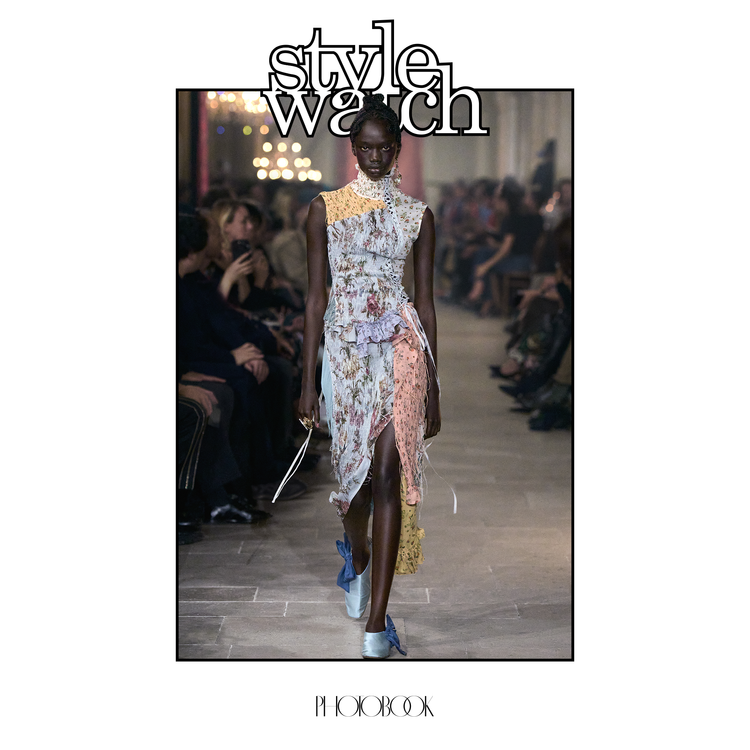
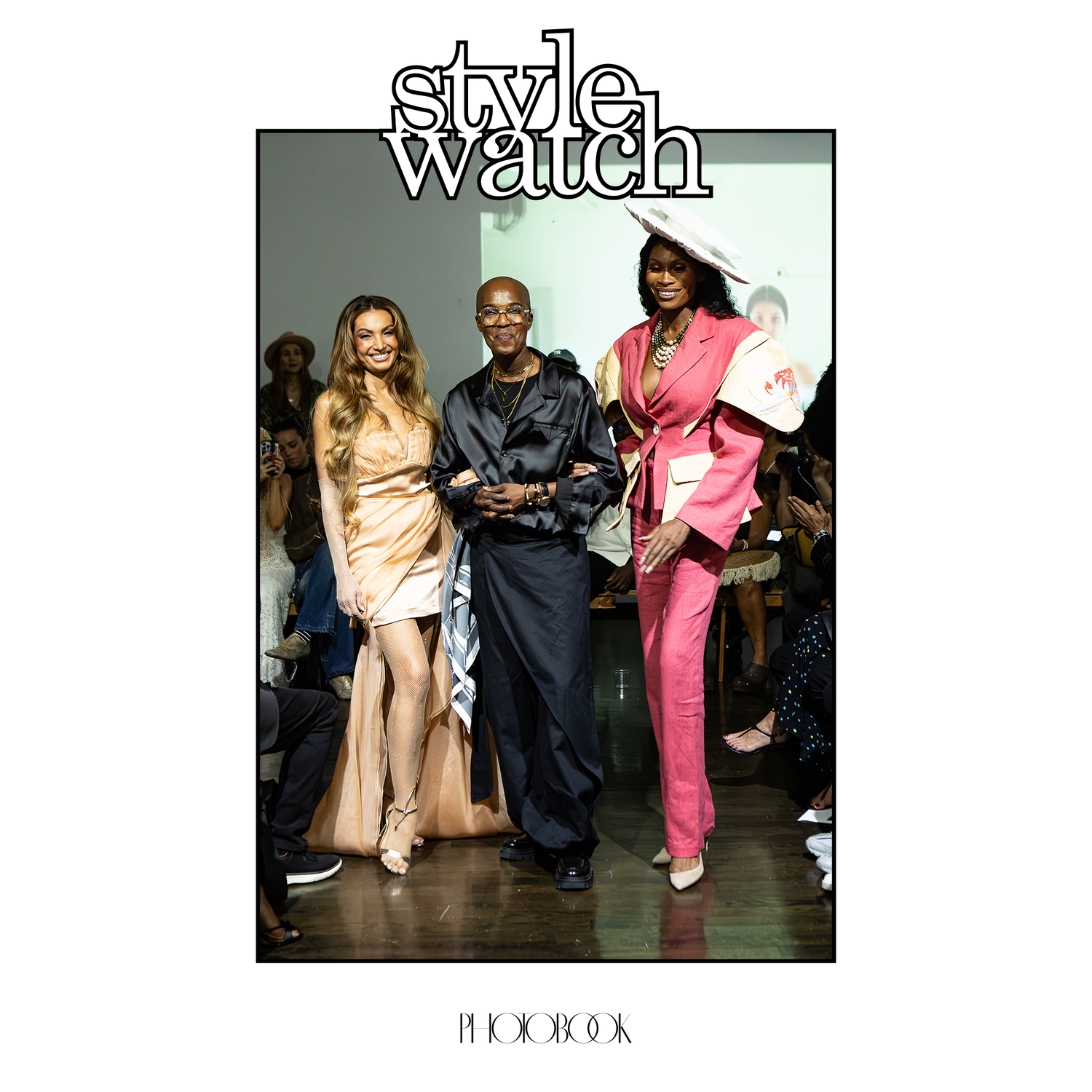
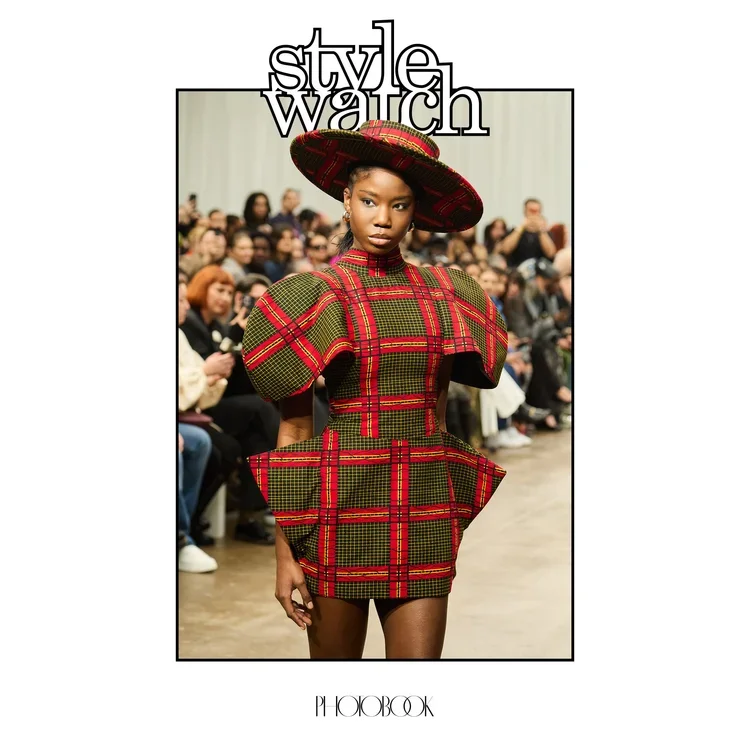
“Each generation has its own Long March” is a familiar phrase in China, repeated so often that its historical weight can begin to fade. For FIT MFA designer Sky Tianyuan, A Piece Of Cloth On The Long March returns to the uncertainty beneath those words: the experience of moving forward without knowing where the road will lead. Drawing from Edgar Snow’s Red Star Over China, archival imagery, and Mao Zedong’s philosophical writings, Tianyuan translates this idea of persistence into clothing shaped by function, movement, and the tension between opposing materials. Military uniforms and the Mao suit inform the collection without being reproduced literally; instead, their practical construction is reconsidered through contemporary silhouettes, raw textures, and details designed for the body in motion. Tianyuan’s design language, described through the codes of Heroic Utilitarian, Post-Maoist, Mando Brutalism, and Mando Punk, reflects a generation navigating the complicated relationship between cultural memory and the present. Yet the collection is not meant to remain an intellectual exercise. Beneath its historical references is a clear conviction that clothes must first make someone want to wear them. For Tianyuan, the past provides a point of departure, while the act of dressing becomes a way to keep moving into an uncertain future.
What was the starting point for your MFA collection, and what initially made you want to explore that idea through fashion?
The Long March was already part of the language I grew up with in China. Now people say ‘each generation has its own Long March’ so often that it can almost sound like a joke. But the people who went through it had no idea what the future would be. They kept going anyway, and that stayed with me. I chose fashion because clothing brings that feeling back to a person and their body. I was also choosing a path without knowing where it would lead. The collection comes from that feeling, but the clothes still have to stand on their own.
Your collection brings together a specific set of personal, cultural, historical, or conceptual references. How did your research evolve as you moved from an idea into an actual collection?
I started with Edgar Snow’s Red Star Over China because he wrote about the people living through that history. Then I looked at archival photographs and paintings. My professor Zoran helped me get clearer about the research and the philosophical readings, and how they could actually inform the collection. Mao Zedong’s On Practice and On Contradiction are philosophical essays, and they became useful ways for me to work. On Practice says that you learn by doing and testing, so an idea has to go through fittings on an actual body. On Contradiction looks at how opposing forces create change. I used that when choosing materials that feel different from each other and seeing what happened when they came together in one garment. The research became part of making, not just a source of images.
What role do your personal experiences play in your design practices, and how much of yourselves do you see reflected in these collections?
My professor Alex helped me develop four codes while I was making the collection. She knows so much about art and has a way of helping you name what you’re drawn to. Heroic Utilitarian is about big shapes, function, and that feeling of keeping going. I was born in China in 2000 and grew up in a post-reform culture where older political imagery and language were still around. That’s where Post-Maoist comes from. Mando Brutalism is the rawness I like in fabric and color. Mando Punk is the attitude: mixing those things without making them too neat or obedient. ‘Mando’ means both me and the culture I come from. The codes are really different parts of how I see things.
How did you all translate the central concepts of your collections into something physical through silhouette, material, color, construction, or textile development?
I don’t really manipulate the fabrics much. I like their rawness and what they already do on their own. That’s the brutalism part for me. Mao’s On Contradiction helped me think about putting materials with different behavior together—something structured next to something softer, for example. Then I work out the cut, stitching, and fusing around the fabric instead of forcing it to become something else. The same thinking goes into the wearing options: a detail should make the garment better to live in.
Was there a particular garment, technique, material, or look within your collections that became especially important to your overall story? Why?
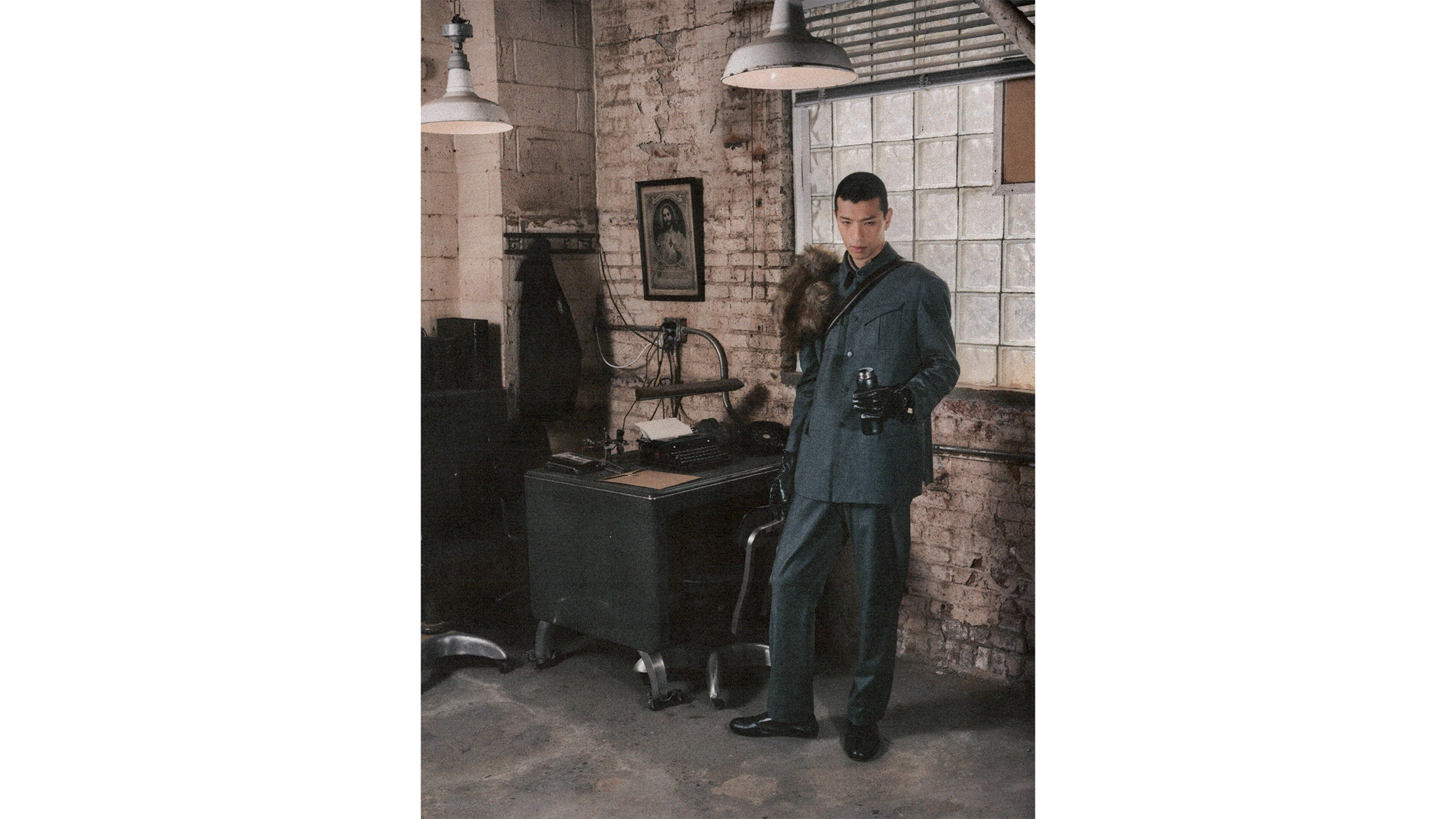
Look 6, the one I half-jokingly called the ‘Mao fit.’ The Mao suit is also the Zhongshan suit, originally associated with Sun Yat-sen. I liked that even its name has shifted over time. I changed the upper pocket from a patch pocket to one built into the seam, and reshaped the flap. The two lower pockets became inset welt pockets, while the side still has a pocket. It takes away some of the bulk without losing the function. I also added a back action pleat so the jacket moves better. The trousers borrow a riding shape from the wrapped lower legs I saw in my research. Up close, it’s a different garment, made for someone moving through a different time.
Many of the collections in this graduating class engage with larger ideas around identity, culture, memory, the body, technology, or the environment. What do you hope viewers take away from your all’s work beyond the clothes themselves?
The feeling is pretty simple: you don’t know what’s going to happen, but you keep going. There’s so much uncertainty now, from work to the way AI is changing things. When a symbol gets repeated until it becomes a meme, it can lose the weight it once had. I hope people think about that too. But honestly, the first reaction I want is, ‘Damn, that looks good. I want to wear it.’ That matters just as much to me. I made a fashion collection, and the clothes need to make someone feel something before I explain them.
Was there anything about the processes of developing your thesis collection that challenged an assumption you initially had about your own design practices?
For my BFA, I was surrounded by very conceptual work, but my professor cared a lot about construction, and that stayed with me. At FIT, Jun helped me a lot as I worked through the construction of this collection. I used to feel like the concept and the garment had to carry equal weight. Making this collection showed me where my priority really is. I want someone to see a piece and want to put it on, then keep reaching for it because it feels good. The concept gives me direction, but it has to serve that experience. Even the smallest detail needs a reason to be there.
How has your time at FIT changed or expanded the way you think about fashion and your role as designers?
FIT changed how I work, both with clothes and with people. I came in using Gerber for most of my patterns. I’d tried CLO before, but Danielle’s class gave me a much more systematic way to learn it. I think in 3D, so being able to see a complicated shape on a body earlier made me faster and clearer about my patterns. Our department chair, Cathleen, had a different kind of influence on me. I can be quite direct, sometimes too quick to push a point. Watching her handle problems taught me to slow down and look for a solution that feels right to the people involved. That carries over to fashion for me: I’m designing clothes for people, and I’m working with people to make them.
What do you think makes your design perspective distinctly your own, and how has that perspective evolved throughout your MFA?
I don’t think my design perspective is separate from how I see things. The history I grew up with is serious, but the way my generation talks about it can be pretty absurd. I’m interested in that contradiction. That’s part of what Mando Punk means to me. It can have humor and attitude, and I still want the garment to be really well made. I came into the MFA with a fairly clear sense of what I liked. The process made me more confident about following it, and more precise about what belongs in a look.
As you move beyond FIT and begin the next chapter of your career, what do you want to carry forward from these collections, and what are you excited to explore next?
Honestly, I don’t know what my next collection is yet. This feels like the best work I can make with what I know right now. It’s a love letter to six years of studying fashion, and maybe a temporary goodbye to that chapter. I’ve spent two years deep inside my own world making it. Now I’m running a sample room with a friend, making clothes for clients. I want to learn from their ideas, from other designers, and from actually working in the industry. After so much time on one collection of my own, I think I need those other perspectives before I know what I want to do next.
You were drawn to the idea of continuing forward without knowing what the future holds. How did that idea of persistence translate into the garments?
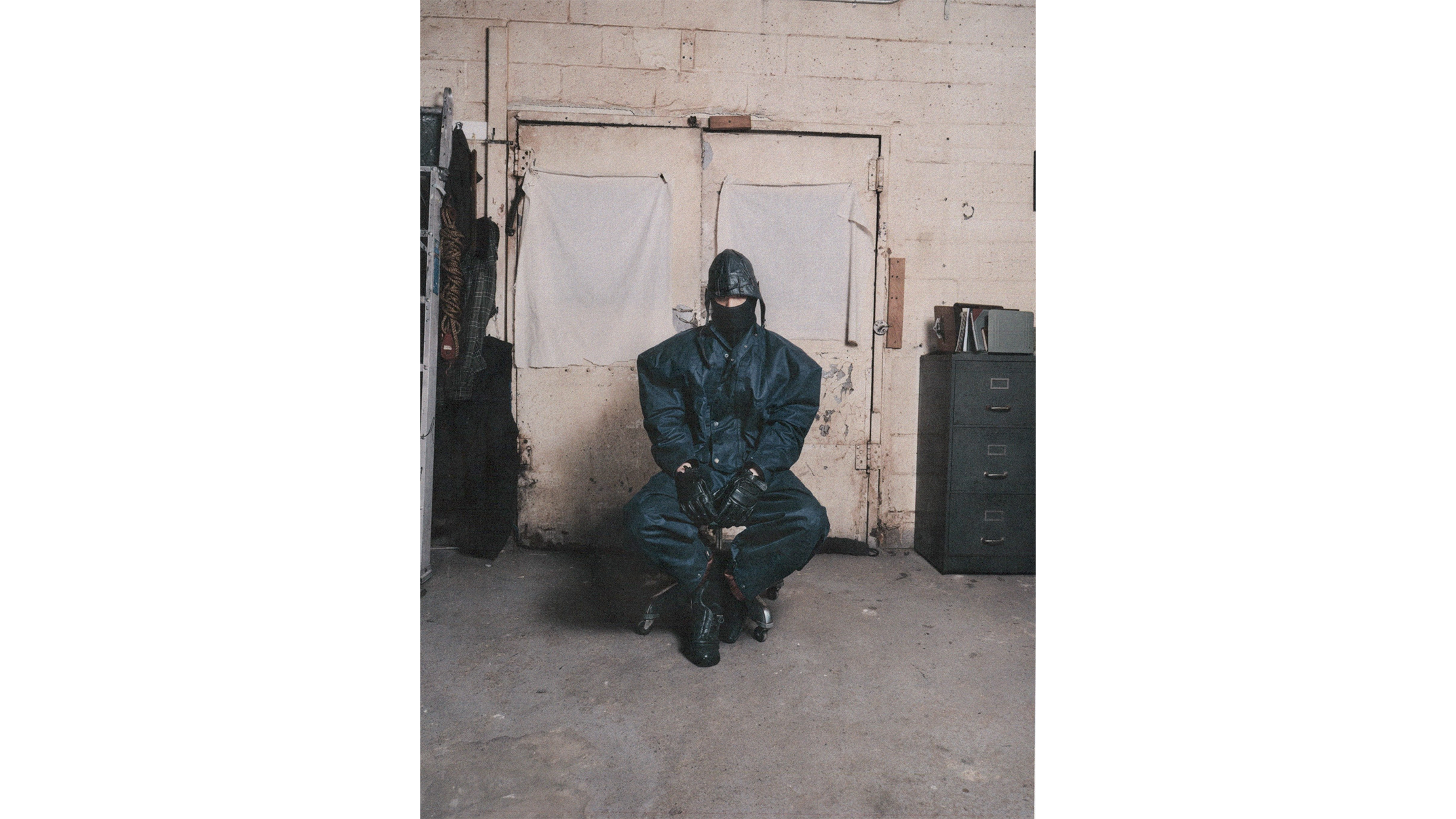
I think of it as carrying weight and still moving. Some looks have a heavy upper half, while the lower body is less protected. Look 8 shows that tension most clearly. But the clothes are more comfortable than they look. I built in space for movement and ways to adjust the fit, so the wearer isn’t fighting the garment just to move. You can carry something that looks heavy and still keep going.
You researched Chinese military uniforms and translated their durability and structure into contemporary clothing. What did you want to preserve from that visual history, and what did you want to transform?
I wasn’t trying to reproduce a uniform. I wanted to understand why it was made that way: it had to last and let a person move. I kept that practical thinking, but changed the shape, materials, and details for someone living now. The circumstances are different, and that’s why a one-to-one copy wouldn’t make sense to me. The historical reference is still visible, but the fit and attitude belong to this moment. For me, that’s how the idea that every generation has its own Long March becomes a garment. It carries some memory of the past while dealing with the present.
Interview by Emma Green, Assistant to Editor-In-Chief, PhotoBook Magazine
Tearsheets by Daniel Lopez, Art Director, PhotoBook Magazine
*Images Courtesy of FIT
RELATED STORIES