One Doorway at a Time: A Look Inside ADAA Tribeca Gallery Walk
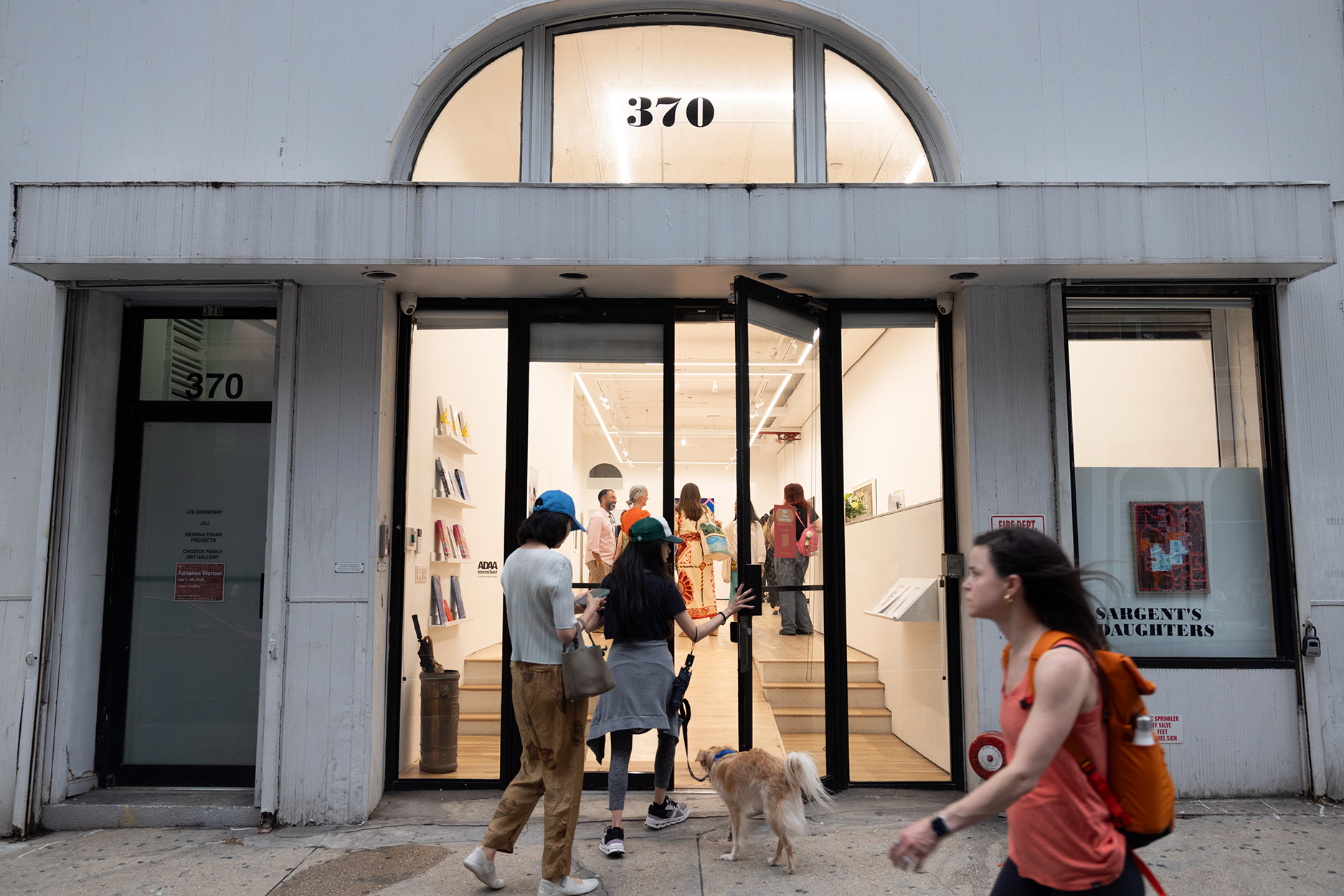
ADAA Tribeca Gallery Walk 2026. Courtesy of the ADAA. Photo credit: Alexa Hoyer.
South of Canal Street, Manhattan seems to exhale. The city's familiar velocity softens into something slower, more deliberate, as cobblestone streets replace hurried avenues and century-old warehouse façades conceal immaculate white galleries behind industrial steel doors. Tribeca has always possessed an effortless elegance and on the day of its annual ADAA Tribeca Gallery Walk, the neighborhood reveals itself as New York's most quietly seductive cultural salon.
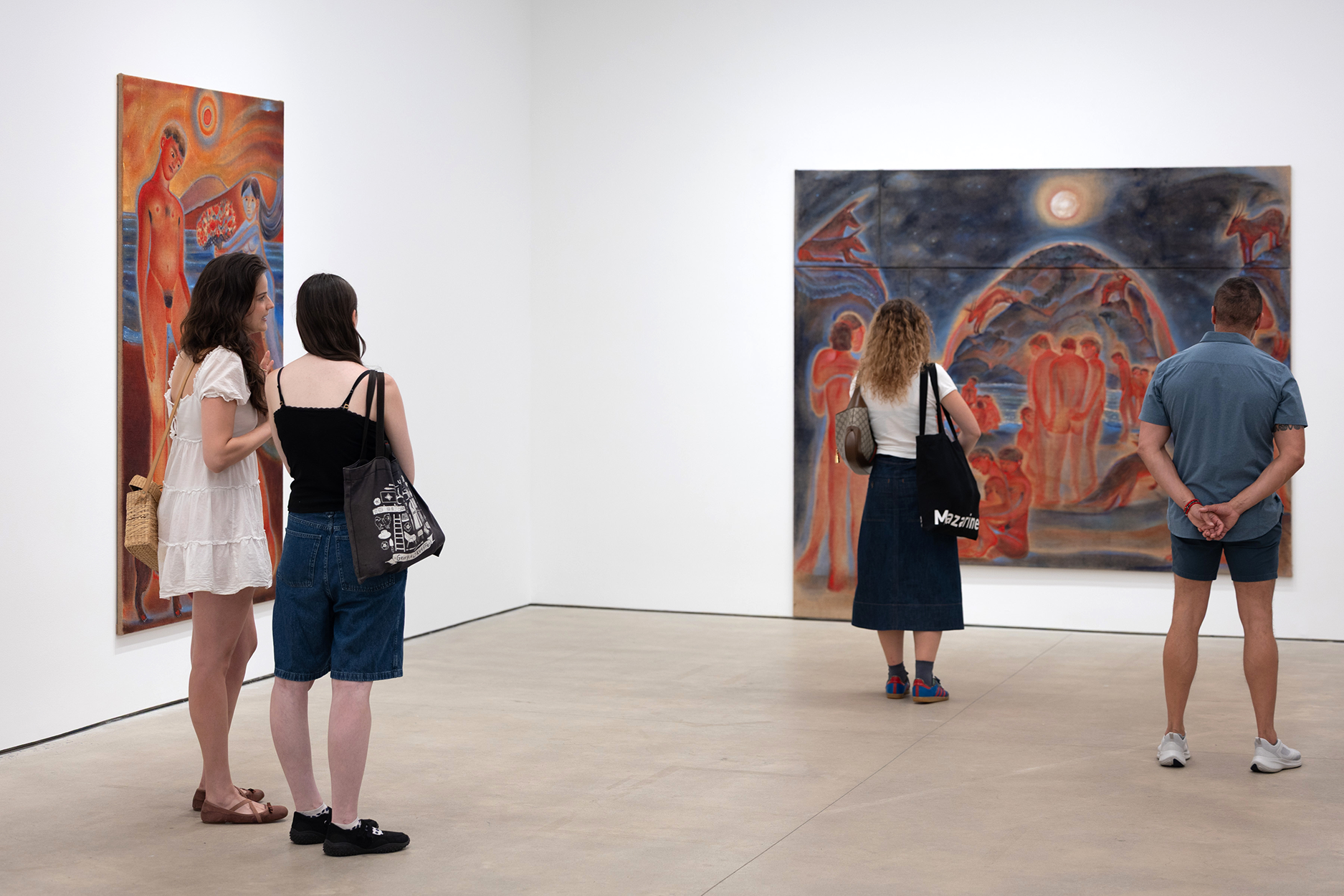
ADAA Tribeca Gallery Walk 2026. Courtesy of the ADAA. Photo credit: Alexa Hoyer.
The evening unfolds with the ease of a beautifully styled editorial, one gallery slipping almost imperceptibly into the next, each threshold introducing an entirely different visual language. Nothing announces itself too loudly, yet by the third or fourth exhibition an unmistakable dialogue begins to emerge. Artists arrive, almost improbably, at the same preoccupations: the architecture of memory, the politics of the body, the elasticity of identity, and the quiet tension between permanence and transformation. This year, the current had real voltage. By the third gallery, unexpected correspondences begin to emerge. Artists separated by decades, mediums, and philosophies seem to find themselves in quiet conversation, each returning to questions of memory, identity, perception, and transformation without ever arriving at the same conclusion.
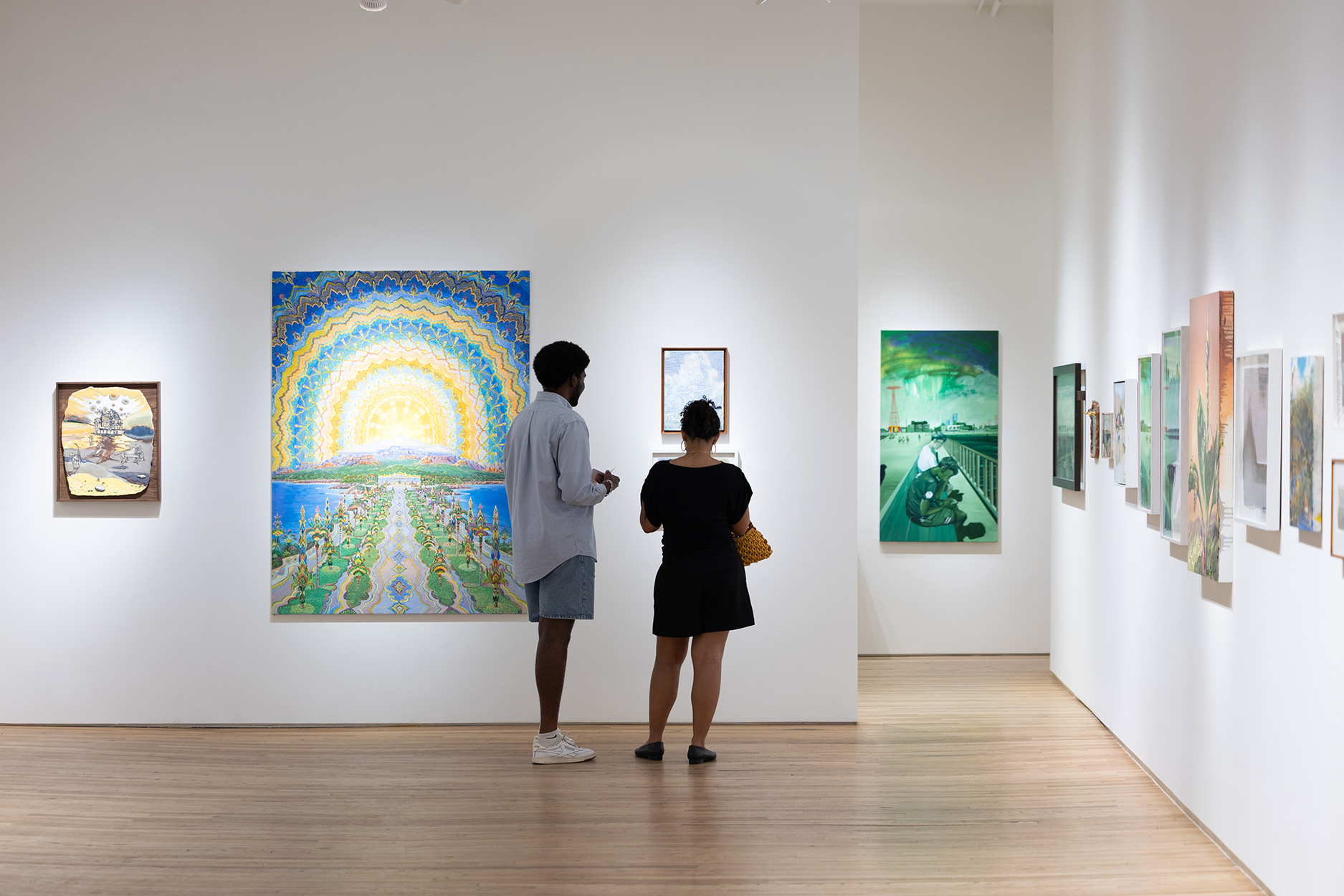
ADAA Tribeca Gallery Walk 2026. Courtesy of the ADAA. Photo credit: Alexa Hoyer.
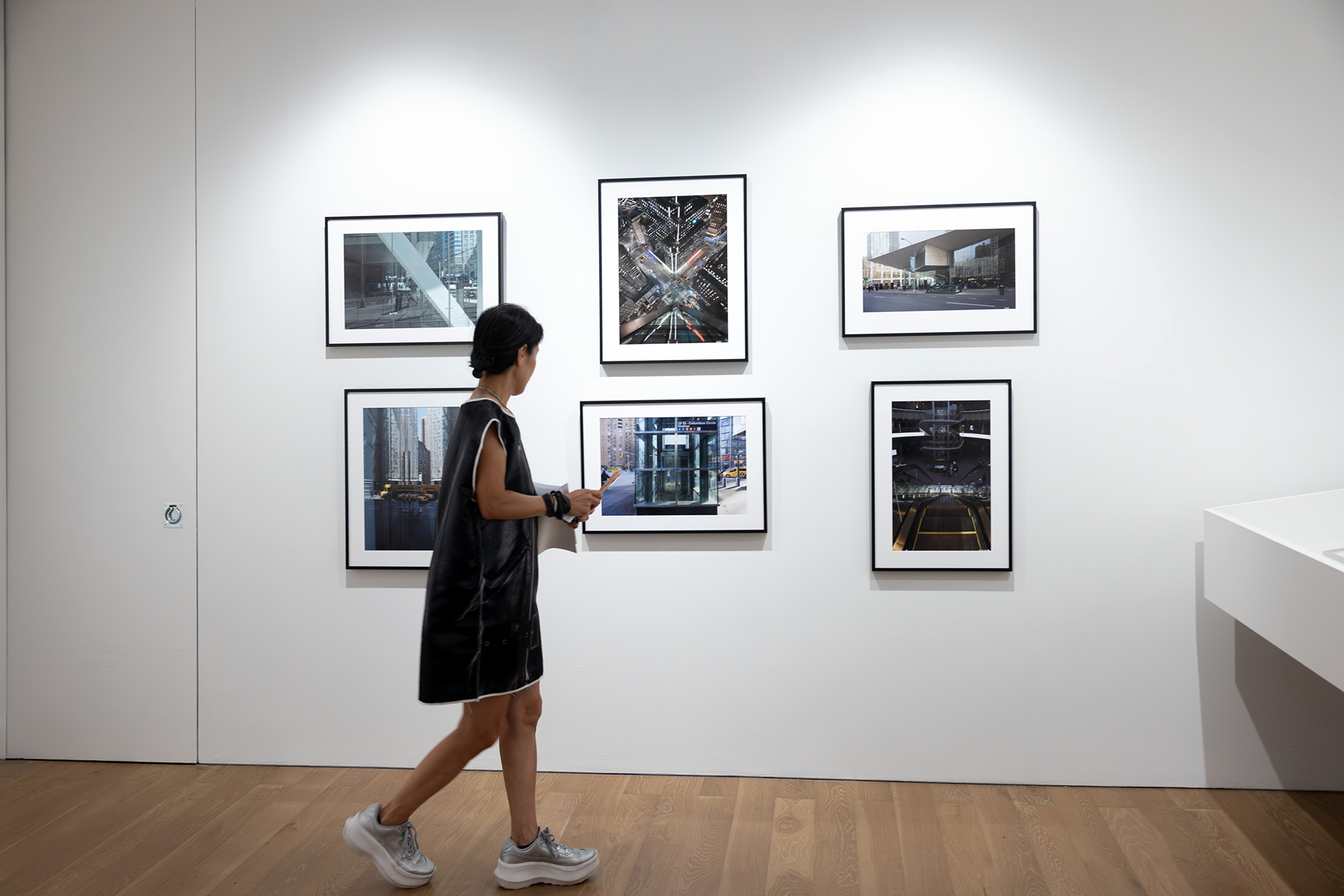
Beginning at Peter Freeman, Inc., the conversation shifted to something structural. 5, 7, 9, 11, 13 brought together Walter De Maria, Jasper Marsalis, Park McArthur, and Sung Tieu in an exhibition that considered the systems through which we measure, organize, and experience the world. The title comes from De Maria’s sculptural work, a sequence of nine stainless-steel polygonal rods whose varying sides become an understated study in mathematics, order, and perception. Around it, works by Marsalis, McArthur, and Tieu expanded those ideas into musical, spatial, and social territory, each artist approaching systems of control from a distinctly different angle.
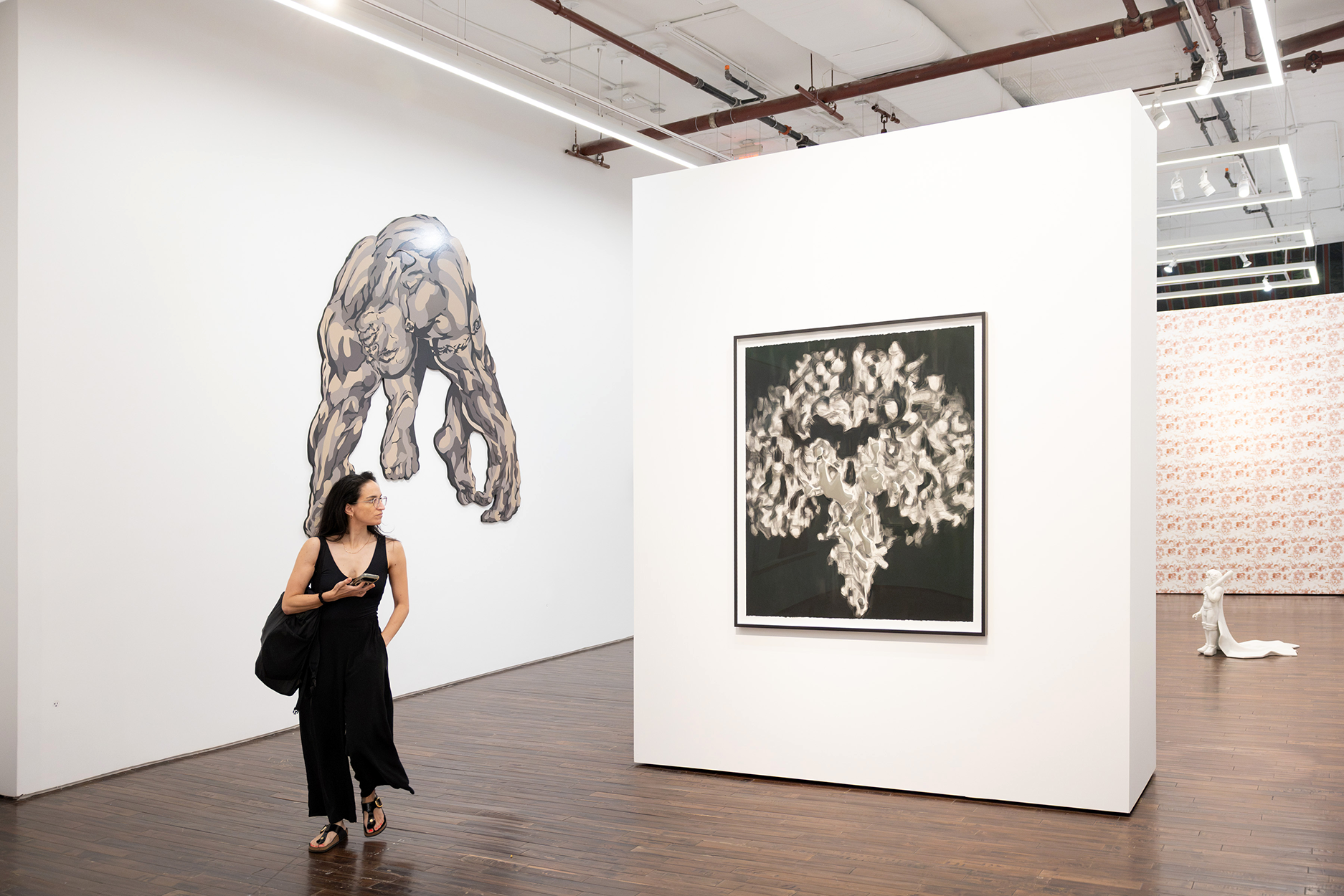
ADAA Tribeca Gallery Walk 2026. Courtesy of the ADAA. Photo credit: Alexa Hoyer.
Sound became an especially subtle thread throughout the exhibition, connecting practices that otherwise resist easy comparison. Rather than presenting a single argument, Peter Freeman allowed these works to exist in tension with one another, asking viewers to consider how structures, whether mathematical, physical, institutional, or social, quietly shape the way we move through everyday life.
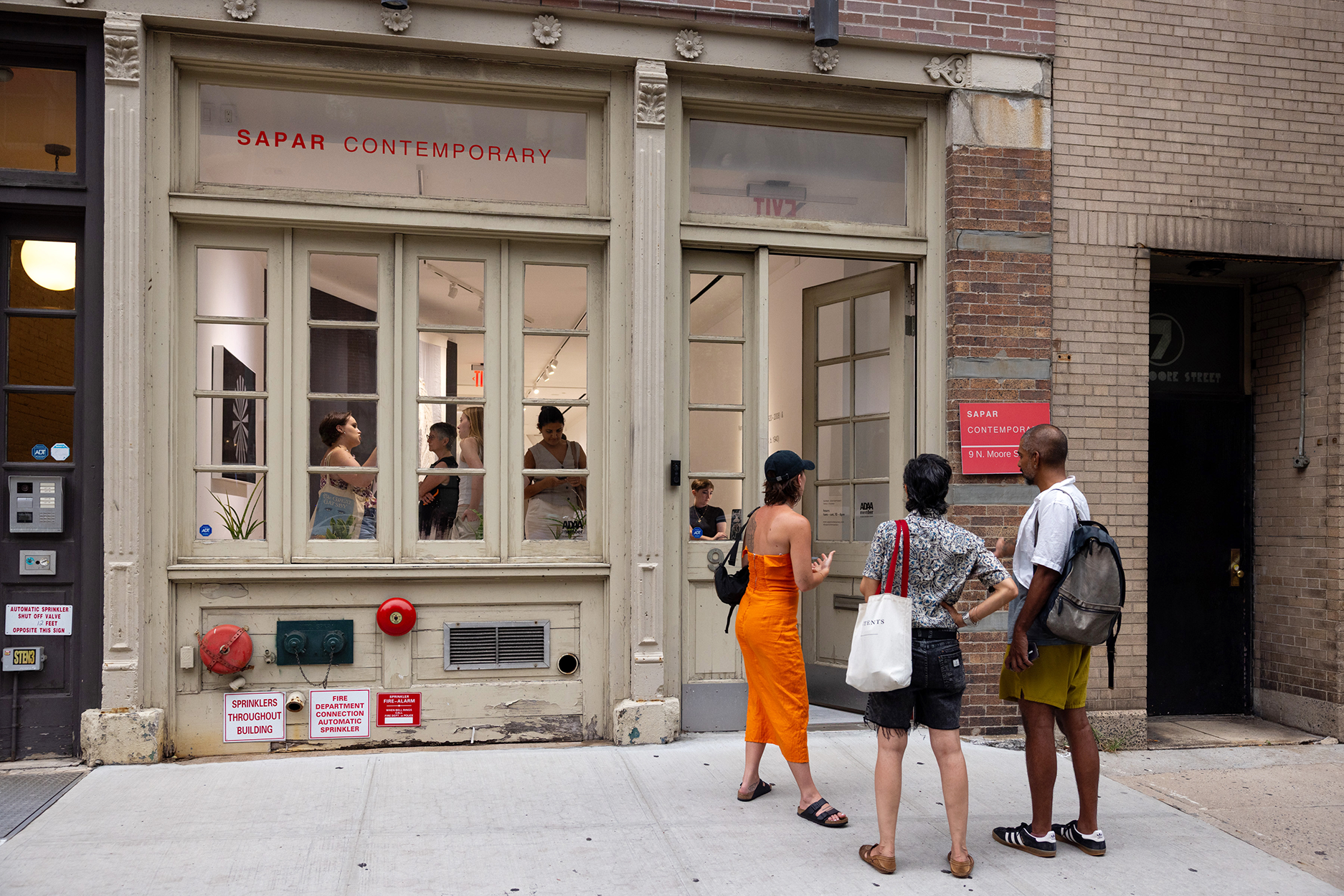
ADAA Tribeca Gallery Walk 2026. Courtesy of the ADAA. Photo credit: Alexa Hoyer.
Out on Walker Street, the neighborhood seems to take the same cue. Light slides off old warehouse glass like it's been styled that way. Café conversation drifts onto the sidewalk. People move between buildings with maps folded into their coat pockets, in no rush at all, letting one mood settle before stepping into the next.
A few doors down, that composure is deliberately shattered. Shaun Leonardo's The Invisible Man, at Cristin Tierney, does not ease you in; it confronts. Across drawing, painting, sculpture, video, and performance, the exhibition takes on masculinity, race, memory, and the sheer physical cost of carrying all three at once. The title borrows from Ellison; the reckoning is entirely Leonardo's own. Where Leonhardt built her drama from absence, Leonardo builds his from presence, impossible to look away from. Figures strain. They bend, collapse, and endure, carrying histories that refuse invisibility. Different registers, same undertow, which is proof that what remains unseen is often what shapes us most.
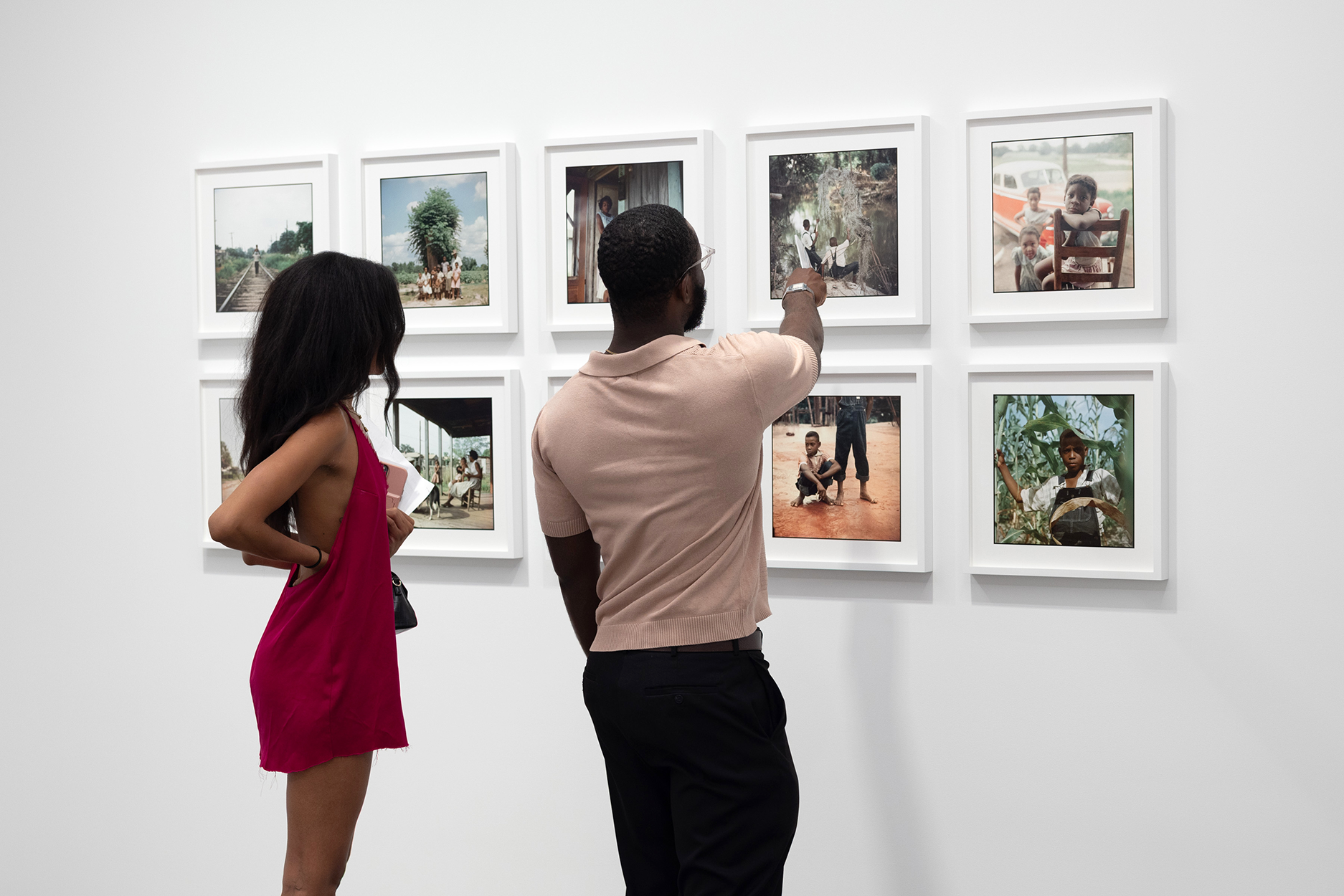
ADAA Tribeca Gallery Walk 2026. Courtesy of the ADAA. Photo credit: Alexa Hoyer.
That same tension around visibility travels several blocks to P•P•O•W, where Strip reunites Jimmy DeSana, Carolee Schneemann, and Martha Wilson, a photography trio from the early 1970s. The show reads as both period piece and current event, which is precisely its power. Culture has shifted seismically since these images were made, but their nerve has not aged a single day. The photographs still carry an irreverent, theatrical charge resisting anything so tidy as a single interpretation. They treated the body not as subject but as collaborator, and in doing so, blew the doors off what art was permitted to be. Standing in that room, nothing here feels like archive. It feels like it's still happening. It was a reminder that most of what now passes for artistic freedom was, not so long ago, fought for at the margins rather than granted from the center.
ADAA Tribeca Gallery Walk 2026. Courtesy of the ADAA. Photo credit: Alexa Hoyer.
Walking between galleries, the exhibitions begin to blur into one another. Themes introduced several blocks earlier quietly reappear in unexpected forms, as though each artist has inherited a fragment of the previous conversation. The neighborhood itself begins to function less as a collection of individual destinations than as a single, carefully orchestrated exhibition.
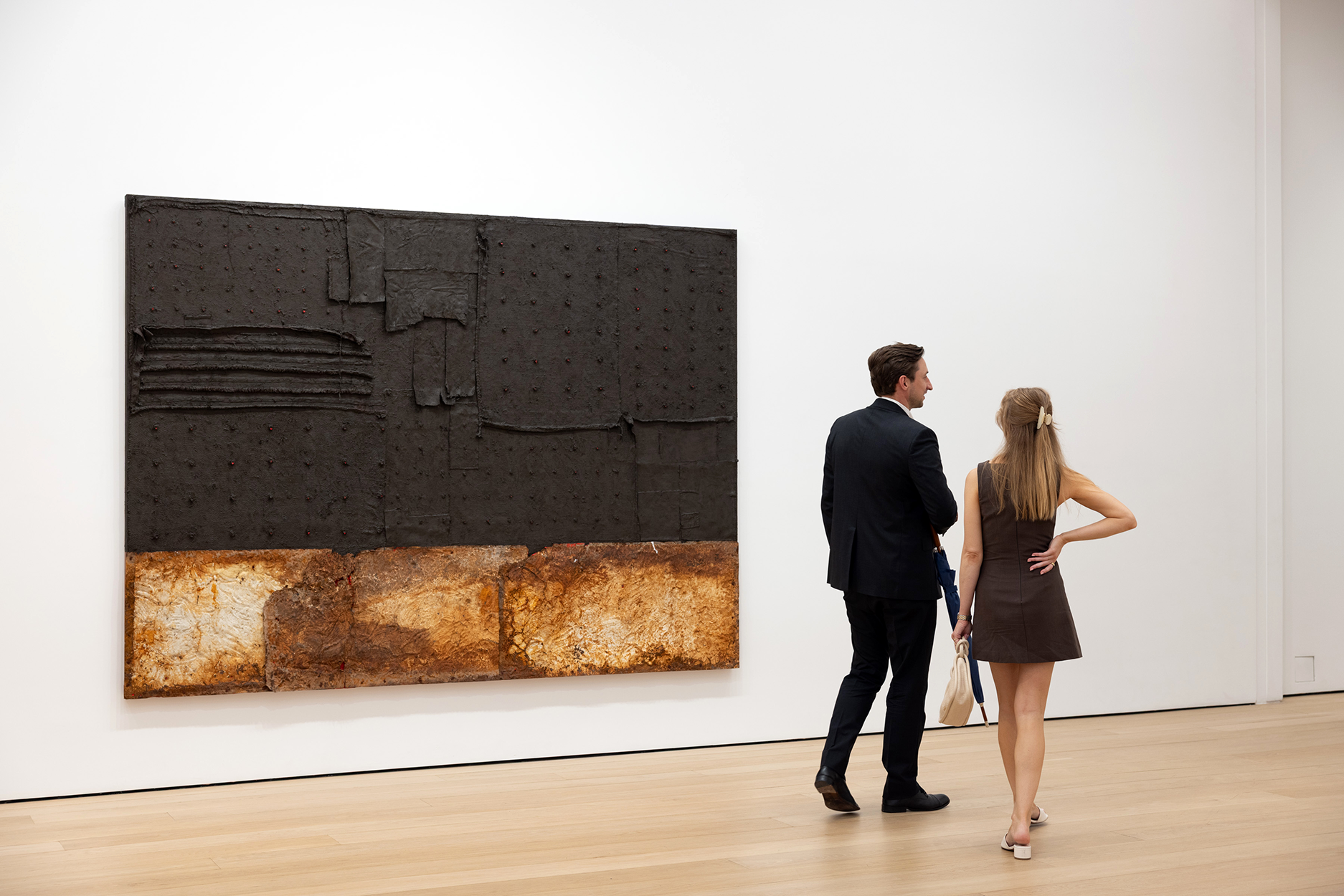
Leonhardt turns paint into memory. Leonardo turns the body into witness. DeSana, Schneemann, and Wilson turn performance into liberation. Different mediums. Different eras. Same fundamental question, asked over and over in different accents: what does it mean to occupy space? This, perhaps, is the real luxury of walking Tribeca on a day like this one: the galleries are not simply exhibiting work; they are staging a conversation that spills out onto the sidewalk and keeps going, block after block, carried forward by whoever happens to be walking it.
ADAA Tribeca Gallery Walk 2026. Courtesy of the ADAA. Photo credit: Alexa Hoyer.
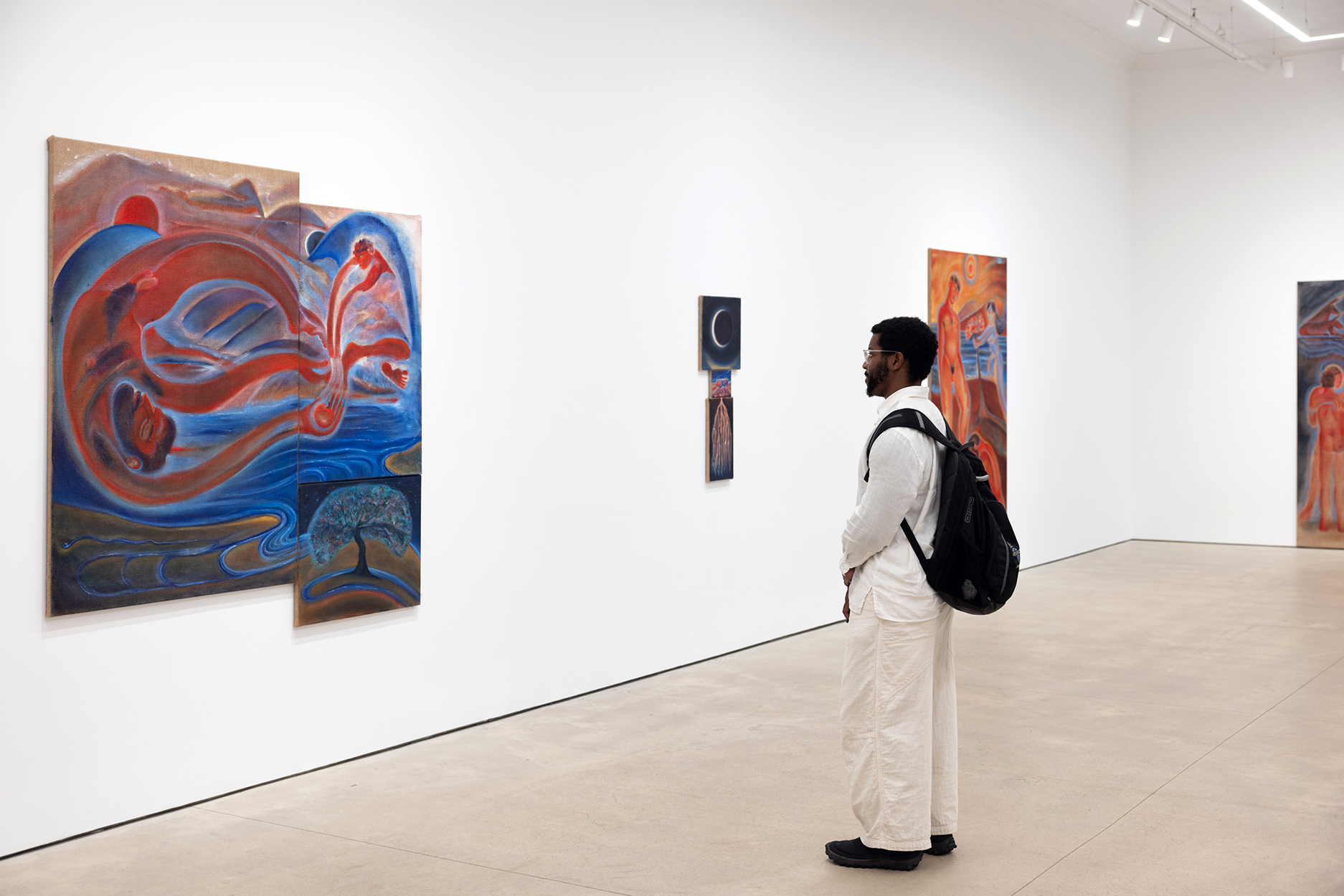
The final stretch turns inward, toward imagination. After some time spent inside the body and memory, the last galleries pose a different question entirely: what happens when the mind starts rewriting the ordinary into something extraordinary? At Derek Eller, Sarah Gamble's Trip the Light Fantastic lives exactly at that fault line, where reality begins to blur into reverie. The paintings are lush and saturated, almost theatrical in their intensity. In her work, you lose the edges of where one world ends, and another begins, and that disorientation is entirely the point.
Gamble treats fantasy not as escapism but as heightened perception. Her paintings suggest that the extraordinary has always existed within the ordinary, waiting only for someone willing to look long enough. There is theatricality here, but never spectacle for its own sake.
ADAA Tribeca Gallery Walk 2026. Courtesy of the ADAA. Photo credit: Alexa Hoyer.
The evening closes at Sargent's Daughters with Leitmotif, a group exhibitions staged with Berry Campbell that traces how artistic influence travels across generations. The title borrows its logic from music—a theme that resurfaces again and again, gathering new meaning with each return; it turns out to be as apt of a description for the exhibition as it is for the entire afternoon.
By the final gallery, the echoes are impossible to miss. Leonhardt's layered surfaces resurface in Gamble's dreamscapes. Leonardo's interrogation of the body finds an unlikely cousin in Schneemann's and Wilson's performative work. None of these shows were planned in conversation with one another, and yet the walk between them creates the unmistakable sensation of one long, continuous exchange. Leitmotif simply makes explicit what the entire day has already been suggesting: no artist works in total isolation. Every piece carries the trace of what came before it still reverberating. Creativity, seen this way, is not a singular act of invention. It is a dialogue that refuses to end.
Tribeca has long resisted the polished insularity often associated with the gallery world. Here, contemporary art remains embedded within the rhythm of everyday life: exhibition spaces share the block with cafés, apartment buildings, and neighborhood institutions. During the Art Walk, that intimacy becomes the neighborhood's defining luxury. What lingers afterward is never a single image; it is the range. The finest exhibitions rarely conclude when you leave the gallery, but instead they linger in the way the city reveals itself afterward. Tribeca Art Walk offers precisely that rare luxury: an invitation not simply to look, but to see.
Article by Emma Green, Contributor, PhotoBook Magazine
Tearsheets by Daniel López, Art Director, PhotoBook Magazine
Related Stories