Natale Adgnot: Beyond What We Wear
Artist Natale Adgnot sees clothing as more than something to wear; it’s a way to explore identity, challenge societal norms, and bridge cultural differences. Drawing on her experiences in Texas, France, Japan, and New York City, Adgnot transforms reclaimed garments, traditional textiles, and Western-inspired materials into sculptural works that challenge conventional ideas of beauty, belonging, and self-expression. Through her practice, she embraces the unexpected, finding harmony in contrasts and encouraging viewers to look beyond the boundaries that divide us. In this interview, Adgnot discusses the cultural influences behind her work, her exploration of body image and societal pressures, and how seemingly paradoxical elements can foster empathy and genuine connection.
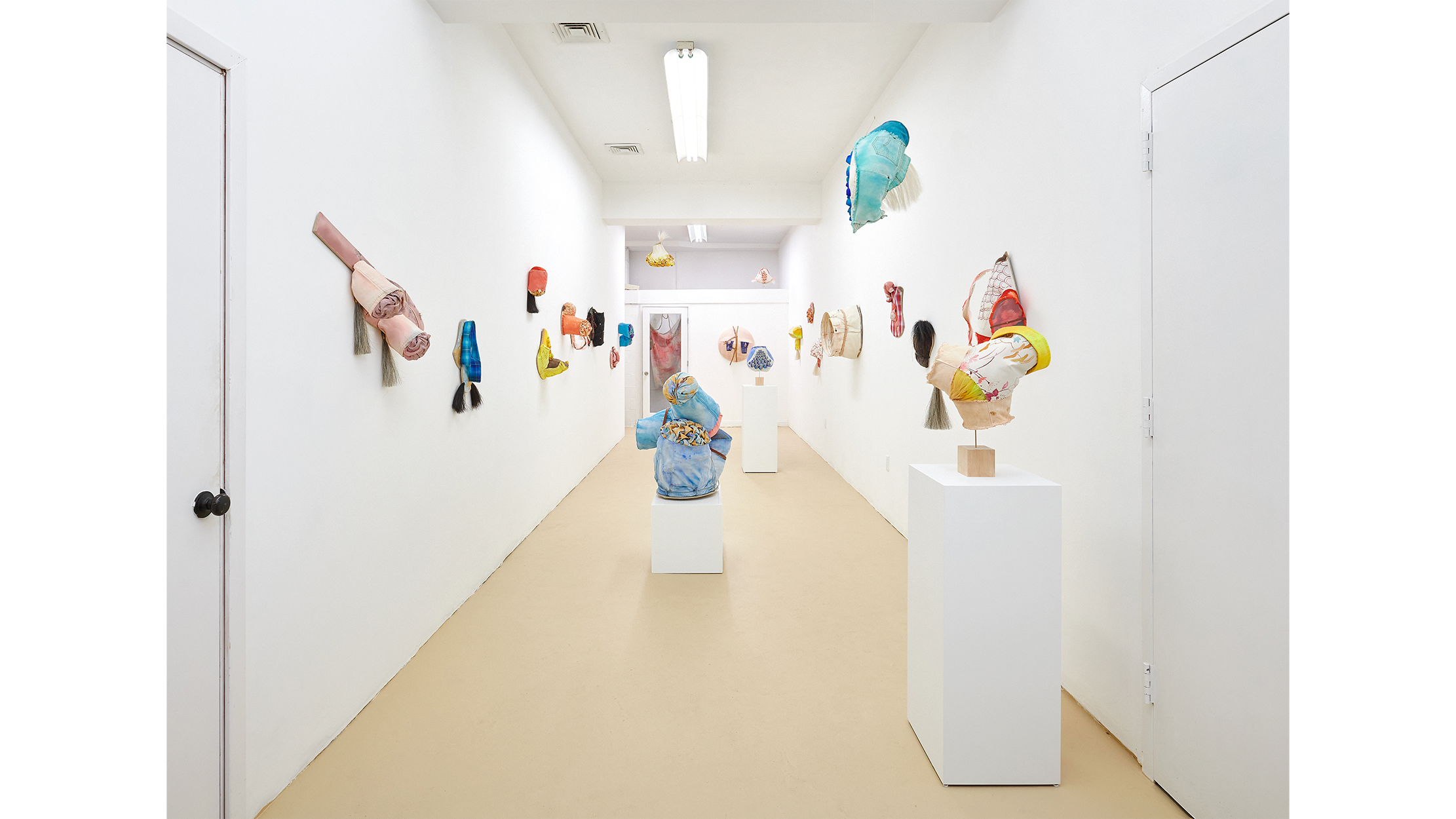
You were raised in Texas by a mother who trained horses. How has growing up around horses and horsemanship influenced the way you think about the body, clothing, and ideas of discipline and control?
In hindsight, I owe much of my resilience to the time I spent at the ranch where my mom worked. By age 11, I was skilled enough as an equestrian to ride bareback, meaning without a saddle or bridle—it was just me and the animal. Fear or agitation in a rider can provoke defiance in some horses, so I learned to carry myself with confidence on horseback, maintaining good posture and using a self-assured tone of voice. These skills became a saving grace at school, where I was bullied for being shy and fat. My hand-me-downs and ill-fitting clothes did little to protect me from being picked on and, perhaps worse, left out. By contrast, the jeans and boots I wore while riding only needed to protect me from chafing and the sun. What I truly longed for was fashionable clothing and a smaller body, believing they would protect me from rejection at school.
You bring together Japanese sewing and mending traditions with Western garments and equestrian forms. What interests you about combining these different influences?
I like to mix and match these distinctive cultural artifacts to show how very different traditions can coexist in a harmonious composition. I incorporate sashiko, a Japanese method of visible mending, alongside the decorative topstitching patterns traditionally used on cowboy boots. I also cut shapes from a saddlemaking pattern out of reclaimed kimono silk and repurposed Wrangler jeans. To bring these elements together, I sew them with gold thread as a nod to kintsugi, the Japanese art of repairing broken pottery with gold lacquer. These influences and techniques reflect not only the geographical story of my life but also my emotional journey of self-reinvention.
Your work brings together influences from France, Japan, and New York. How have your experiences in these places shaped the way you create and think about clothing?
For me, blending these influences is a way to challenge the notion that there is only one right way to live. As a Texan who spent a decade in France before living in Japan for several years, I felt right at home when I moved to New York. In New York City, there is room for anyone and everyone to be themselves. Living in these different places taught me the comforting lesson that there are many acceptable ways to exist, and I express that realization by fusing garments from different cultures into one cohesive whole. Viewing clothing as a raw material for art also removes the painful associations it held for much of my life: trying to afford it and trying to fit into it.
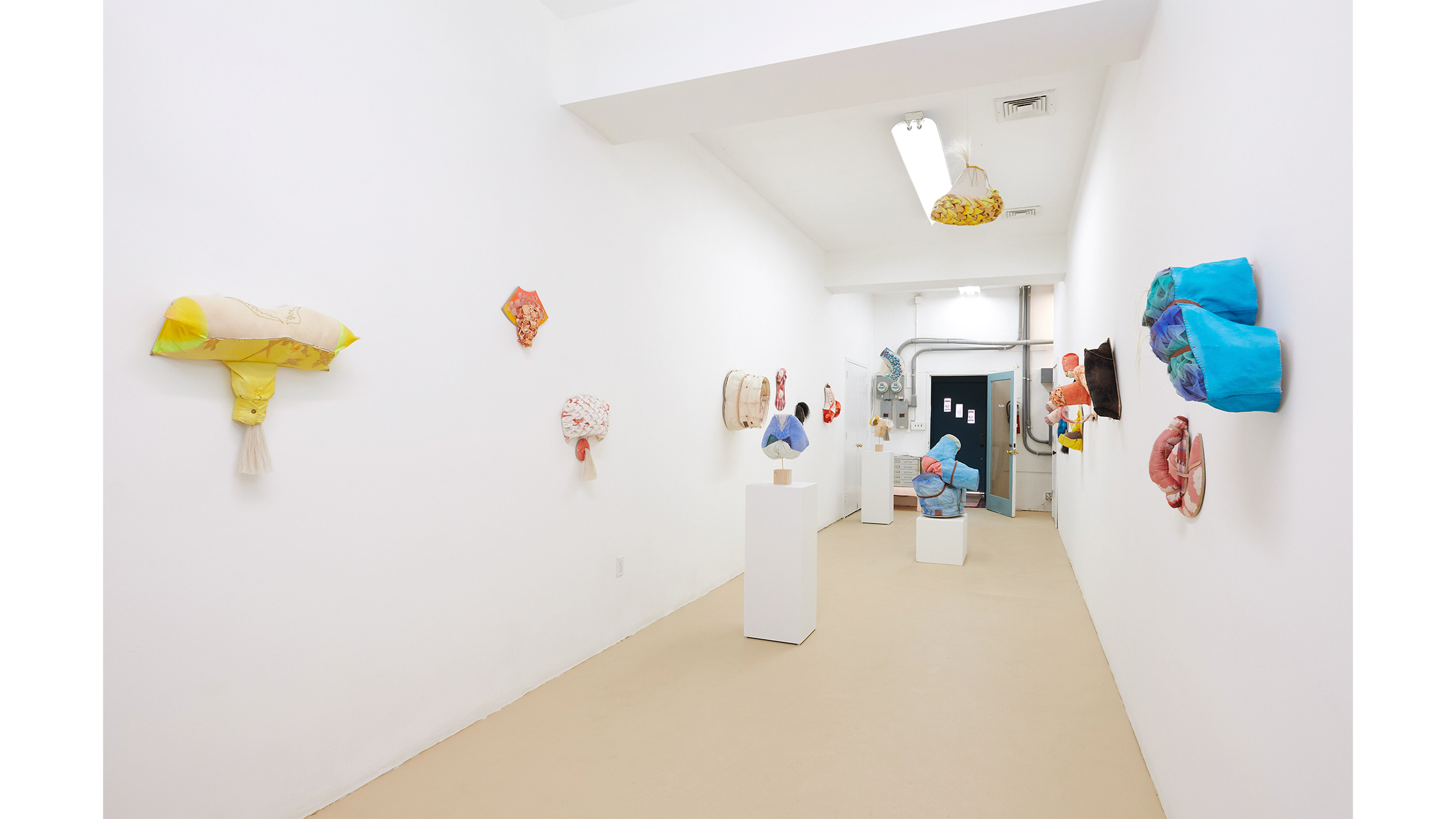
The title Reined In speaks to ideas of restraint and control. What does that idea mean to you?
Reined In implies bringing something unruly or undesirable under control. In this work, I challenge societal expectations surrounding bodies, especially gendered bodies, as well as behaviors and beliefs. Religious dogma is a major target of my pushback, as is the broader notion of what is considered beautiful. Beyond using potentially off-putting materials, such as horsehair and torn or blemished clothing, I reference lumpy, fat flesh and “unsavory” body parts through the shapes and colors of my sculptures. Often, this simulated flesh is tied up or cinched to evoke the impression of someone trying to change its size or pull it out of view.
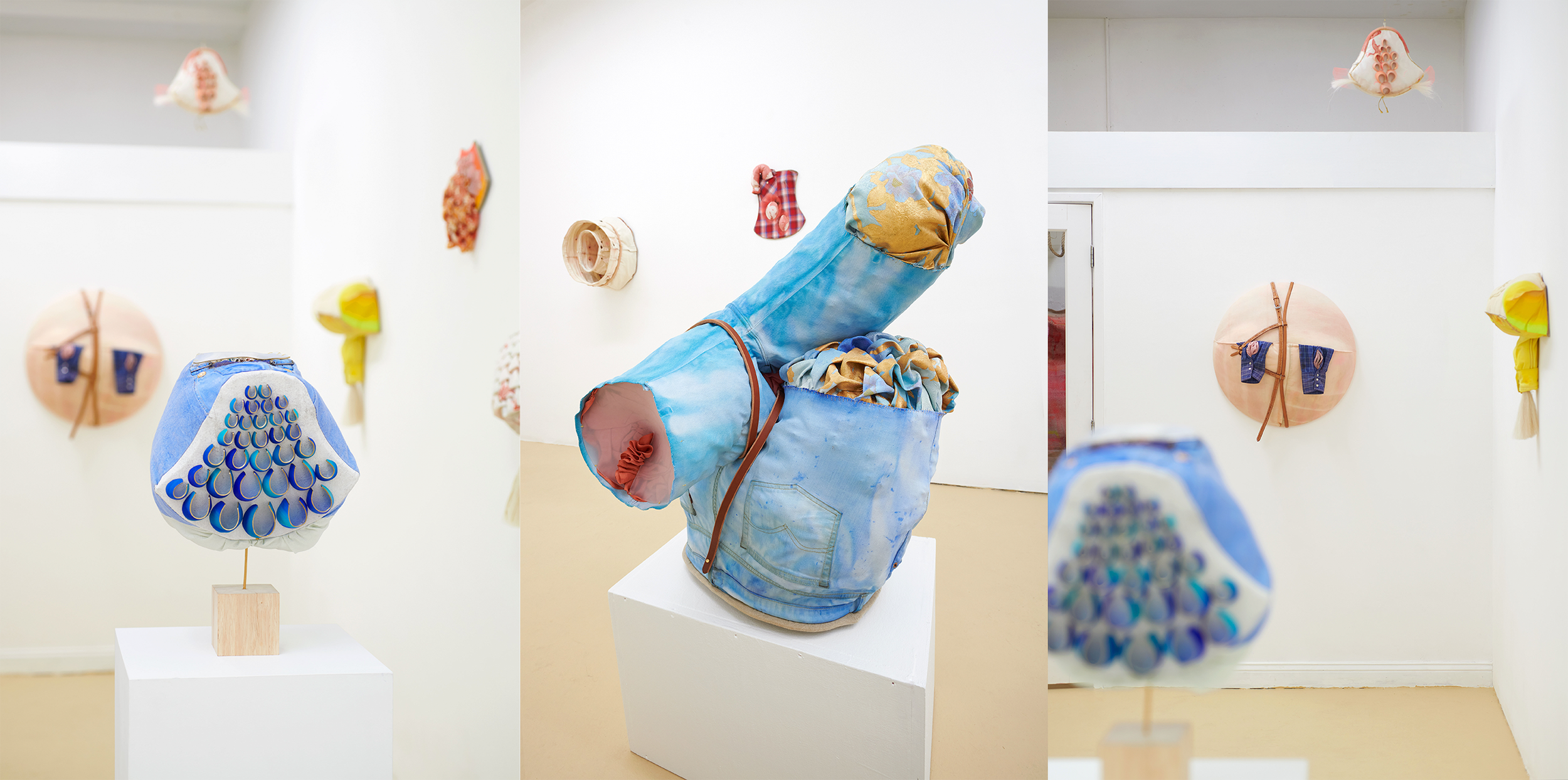
Can you tell me about Wildly Signaling to Be Let Out and how the different materials and references came together in the piece?
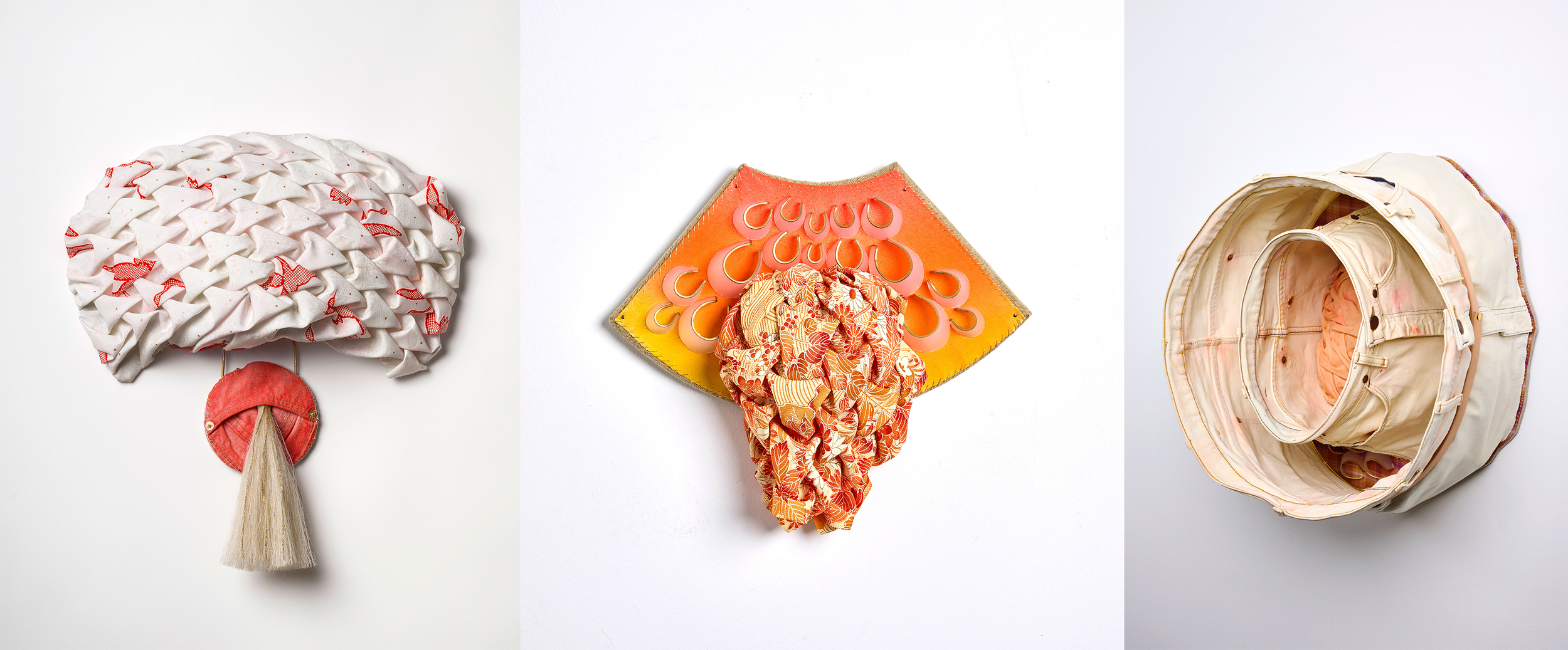
This piece is something I had been thinking about making for a long time; I just needed to find the right materials. The title refers to an idea attributed to more than one person: “Imprisoned in every fat man there is a thin one wildly signaling to be let out.” I was thrilled when both of the piece’s main elements presented themselves on the same rack at a Goodwill store in Odessa, Texas, in the heart of the country’s blue-collar oil region. They were two nearly identical pairs of well-worn Wrangler blue jeans, differing only in size. I bleached the jeans and used flesh-toned acrylic paint to emphasize the “pain points” where the rivets and seams began to give way under the harsh chemical process. Using a combination of wire and a stiffening agent, I suggested the bodies within the jeans while allowing viewers to peer inside and see the stained and dimpled smocking at the heart of the piece. A thrifted Western snap shirt, horsehair, and several horse-hoof shapes form the base, while a single leather strap forcefully reduces the larger hips by several inches. Through this piece, I wanted to convey the discomfort of desperately trying to fit in while reminding viewers that every fat person has stories, lived experiences, and a full human being within. It’s crazy that this even needs to be pointed out.
What drew you to bringing these particular materials together in Erupt, and what happened when they came together?
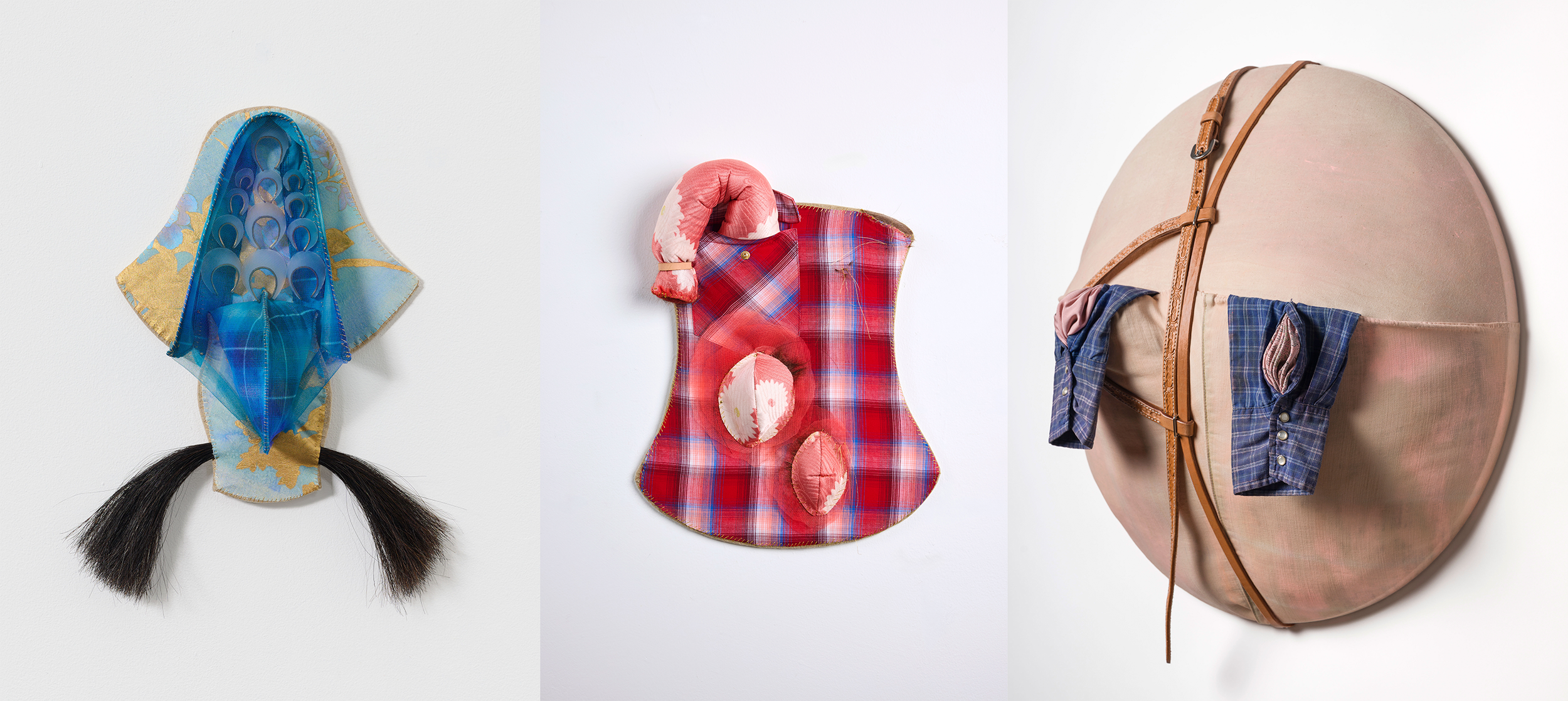
This is one of the artworks that puts the Western yoke shirt with pearl snaps, a staple of the cowboy uniform, front and center. The shirt came from the same haul as the jeans I used in Wildly Signaling to Be Let Out and was one of about a dozen shirts I found on the racks near my parents’ home in West Texas. The other fabric is reclaimed silk from a kimono that arrived in a bulk order of damaged vintage garments. I used the wrong side of the silk because its color perfectly matched the salmon hue in the shirt’s plaid. I loved that, despite having little control over how either garment was sourced, they worked together perfectly. The shape of the artwork, cut from the seat piece of a saddlemaking pattern, evokes a shapely woman’s waist. I wanted to balance this reference to idealized beauty with something unsettling. The eruption in the title refers to the body: the eruption of pimples or the gushing of other bodily fluids. I hope these elements create a simultaneous sense of attraction and repulsion in the viewer.
What drew you to combining these softer materials with horsehair and thermoplastic in Split Reins?
My visual vocabulary, or library of materials, is limited to items that carry connotations of the cultures that shaped me. This constraint allows me to explore many different combinations while maintaining continuity across my work. In every artwork, I try to include at least one reference to each chapter of my life. This means bringing together elements of cowboy culture, sewing techniques I acquired while working in Paris fashion, fine silks used in traditional Japanese garments, and horse-hoof shapes made from thermoplastic. The thermoplastic represents my life in New York City because it can be cut and formed into an endless variety of shapes, much like how New Yorkers are afforded the freedom to exist across innumerable races, religions, ages, appearances, and beliefs. I aim to bring these disparate materials together in one harmonious composition while allowing each element to remain somewhat recognizable.
What was the starting point for Barrel Race, and how did the piece develop from there?
The main body of this sculpture is made from a segment of a pair of denim baby overalls. Working with this garment reminded me that we begin passing down our distinct cultures to our children from the earliest days of their lives. This chunky little element was always meant to be round, but it took me a while to resolve the piece by grounding it with a dark lower portion. The black hair comes from a horse’s tail. I finished the sculpture by closing the bottom of the barrel with a section of smocked kimono fabric and trimming the top with the kind of gold cord that might be used on a fancy snap shirt. The shape of the piece reminds me of the barrels I used to race around on my mom’s Quarter Horse.
You use hand-smocking throughout the series, and it can make the fabric look almost like flesh or tissue. What drew you to using this technique in that way?
I originally began using a technique called Canadian smocking because I wanted to make two-dimensional fabrics more sculptural. However, as I began deconstructing the silk kimonos I had collected, I became interested in their visible wear and tear. Often, you can see holes, sweat stains, and other evidence of a garment’s previous life, especially in the less ornate interior linings. Their thin, fluid quality and close contact with the wearer’s body made them a natural stand-in for skin or flesh, so I decided to lean into that connection.
What interests you about taking something that was made to be worn and using it in a completely different way?
What better way to reject the tyranny of societal body standards?
Your work explores moments when clothing no longer fits comfortably around the body. What interests you about that tension and the discomfort between the body and the structures meant to contain it?
My personal experience of inhabiting both a larger and a smaller body has been akin to going undercover. When you lose weight, it’s as if a curtain is pulled back, revealing how much better the world treats you in a thinner body. The experience is jarring and often infuriating. Through my work, I want to highlight the pain caused by societal demands for conformity in many forms, not just physical appearance.
Looking at the Saddle Couturage series as a whole, what has working with these materials allowed you to explore beyond clothing?
My entire artistic practice is an effort to inspire empathy among people from different, or even opposing, groups. These groups may be defined by nationality, race, religion, or simply by narrow views of what is acceptable. With Saddle Couturage, I bring together elements that aren’t supposed to go together and make them work together anyway. I’m finding that it’s more interesting to explore the 1,001 ways to do something no one asked you to do than to perfect something someone else told you to do.
Interview by Ali Rosoff, Contributor, PhotoBook Magazine
Tearsheets by Daniel Lopez, Art Director, PhotoBook Magazine
*Images Courtesy of Natale Adgnot
RELATED STORIES