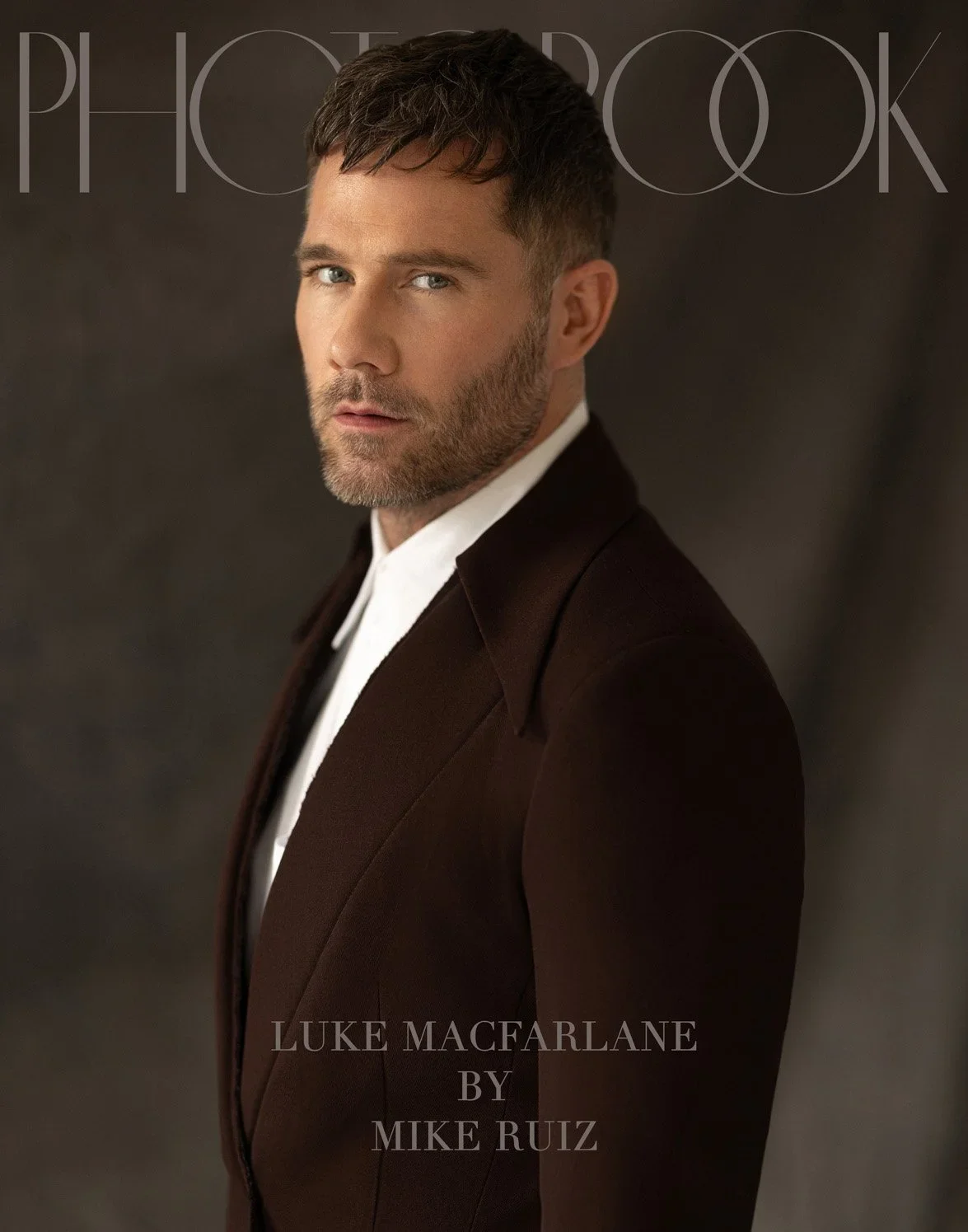
Dublin’s Own: Jack Reynor and the Bandwidth of Home
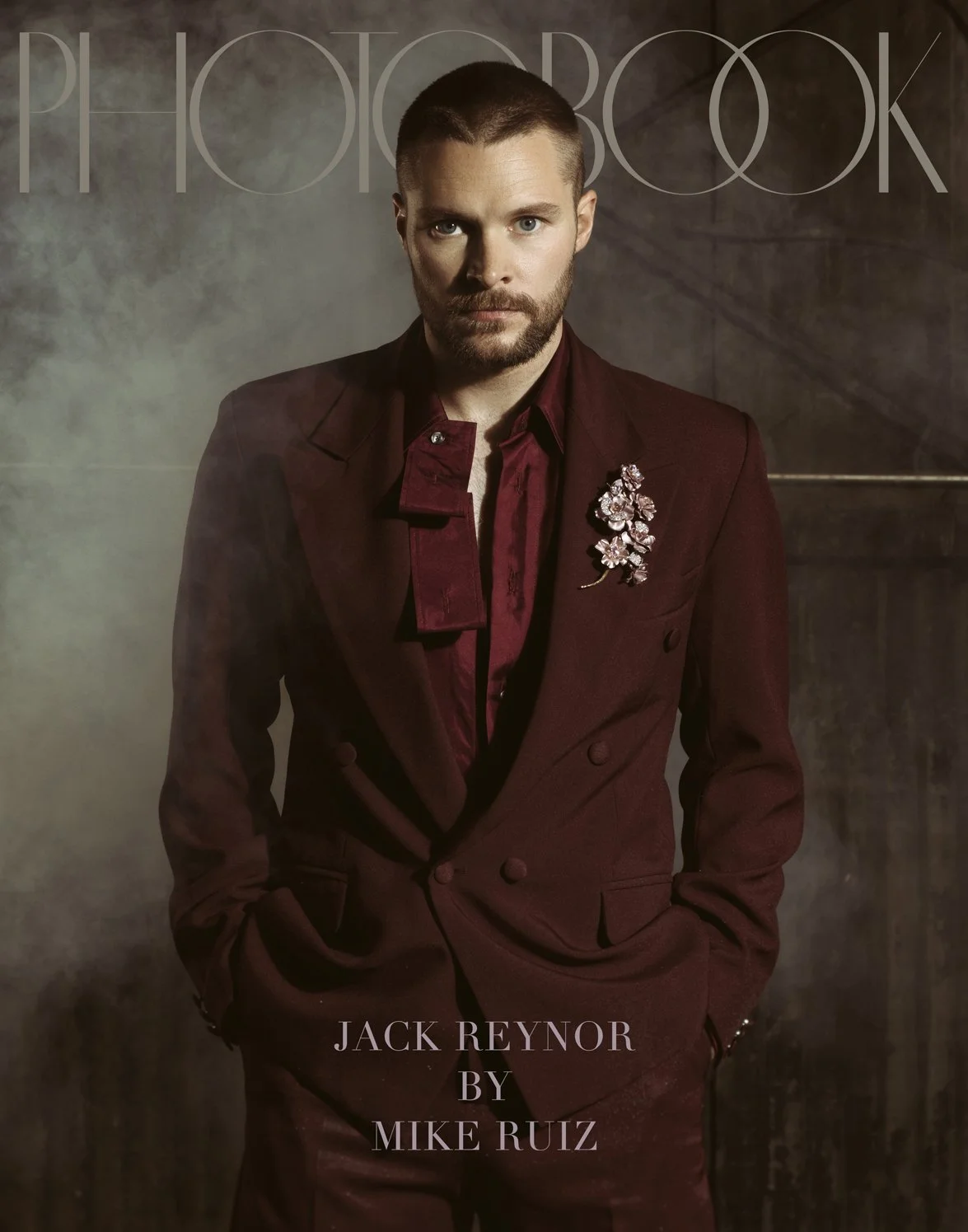
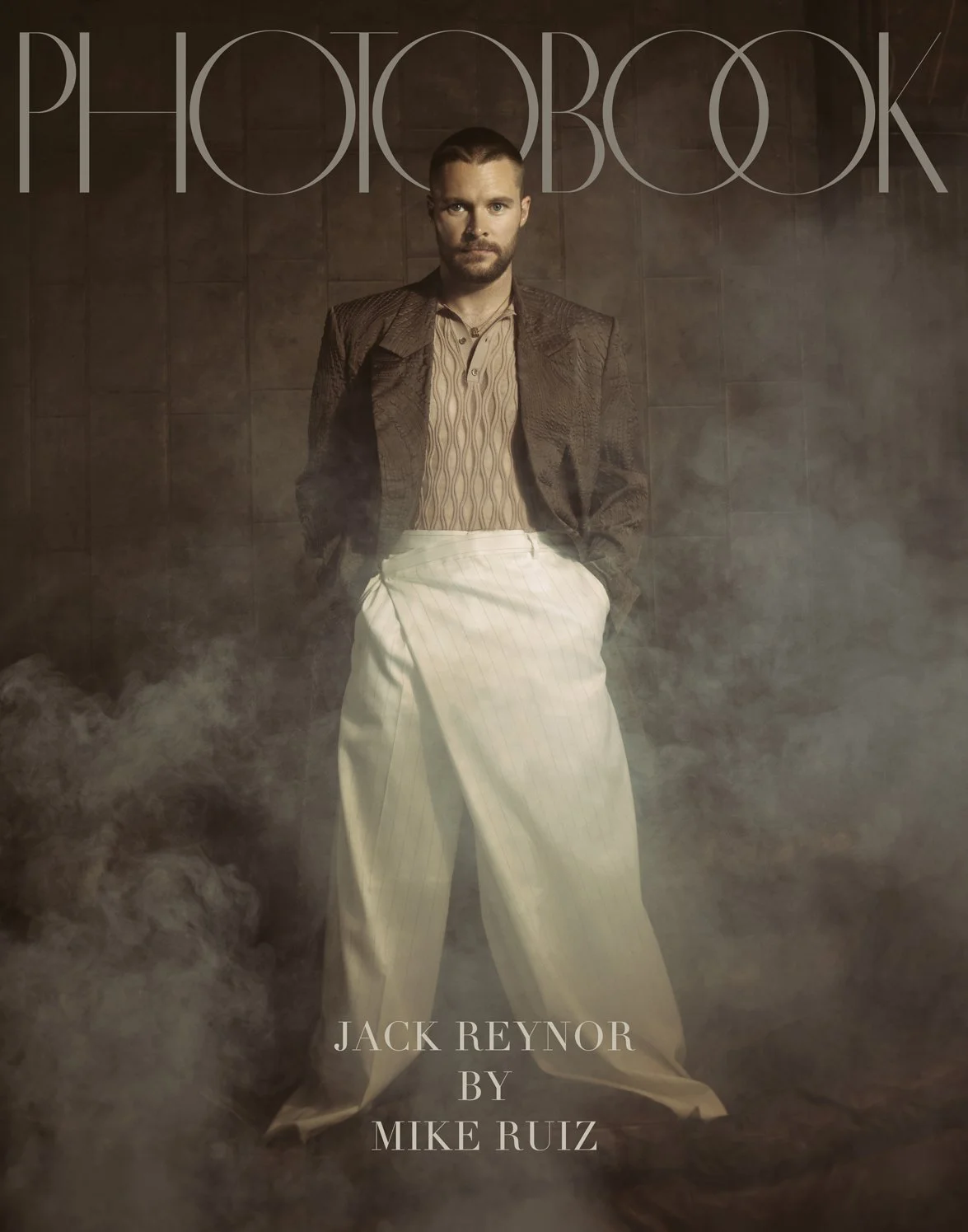
Jack wears full look by DENZIL PATRICK
Brooch by ANABELA CHAN
Jack Reynor has built a career that feels remarkably intentional. Despite the global sets and Hollywood calls, he remains rooted in Dublin, prioritizing the "bandwidth" of home over the industry's constant hum. Whether he's navigating the legal thrills of Presumed Innocent or returning to his horror roots in Lee Cronin's The Mummy, Reynor's approach is defined by a deep respect for the craft and a refusal to overcomplicate it. "I don't feel under too much pressure to just keep churning out work right now," he admits. Instead, he's chasing "really great writing" and the chance to challenge audiences with characters that are as dynamic as they are difficult.
You're leading the new film The Mummy with Lee Cronin and Blumhouse. After doing a massive horror hit like Midsommar, what was it about this specific project that made you want to jump back into the genre?
It was going to shoot in Ireland with an all-Trish crew of people whom I've worked with before, which was great. I love to work at home, and so that was definitely a very enticing factor in the decision to do the movie. But also, I was a really big fan of Lee. Lee and I sort of have had adjacent careers in some ways. We both started in the industry at a similar time, and I just loved his Evil Dead Rise, it is so fantastic. It's a very tricky piece of material to be able to get right, I think, given that there's a built-in fandom there who have very high expectations for what Evil Dead needs to be. I think that he was able to create something that felt very new and very fresh, but at the same time, it kind of paid homage to the elements of the franchise that people really wanted to see. When it came to The Mummy, it was not something that I ever had a huge ambition to do, as much as I love the legacy of films in the kind of Mummy universe. I read Lee's script and I was like, "Oh, wow, this is similar to Evil Dead in that it's a very fresh take on this." It's something that I don't think audiences have seen this type of mummy film before. It's definitely a horror movie; it's not like an adventure movic. This is not like an Indiana Jones-adjacent film. This is very much a horror. So, that was kind of the jumping-off point for me.
This Spring you're back in the world of Citadel. This is your second time working with the Russo brothers after Cherry, how does having that existing relationship and "shorthand" with a director change the way you work on set?
It's great. I'm very low-key as an actor in that there's a lot of repeatability with me. I work with the same people a lot, and I really enjoy that because it just gives you a shortcut to get to the place you need to go. Joe and I are really good friends, and we always kept in touch after Cherry. I think a big part of it for him was that he was coming on to direct Season 2 of Citadel, and he felt that he just wanted to, I think Joe likes to work with people whom he knows and whom he likes. He likes to go to work with people whom he likes to be around. That's a cool thing. For me, it's similar in that, if I can work with the same director again and again, and I turn up to work every day and I feel good about the people that I work with, that makes my job that much casier. I guess it's born out of collaboration, but also, Joe's fantastic at what he does. He just has unbelievable efficiency in the way that he works, and he's also very trusting of the people that he works with. He was open to a lot of the ideas that I had for the character in the show, which was great. A really fun experience, great to get back on set with them.
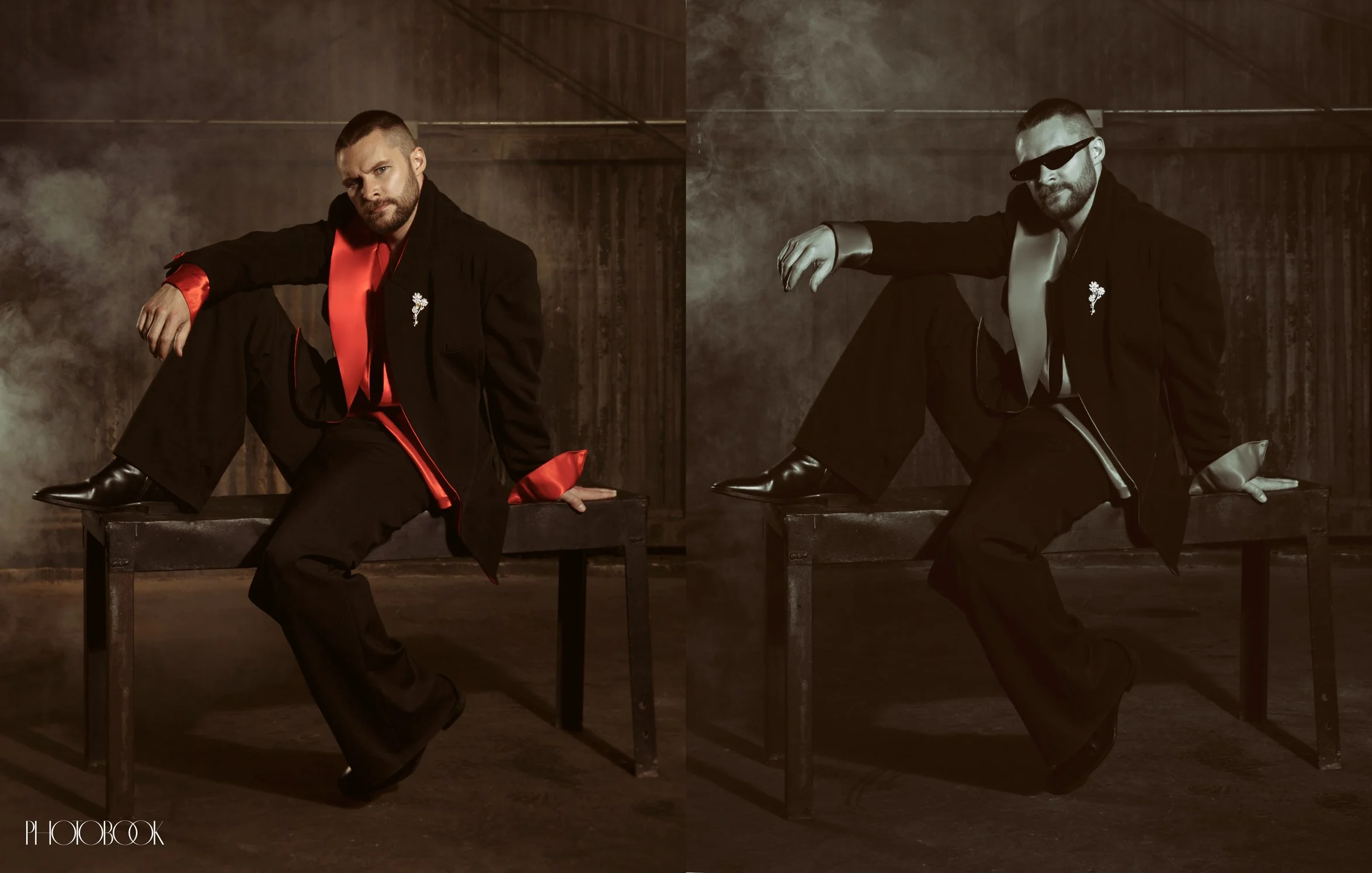
Jack wears full look by LAQUAN SMITH
Brooch by ANABELA CHAN
Boots by DSQUARED2
You've worked with director John Carney several times now, from Sing Street to the upcoming Power Ballad. What is it about his "music-driven" style of storytelling that keeps you coming back to his projects?
I think it's more about the Irish side of it for me. Again, I love to make movies in Ireland and I love to support the Irish film industry in any way that I can. Some of the best stuff that I'm doing has been in Ireland. Some of the stuff that I'm most proud of has been in Ireland, and I think that the projects that I've done with John are kind of a testament to that. It's a state always to come back to work at home when I can.
You're currently filming the lead role in the second season of Presumed Innocent. After the huge global success of The Perfect Couple, how do you approach stepping into another high-stakes mystery where everyone is a suspect?
I love to do those kinds of projects. I think that The Perfect Couple for me, maybe, was a little bit more of an opportunity to exercise a sort of comedy muscle. There was a lot of humor in that show; it's a little lighter than Presumed Innocent is. I think Presumed Innocent feels a bit more of a neo-noir legal thriller. With this one, it's been great. I've loved the cast and the crew that I'm working with. The material is good, it's challenging material, but I'm having a really fun time on it. I think the show is going to be great, I really hope it is. Certainly, I've kind of been lucky to have Rachel Brosnahan as a big advocate on the show. She's one of the executive producers, and I love working with her. She's a fantastic lead. From her producing standpoint, she's just somebody who puts in 110% every day. She's got an unbelievable work ethic and she's an extraordinarily talented person. I'm having a great time working with her. Then Matthew Rhys is obviously another, he's from Wales, and he's such a laugh to have on set. Of course, Fiona Shaw, one of my favorite actresses of all time, an Irish actress, somebody who I've grown up watching, it's just an honor to work with her. Also Courtney B. Vance. I love Courtney; I've followed all his work over the years and he's so brilliant too. It kind of makes the job easy when you have such a brilliant cast.
In your upcoming film A Colt Is My Passport, you play a Vietnam veteran turned contract killer in 1978 Detroit. What kind of preparation did you do to get into the headspace of such a gritty, "hardboiled" character?
Sharp's character is a Vietnam veteran. I'm playing another hitman, but I'm a hitman who's sent to kill him. And it was great. I don't want to give away too much about it just yet, but that period of the '70s is just such a fun period to work in. The style of it, the setting in Detroit, it's so cool. The music is all brilliant. I had had an ambition to work with Gareth Evans as a director since 2011. I went and saw his movie The Raid in theaters when it came out, and for me, that movie was like a reinvention of the action film. He just has such an unbelievable vision and capacity for creating compelling action. It's just unbelievable. I always wanted to make a movie with him. Right as I was finishing The Mummy, he reached out and wanted to work on this movie with me, and we had a blast on it. It is an incredibly violent film, but it is also so fun and so entertaining. Shooting these massive gun battles and doing all the stunt work on that movie was the best time. We shot that movie in Wales. Ireland's a small film industry; Wales is a tiny film industry. Gareth is from Wales, and he was working with a crew of people who've all looked up to him so much in their journeys in the film industry. It was just great to be able to make a film that was so ambitious, that was set in Detroit in the "70s, but to be able to achieve that in Wales and support the Welsh film industry in that way. I'm all about supporting small film industries and diversity of cinema.
You've written and directed your own award-winning short film, Bainne. Does having experience behind the camera change how you collaborate with directors like Ari Aster or Gareth Evans when you're acting for them?
Yeah, absolutely, it does. I think having technical knowledge of filmmaking is a really useful tool for an actor. Particularly if you're doing something that's stunt-heavy, if you're doing an action movie or a horror movie, it's good to understand camera movement. It's good to understand lens sizes. It's good to have experience in stunts as well. I've grown up loving movies; I love cinema so much. I've always paid attention as an actor because I'm so lucky to have an opportunity to make films. I absorb every single part of it. I've been lucky in my career to work with some of the most technically impressive directors, like Michael Bay and his Transformers movies. Those are actually extraordinary films, particularly from a technical filmmaking perspective. To do one of those movies at 21 years of age is more schooling than you could get in three years in a college course. Six months on a Transformers movie, you're going to learn a lot about the technical side of filmmaking and what you need to do as an actor to complement the style of filmmaking that you're doing. I had a similar experience with Kathryn Bigelow in Detroit.
I've been lucky to work with great people and mega-tempo directors over the years. Just like paying attention in class, basically, I've managed to develop a pretty fluent style when it comes to working on action films or horror films for directors.
Your career ranges from billion-dollar blockbusters like Transformers to intimate dramas like Glassland. At this stage, what is the main thing you look for in a script before you decide to take on a new role?
Over the past couple of years, I've been looking for characters that I could challenge the audience with because they come across as kind of nasty characters. If I can make them likable and make them more dynamic than they feel on the page, I enjoy doing that. I enjoy playing someone who people hate, but at the same time, they can't help but kind of enjoy them. I think over these next few years I've been doing a lot of genre stuff. As lucky as I am to have a lot of opportunities, I want to find stuff that's really great writing and that is finished. It's very important. I'm noticing more and more in the industry that people are going into productions on things where the writing is not ready, and they're trying to rewrite and catch up with things in the middle of production. That's a very difficult place for an actor to have to operate. I probably want to continue to work with people who are auteurs and people who have put in the work ahead of time on scripts so that I can just walk onto the set and do the performance, and not have to worry about coming in with notes on the script and having to rewrite things.
You've worked on some massive global sets, but you still call Dublin home. Does being based in Ireland help you stay grounded when you're jumping between these huge Hollywood productions like The Mummy or Citadel?
Yeah, absolutely. I think it's critical. I love my work and I love the opportunities that I have. I feel extremely grateful, but the industry is just a part of my life. The majority of my life is at home in Ireland. I work, if I'm lucky, 100 days a year, maybe 150 days a year. So that leaves over 200 days to be at home in Ireland and be with my community and be with my friends.I think living in the place that I do and having the life that I have at home in Ireland is so diametrically opposed to the film industry; it gives me the bandwidth that I need to be able to function in the film industry at a high level. It also gives me the perspective to be able to play characters with a kind of authenticity, and with a sense that they're lived-in because I'm living a very fulfilled life.
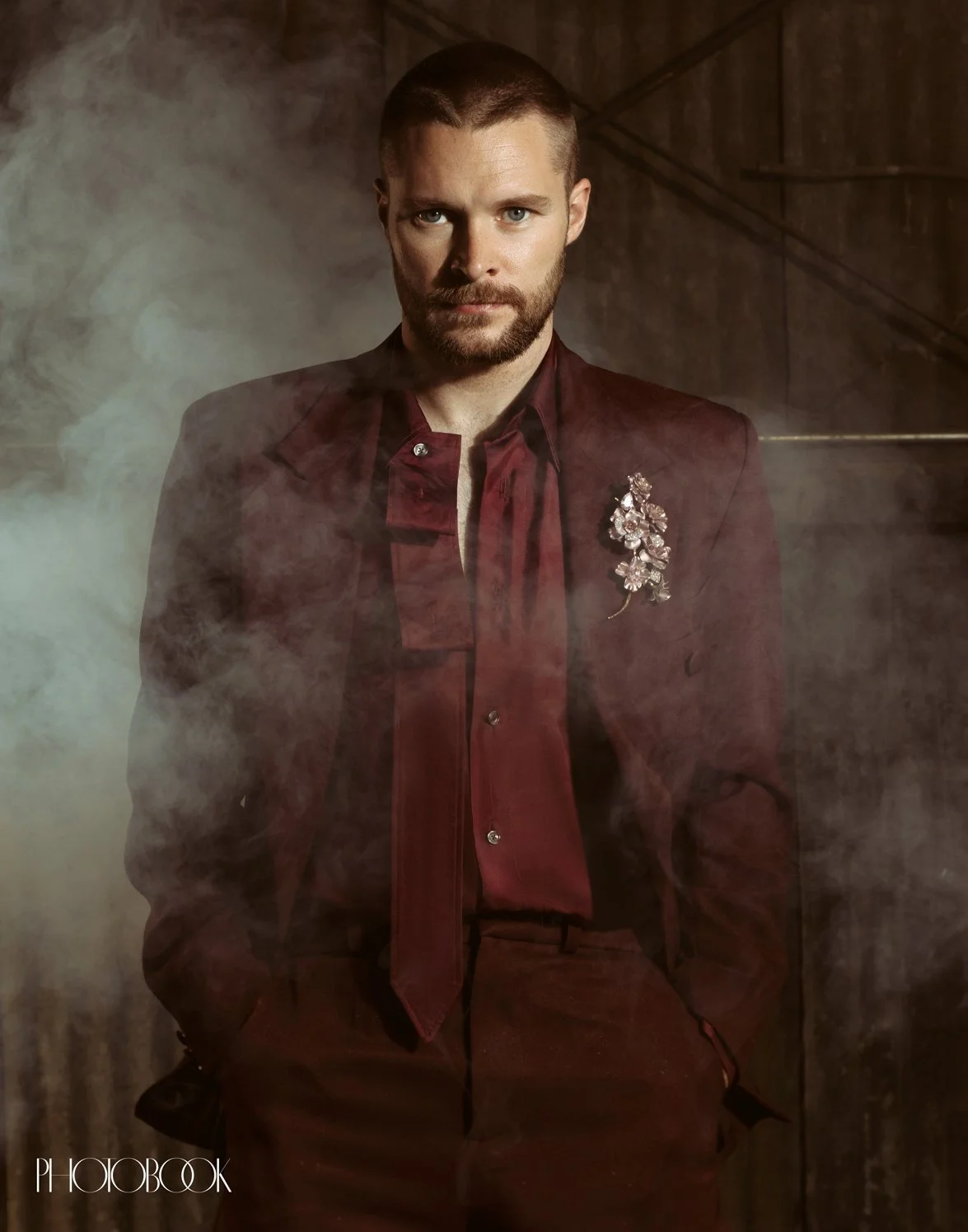
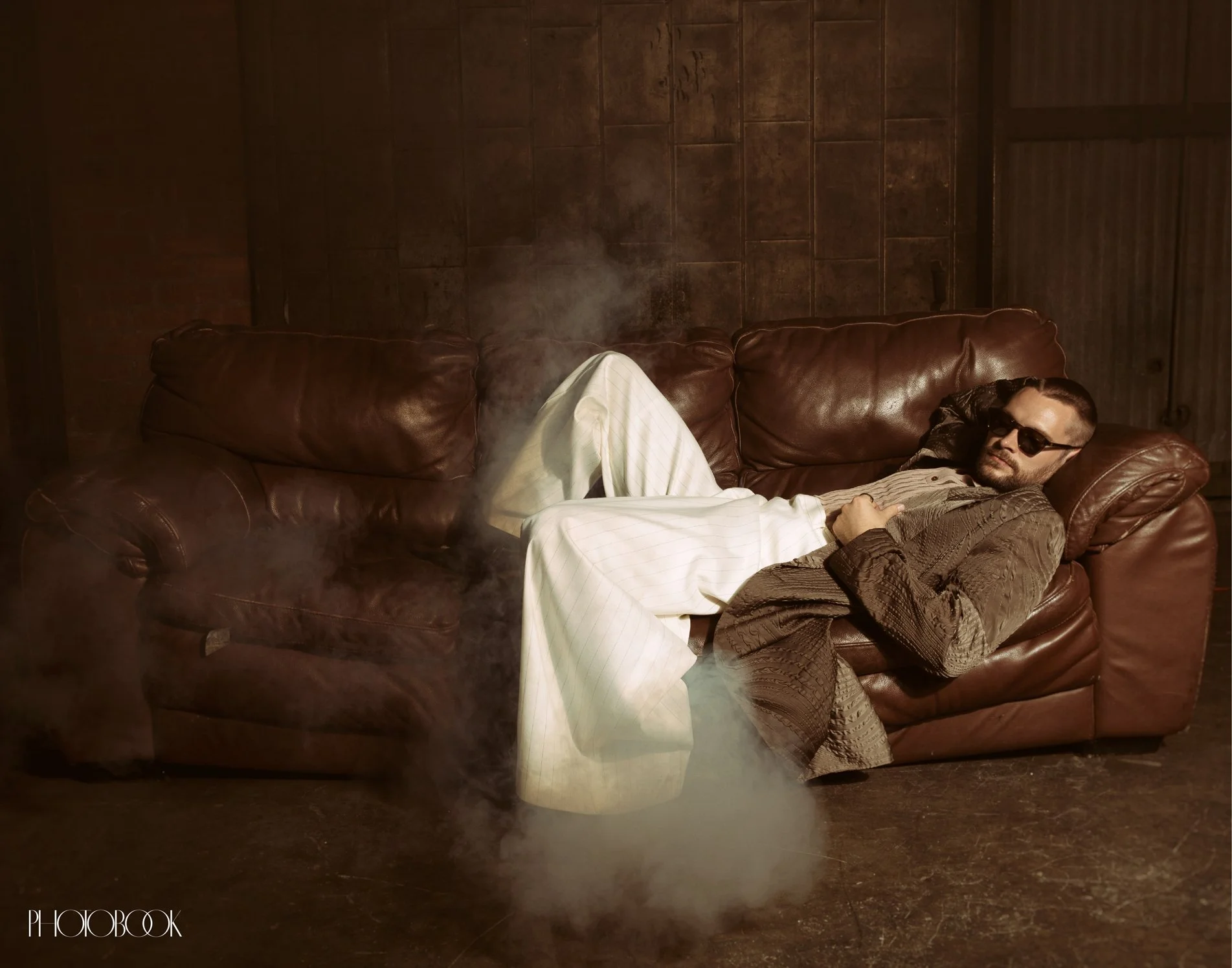
Jack wears full look by DENZIL PATRICK
Brooch by ANABELA CHAN
When you're lead in a series adapted from a book, do you prefer to read the original story to get all the details, or do you stick strictly to the script to create your own version of the character?
Not really. I think it would depend on the case. But, a lot of the time I stay away from source material because adaptations often diverge from the source material a lot. In this day and age, it can be a little unhelpful to lock yourself into a piece of source material if, seven episodes into a ten-episode run, the whole ending of the thing changes and the context of the character is completely different. I like to go off if it's a film and it's an auteur director who's written the script themselves and it's based on something else. I just like to go off what the director's going to tell me. Similarly, on a TV show, you have to lean on your showrunners for that.
Looking at the next few years, is there a specific genre or a type of character you haven't touched yet, maybe something completely unexpected, that you're dying to take a risk on?
No, not really. I mean, like I say, I just want to find good writing, really good writing that doesn't need any work before you shoot. I want all that work going ahead of time. I think if you were to put a gun to my head and say if there's one movie that you'd love to be part of a remake of, or something that's in that style, I would say there's a movie by Kiyoshi Kurosawa, a great Japanese director. It's a movie from 1997 called Cure. That's an unbelievable film. One of my favorite movies ever, just from a technical filmmaking perspective, but also a great horror film, a great neo-noir, and also a great kind of domestic drama as well. I'd love to do something like that. It'd be so cool.
CREW CREDITS:
Talent: Jack Reynor
PhotoBook Editor-In-Chief: Alison Hernon
PhotoBook Creative Director + Photographer + Producer: Mike Ruiz
Fashion Stylist: Mike Adler at Monday
Grooming by Jenna Nelson from The Wall Group using 111SKIN
Photo Assistant: Ozzie Gutierrez
Fashion Stylist Assistant: Abby Wan
Tearsheets by Daniel López, Art Director, PhotoBook Magazine
Interview by Lily Kalbasz, Contributor, PhotoBook Magazine
RELATED STORIES